

Five-month-old baby thrives after pioneering womb surgery for severe birth defect
Baby Theo becomes the first British infant to undergo groundbreaking in-utero surgery in the US to correct complex gastroschisis.
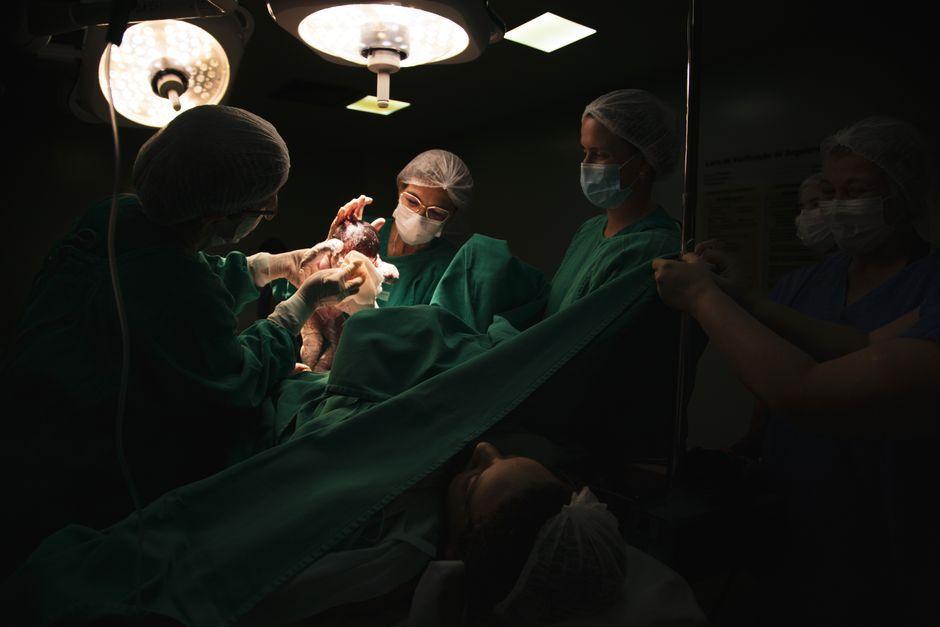
Stock photo for illustration only, not from the actual event
- Baby Theo, now five months old, is the first UK infant to receive in-utero gastroschisis surgery.
- Mother Maisie Savage underwent the operation at 26 weeks of pregnancy in Texas, US.
- The severe birth defect affects one in every 3,000 babies born in the UK annually.
- Surgeons successfully used keyhole techniques to return organs inside the abdomen without complications.
A remarkable medical milestone has saved the life of a five-month-old boy named Theo, who is now growing and thriving after receiving pioneering surgery while still inside his mother's womb. His mother, Maisie Savage, 29, from London, traveled to the United States to undergo the procedure when she was 26 weeks pregnant.
Baby Theo was diagnosed with gastroschisis, a serious condition where the abdominal wall fails to develop properly, causing the intestines and organs to grow outside the body. At 24 weeks gestation, specialists at London's Great Ormond Street Hospital (GOSH) prepared the parents for a difficult journey, but upon discovering the complex nature of Theo's condition, referred the family to Texas Children's Hospital in Houston.
Gastroschisis is a congenital defect where a hole in the abdominal wall allows the intestines to push outside. Performing corrective surgery while the fetus is still in the uterus represents a major paradigm shift in fetal medicine, as it prevents prolonged exposure of delicate organs to amniotic fluid, which typically causes inflammation and tissue damage in traditional post-birth treatments.
Before heading to Texas, Maisie first traveled to Leuven Hospital in Belgium, where specialists administered a Botox injection through her womb into Theo's abdominal wall to relax the muscles, making the upcoming surgical repair much easier.
Stock photo for illustration only, not from the actual event
The high-stakes operation took place in November last year. Doctors partially exposed Maisie's uterus, drained the amniotic fluid, and replaced it with carbon dioxide gas to expand the surgical workspace. Using keyhole surgery, the medical team gently maneuvered Theo's external organs back into his abdomen before stitching the wall closed.
While standard cases require weeks of intensive care and tube feeding, complex cases like Theo's carry severe prognoses, including up to six months in neonatal intensive care, multiple surgeries, years of intravenous nutrition, and potential intestinal transplants. Even with top-tier medical intervention, one in ten babies with severe forms does not survive.
"The mother, the baby, the surgery, the time of the surgery, the fact that we had zero complications during the foetal surgery and after the foetal surgery, just remarkable."
Dr. Michael Belfort
Dr. Michael Belfort, the clinical lead of the trial and obstetrician-in-chief at Texas Children's Hospital, expressed astonishment at the flawless outcome. Following the successful procedure, Maisie carried the pregnancy to term and gave birth to Theo vaginally in Texas in February.
Looking to the future, Professor Paolo de Coppi from GOSH hopes that successful clinical trials will soon allow UK hospitals to offer this revolutionary in-utero procedure domestically, marking a powerful collaboration between British and American medical institutions.
Source: BBC Health
Found something wrong in this article? Report an issue with this article
Comments
Leave a Comment