

Thailand Sets Sights on the Moon: Countdown Begins for Thailand Moonshot Mission
Yotsanan leads the Ministry of Higher Education in unveiling the Thai-built CE-7 MATCH instrument for the Chang'e 7 lunar mission, with a live broadcast set for August 24.
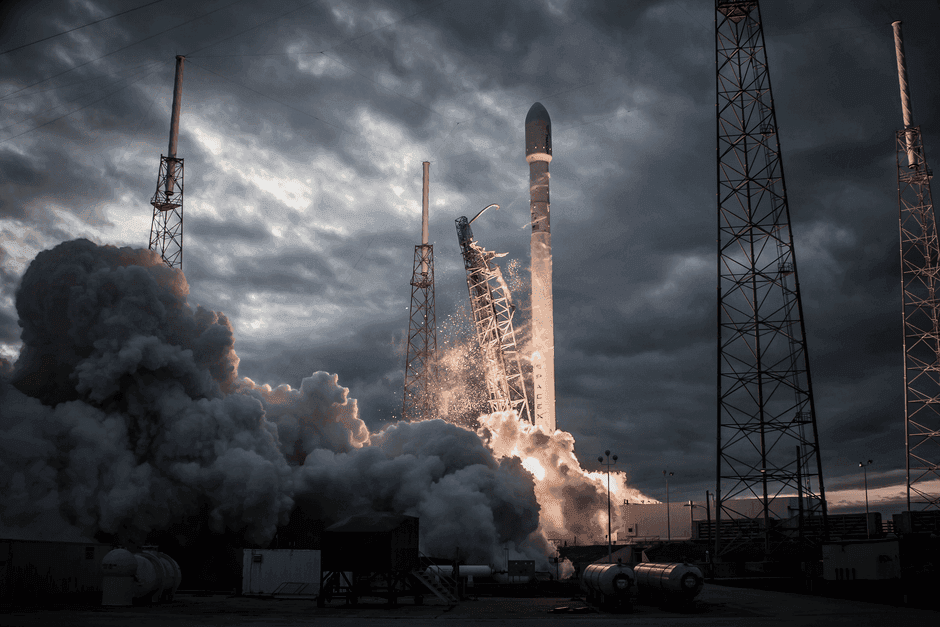
Stock photo for illustration only, not from the actual event
- Thailand sends its first homegrown CE-7 MATCH instrument to the moon with Chang'e 7
- Live broadcast of the August 24 launch aims to inspire 3 million Thai youths
- Mission marks a major milestone toward building a space economy and global-standard engineers
Thai scientific history is about to be made as Mr. Yotsanan Wongsawat, Deputy Prime Minister and Minister of Higher Education, Science, Research and Innovation (MHESI), presided over a press conference announcing Thailand's historic lunar exploration mission. The event showcased the readiness of the Thai-designed scientific payload known as CE-7 MATCH, which has been selected as one of seven international scientific instruments aboard the Chang'e 7 lunar mission. The Long March-5 Y14 rocket carrying the spacecraft is scheduled to launch on August 24 from the Wenchang Spacecraft Launch Site in China.
This landmark mission is a collaborative effort involving the National Astronomical Research Institute of Thailand (NARIT), the Ministry of Education (MoE), Thai PBS, and Sea (Thailand). Key executives attending the announcement included Deputy Education Minister Akaranan Kannakitnant, MHESI Permanent Secretary Supachai Pathumnakul, NARIT Director Wiboon Rurojphan, Thai PBS Director Wanchai Tuntivitayapitak, and Sea (Thailand) Senior Director Sarut Vanichphan.

Stock photo for illustration only, not from the actual event
Mr. Yotsanan stated that the successful development of the Thai-built payload demonstrates tangible progress in human capital development and reinforces the government's push toward an innovation-driven economy. Traveling into an orbit 200 kilometers above the moon's surface represents one of the toughest engineering challenges. The equipment will monitor space conditions and track solar storms continuously for the next three years, not only protecting satellites around Earth but also fostering world-class engineering talent in Thailand.
"The greatest heart of this Thailand Moonshot mission may not just be the equipment floating in space, but 'building people'."
Yotsanan Wongsawat
Deputy Education Minister Akaranan noted that the Ministry of Education is ready to collaborate with MHESI to spark inspiration among students. NARIT Director Wiboon added that the CE-7 MATCH instrument will measure cosmic rays and study the Sun-Earth-Moon relationship to support the future International Lunar Research Station (ILRS) project. Meanwhile, Thai PBS's live coverage and digital engagement through Sea (Thailand) platforms like Shopee and Garena Free Fire will ensure that astronomy and STEM education remain accessible and engaging for the younger generation.
Pushing into the space economy represents a pivotal shift for developing nations, as space-grade manufacturing demands absolute zero tolerance for error. Investing in such high-tech endeavors forces a nation to upgrade its supply chains, material testing procedures, and engineering workforce to meet international standards, ultimately returning high-value expertise back to domestic industries over the long term.
Source: Khaosod Politics
Found something wrong in this article? Report an issue with this article
Comments
Leave a Comment