

SpaceX's first-ever earnings show higher revenues and huge spending
SpaceX reports its debut quarterly business report showing a 92% surge in revenue alongside a massive 550% jump in spending.

Stock photo for illustration only, not from the actual event
- SpaceX delivers its first-ever quarterly business report since trading on the US stock market in June.
- Revenue grew 92% to $7.8bn, while spending skyrocketed over 550% to $18.3bn.
- Elon Musk highlights Starlink as a profitable segment bringing in $1.6bn in the second quarter.
- Company shares dipped nearly 9% in after-hours trading amid ongoing investor scrutiny.
SpaceX has released its very first quarterly business report, revealing that while revenues nearly doubled, corporate spending skyrocketed significantly. The aerospace company, led by Elon Musk, manufactures rockets, operates Starlink internet satellites, and owns the social media platform X after beginning its public trading on the US stock market in June.
According to the report, SpaceX generated $7.8bn in revenue, marking a 92% increase compared to the previous year. However, expenses surged by more than 550% to reach $18.3bn, alongside a net loss of $2bn recorded during the first six months of the year. This financial snapshot caused the company's stock to drop nearly 9% in after-hours trading sessions.
During a post-earnings call with financial analysts and investors, Musk stated that people appeared to be underestimating SpaceX. He pointed to Starlink as the company's sole profitable unit, generating $1.6bn in the second quarter alone, and expressed expectations for exponential growth in that division. Musk also touched upon the rapid expansion of SpaceX's emerging AI compute power sales line targeting corporate clients, which currently include Google and Anthropic.
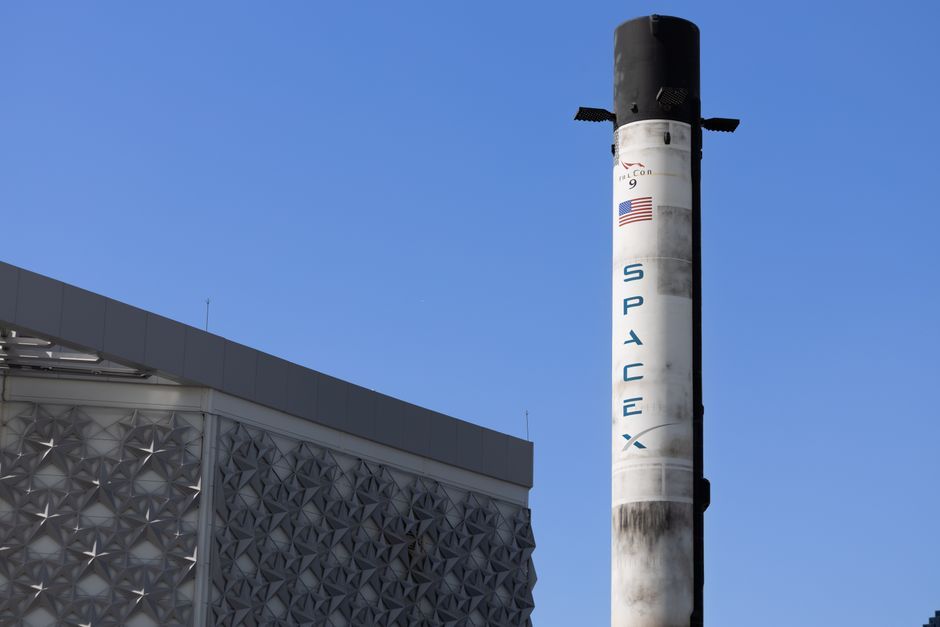
Stock photo for illustration only, not from the actual event
SpaceX's aggressive push into AI infrastructure and data centers underscores its strategy to diversify beyond traditional aerospace and satellite broadband markets. By scaling its current compute capacity from 1.4 gigawatts to a projected target of at least 10 gigawatts next year, the company is positioning itself to capture lucrative enterprise cloud and AI workloads driven by soaring global demand.
Although SpaceX currently maintains 1.4 gigawatts of ready-to-use compute power, Musk noted that capacity should reach at least 10 gigawatts next year through ongoing data center expansions. During the financial call, Musk emphasized the relative ease of building computing infrastructure compared to aerospace engineering.
"Data centres are a trivial problem compared to making reusable rockets."
Elon Musk
Rocket manufacturing remains SpaceX's core business, yet the space segment reported a $542m net loss against $962m in revenue for the second quarter. Meanwhile, the company's AI venture also recorded a $542m or rather $1.2bn loss during the quarter on $2.5bn in revenue. Despite these financial headwinds, Musk predicted that SpaceX would likely hit $1tn in revenue by 2030, a year ahead of a timeline he estimated just six weeks prior.
Source: BBC Science & Environment
Found something wrong in this article? Report an issue with this article
Comments
Leave a Comment