

CopilotKit Open Sources Channels SDK to Run AG-UI Agents Inside Slack and Teams
The new MIT-licensed library allows developers to seamlessly deploy AI agents directly into popular chat platforms like Slack and Microsoft Teams.

Stock photo for illustration only, not from the actual event
- CopilotKit has open-sourced its Channels SDK under an MIT license.
- Supports Slack and Microsoft Teams in early access, with Discord and Google Chat planned.
- Integrates with the AG-UI protocol, supporting frameworks like LangGraph, CrewAI, and Pydantic AI.
- Automatically translates messages into native platform formats like Slack Block Kit and Teams Adaptive Cards.
The AI agent development landscape has evolved as CopilotKit announced the open-source release of its new library, Channels SDK. This release enables developers to run AG-UI-powered AI agents directly within collaboration platforms such as Slack and Microsoft Teams. Currently available in early access, the SDK has future roadmap plans to include support for Discord and Google Chat.
To get started, developers can install the required packages using npm install @copilotkit/channels @copilotkit/runtime. The core connection relies on AG-UI, the agent-user interaction protocol maintained by CopilotKit, ensuring compatibility with any framework that speaks AG-UI. This includes LangGraph, CrewAI, Mastra, Pydantic AI, Google ADK, and custom-written HTTP agents, while allowing existing models and orchestration layers to remain untouched.
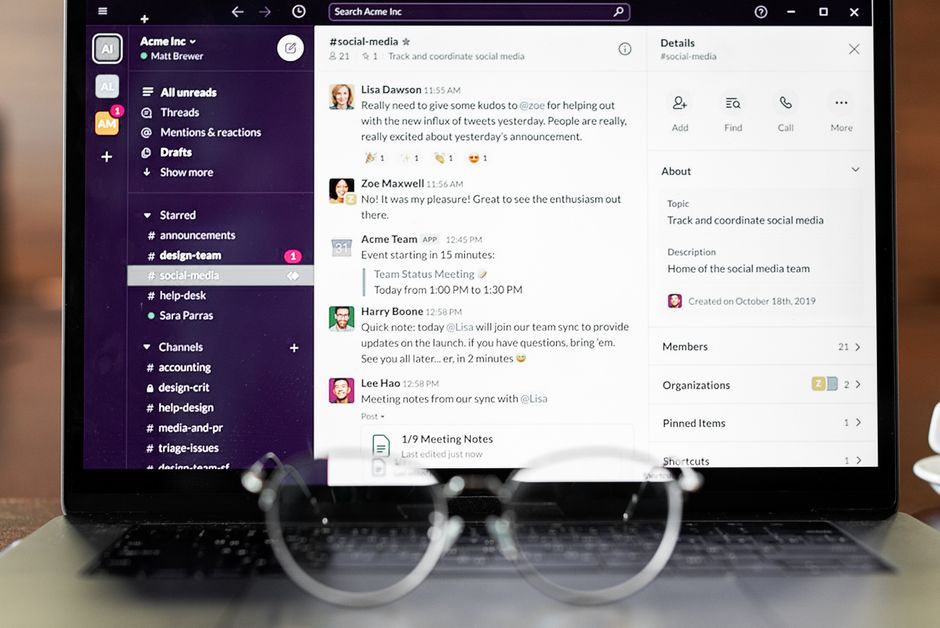
Stock photo for illustration only, not from the actual event
A crucial distinction is that a channel is not a secondary agent; rather, it functions as a transport mechanism paired with a rendering target. Developers write a message once, and the adapter lowers it into each platform's native format—such as Block Kit in Slack and Adaptive Cards in Teams—avoiding plain text blobs pushed through simple webhooks.
Responsibility is clearly split between the developer and the intelligence layer. Developers manage their agent, model credentials, tools, business logic, long-running Channels listener, application state, deployment, and logs. Meanwhile, Intelligence handles Slack and Teams platform credentials, platform ingress, credentialed delivery, runtime registration, health checks, and reconnections.
CopilotKit's decision to open-source the Channels SDK under an MIT license represents a strategic push to bridge the gap between backend AI agents and everyday workplace communication tools. By translating agent outputs into native interactive components like Adaptive Cards, developers can deliver richer and more contextual user experiences without building custom frontends for every single messaging platform.
The lifecycle is managed entirely by the runtime rather than explicit channel activation commands. The runtime exposes listeners for Node, Hono, and Express through subpaths like @copilotkit/runtime/v2/*. Furthermore, createChannel accepts comprehensive options including tools, context, components, commands, store, sanitizeAgentEvents, showToolStatus, and replyContinuation, allowing named JSX components to re-render and re-fire handlers seamlessly after a restart.
The feature set focuses heavily on threaded work environments. For instance, the approval pattern demonstrated in OpenTag intercepts every Linear and Notion mutation in code before executing MCP requests, emitting a confirm_write event and proceeding only upon explicit approval while keeping reads and rendering uninterrupted.
Source: MarkTechPost
Found something wrong in this article? Report an issue with this article
Comments
Leave a Comment