

AI Agents vs Chatbots: Why They Are Not the Same Thing
Explore the fundamental differences between traditional chatbots and intelligent AI agents that can plan, decide, and act autonomously.
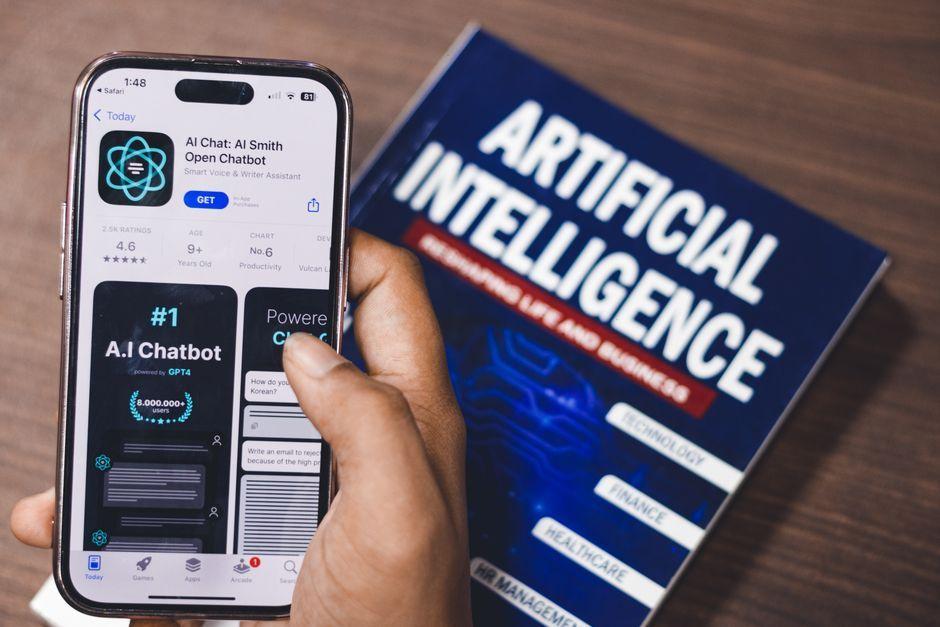
Stock photo for illustration only, not from the actual event
- Many people still use the terms chatbot and AI agent interchangeably despite big differences.
- Chatbots wait for direct instructions step-by-step and finish tasks immediately.
- AI agents can autonomously plan, make decisions, and interact with external tools.
- Choosing the right tool for the right task is essential in the age of AI.
A few months ago, when people mentioned artificial intelligence, most immediately thought of ChatGPT. Everywhere you look today, discussions revolve around AI Agents. Startups are raising millions around them, developers are integrating them into products, and suddenly everyone claims that agents represent the future.
Despite this massive hype, many people still treat chatbots and AI agents as if they share the exact same definition. In reality, grasping this distinction stands out as one of the most valuable concepts for anyone exploring the future of artificial intelligence. Traditional interactions follow a rigid pattern where a system responds only upon request and stops working the moment the task concludes.
Instead of asking ChatGPT to plan a vacation step by step by saying "Plan my five-day trip to Tokyo under $2,000," an AI agent begins executing the workflow immediately without asking further questions. It adjusts schedules if flights become unavailable and organizes everything into a single plan, bringing a much higher level of autonomy.
Understanding this evolution highlights a shift in software design from reactive rule-based responses to goal-oriented architectures. Agents do not necessarily possess a superior core language model, but rather an organized loop structure enabling sustained reasoning and planning.

Stock photo for illustration only, not from the actual event
The simplest way to differentiate them is that a chatbot waits for instructions after every single response, whereas an AI agent determines what the next step should be on its own. This mirrors the difference between asking someone for directions versus hiring a professional to manage your entire journey. Although systems vary, most AI agents follow a cyclical workflow centered around a core objective rather than just processing your latest prompt.
Humans naturally tackle large problems by breaking them down into manageable pieces, and agents mirror this by building their own workflows instead of waiting for constant guidance. Unlike traditional chatbots that only generate text, AI agents interact with external tools, allowing them to:
- Search for additional information and evaluate results independently.
- Modify search strategies if initial findings prove insufficient.
- Attempt alternative approaches when errors occur during execution.
This iteration capability gives agents a much stronger sense of autonomy compared to traditional chatbots. Think of a chatbot as a cook following a recipe, while an AI agent acts more like a restaurant manager keeping operations running smoothly. Many agents utilize large language models like ChatGPT under the hood, but the intelligence stems from how they organize resources, schedules, and decisions.
We already witness early versions of these agents transforming various industries. In software development, they generate code, run tests, identify bugs, and suggest improvements. In healthcare, they organize patient data and summarize complex medical records to assist clinicians. Businesses deploy them to automate customer support and analyze sales trends, while researchers use them to parse scientific literature.
These systems do not replace human expertise; instead, they serve as collaborative partners handling repetitive or time-consuming workflows. When you need a quick code explanation or an email draft, a chatbot remains the perfect tool. AI agents shine when tackling complex, multi-step problems requiring overarching planning, decision-making, and external system integrations.
Source: Dev.to
Found something wrong in this article? Report an issue with this article
Comments
Leave a Comment