

NVIDIA Releases Alpamayo 2 Super: A 34B Open VLA Model for Autonomous Driving
NVIDIA introduces a 34-billion parameter Vision-Language-Action model trained on 115,000 hours of driving video, featuring Chain-of-Causation reasoning for autonomous vehicles.
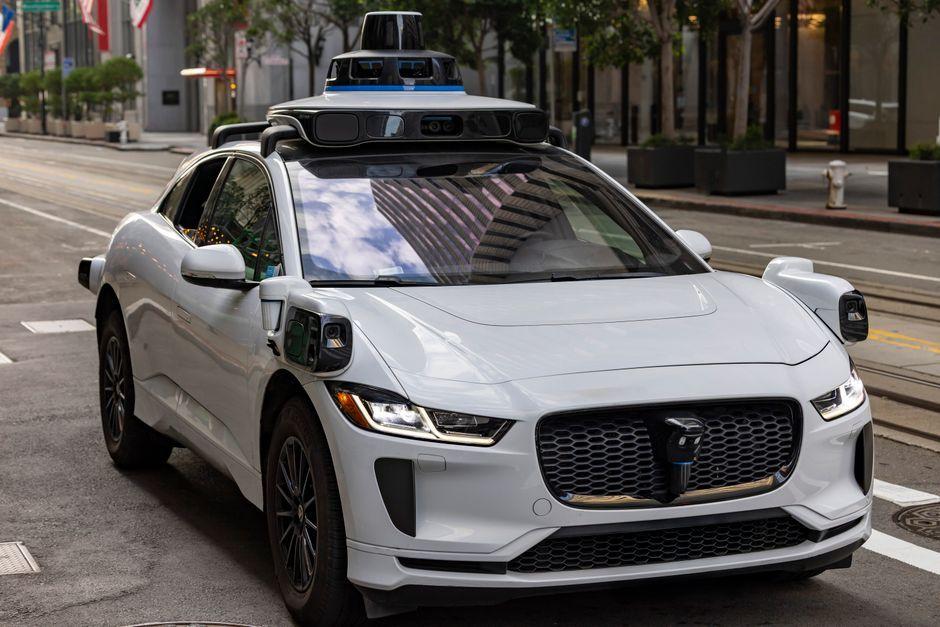
Stock photo for illustration only, not from the actual event
- Alpamayo 2 Super is a 34-billion parameter Vision-Language-Action model for robotaxis and autonomous driving.
- Inputs include multi-camera RGB video, text, and egomotion history with timestamps.
- Training data features approximately 115,000 hours of multi-camera driving video and over one billion images.
- Ranks first on LingoQA among nearly 40 evaluated models with a Lingo-Judge score of 79.2.
NVIDIA has announced the release of Alpamayo 2 Super, a 34-billion parameter (34B) Vision-Language-Action (VLA) model governed under the OpenMDW-1.1 license, built specifically for robotaxis and autonomous driving systems. The model takes inputs consisting of multi-camera RGB video, text, and egomotion history with timestamps. The validated public profiles utilize six cameras and four historical frames per camera, while the egomotion data comprises 3D translation along with a 3×3 rotation matrix across multiple timesteps.
The trajectory API provides 64 waypoints spanning a duration from 0.1 to 6.4 seconds at 0.1-second intervals, where each waypoint contains ego-frame XYZ coordinates and a 3×3 rotation matrix. The training dataset is exceptionally dense, encompassing roughly 115,000 hours of multi-camera driving video complete with egomotion and trajectory annotations. It also features about 3,700,000 Chain-of-Causation (CoC) traces—structured, causally linked explanations for driving decisions—alongside an image training dataset exceeding one billion images.

Stock photo for illustration only, not from the actual event
In benchmark evaluations, Alpamayo 2 Super demonstrated exceptional performance, recording a Lingo-Judge score of 79.2 on LingoQA and securing the top rank among nearly 40 evaluated models. According to NVIDIA's testing, the model outperformed Qwen2.5-VL 72B by 17.0 points, Gemini 2.5 Pro by 15.1 points, and GPT-4o by 23.2 points. Furthermore, planning evaluations showed robust quantitative results, with closed-loop evaluations using AlpaSim across 910 scenarios from the PhysicalAI-AV-NuRec dataset yielding an AlpaSim score of 1.50 ± 0.13, and open-loop evaluations across 937 challenging samples from the PhysicalAI-AV dataset achieving a minADE₆ at 6.4s of 0.911 meters.
For every driving scenario encountered, the model generates a trajectory, a CoC trace explaining the underlying decision, a meta-action such as yielding or changing lanes, reasoning auto-labels, and visual question answering equipped with 2D grounding. This unique combination makes the release operationally compelling, as developers can directly correlate what the model observed with the specific action it selected. The CoC traces integrate smoothly with NVIDIA Halos safety-validation workflows, supporting AI safety aligned with ISO/PAS 8800 standards.
The introduction of Alpamayo 2 Super highlights NVIDIA's focus on tackling the black-box challenge in autonomous systems. By pairing driving trajectories with explicit Chain-of-Causation reasoning traces, the model allows engineers to audit and interpret autonomous decision-making processes, which is a critical step toward meeting stringent safety certifications for public road deployments.
When deployed as an autolabeler on proprietary fleet data, NVIDIA reports that the model compresses annotation cycles from months down to a matter of days. Developers can explore the NVIDIA blog and Hugging Face model card for further technical documentation.
Source: MarkTechPost
Found something wrong in this article? Report an issue with this article
Comments
Leave a Comment