

Second White's VtoV 2000 Concept Gives the Electric Scooter a More Grown-Up Role
South Korean design agency Second White developed VtoV 2000 in 2023 as a conceptual electric scooter proposal presented to Hyundai.
Stock photo for illustration only, not from the actual event
- Second White developed VtoV 2000 in 2023 for Hyundai.
- Focuses on solving safety and order issues of electric scooters.
- Views scooters as part of an urban transit system, not isolated objects.
- Applies an 'only the essentials' philosophy to modern electric mobility.
South Korean design agency Second White developed VtoV 2000 in 2023 as a conceptual electric scooter proposal presented to Hyundai. Rather than introducing a production-ready vehicle, the unrealized project examines how the increasingly common kickboard could evolve into a safer and more credible component of future urban transportation.
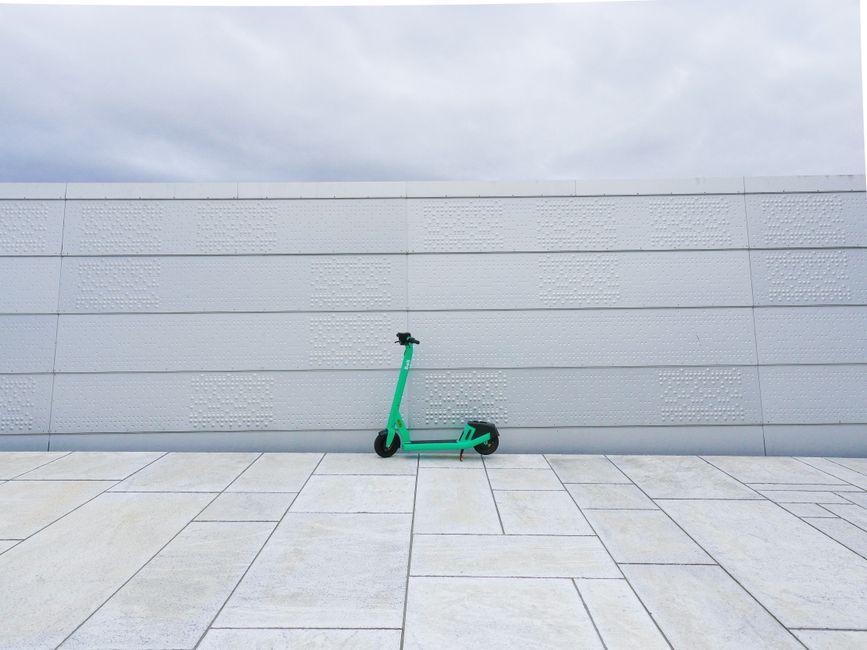
Electric scooters have become a familiar answer to the last-mile problem, offering an affordable and relatively low-impact alternative to cars and motorcycles for short journeys. Their rapid spread, however, has also introduced accidents, uncertain road etiquette, and pavements dotted with abandoned vehicles, proving that convenience occasionally comes with handlebars.
Stock photo for illustration only, not from the actual event
VtoV 2000 responds to these contradictions by considering the scooter as part of a wider mobility system rather than as an isolated consumer object. Second White identifies usability and safety as essential areas for development if electric kickboards are to play a larger role in reducing congestion, limiting urban air pollution, and connecting different forms of public and private transport.
This conceptual approach highlights that the primary challenge of electric scooters in metropolitan areas is not battery technology or motor performance, but rather urban coexistence and behavioral design. Pitching such a concept to a major automaker demonstrates a broader industry shift where personal transport must seamlessly integrate with mass transit networks rather than compete against public space.
The concept therefore focuses less on celebrating personal mobility as an end in itself and more on questioning how it might coexist with pedestrians, cyclists, cars, and the surrounding city. By addressing the social problems that have accompanied the scooter's popularity, the proposal imagines a future in which the vehicle becomes more deliberate, dependable, and less likely to appear sideways across an entrance.
Source: designboom
Found something wrong in this article? Report an issue with this article
Comments
Leave a Comment