

Editorial Exposes Gray-Market Chinese Capital Infiltrating Thai Universities
University council member reveals exploitation schemes in higher education, prompting urgent investigation by Ministry of Higher Education.

Stock photo for illustration only, not from the actual event
- University council member exposes gray-market Chinese capital infiltration
- Suspicious fast-track degree programs target 9th-grade grads with hiked tuition
- Fears grow that academic programs act as channels for illegal visa loopholes
- Minister Yoschanan Wongsuwan orders urgent ministry and security checks
A recent revelation by a university council member regarding gray-market Chinese capital infiltrating higher education institutions has raised serious alarms across Thai society. The allegations point to severe abuses, including unauthorized signing of memorandums of understanding with Chinese investor groups without council approval, alongside poor governance and corruption within the institution. These developments highlight an urgent need for state intervention and rigorous oversight.
Of particular concern is the creation of specialized curricula designed to attract Chinese students through aggressive marketing. Advertisements claim that students who have completed just the 9th grade can earn a bachelor's degree in only five years, with tuition fees set at rates several times higher than standard programs. Allegations suggest that the massive financial discrepancies are funneled into student management or even paying for thesis ghostwriting. If proven true, these practices severely damage academic standards and distort the true value of university degrees.
This phenomenon illustrates how transnational illicit networks adapt by exploiting administrative vulnerabilities within academic institutions. When higher education infrastructure is co-opted for illicit residency, the threat extends beyond academic corruption to national sovereignty and border security management, requiring cross-agency intelligence cooperation.
Furthermore, suspicions loom that these educational programs are being exploited as proxies to secure student and dependent visas, enabling foreign nationals to reside or conduct illegal businesses in Thailand. This threatens to turn universities into gateways for unlawful operations. Compounding the issue are reports of internal coercion, retaliation against whistleblowers, and data concealment, indicating that the breakdown in institutional governance goes far beyond a single curriculum.
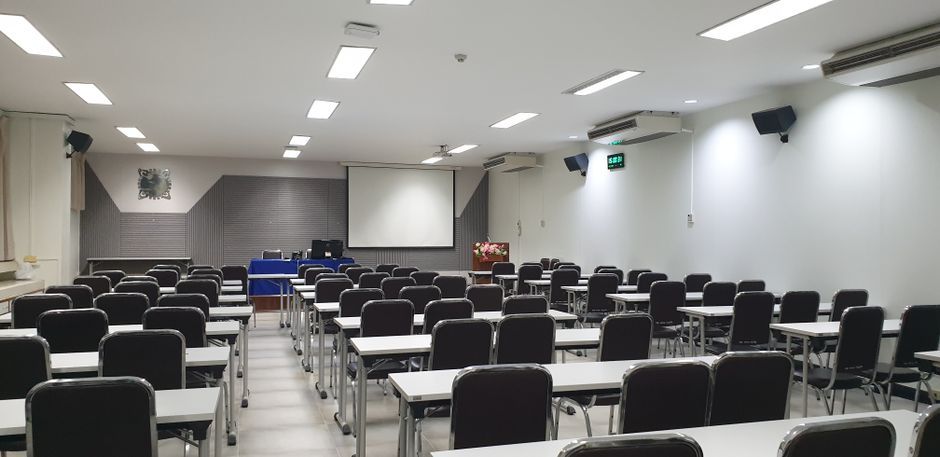
Stock photo for illustration only, not from the actual event
The scandal threatens not only the reputation of a single university but also the integrity of Thailand's entire higher education framework, national security, and the trust of legitimate international students. In response, Yoschanan Wongsuwan, Deputy Prime Minister and Minister of Higher Education, Science, Research and Innovation (MHESI), has directed the Office of the Permanent Secretary to swiftly investigate the facts, scrutinize foreign student admissions and visa issuance, and coordinate closely with national security agencies.
If wrongdoing is uncovered, strict legal action must be enforced without exception. Crucially, investigations must be expanded to determine whether other higher education institutions are engaging in similar practices, ensuring universities remain dedicated to building knowledge and the nation's future.
Source: Khaosod Politics
Found something wrong in this article? Report an issue with this article
Comments
Leave a Comment