

Adaptive Experimentation with Meta's Ax
A practical coding guide on utilizing Meta's Ax framework for hyperparameter tuning and machine learning optimization.
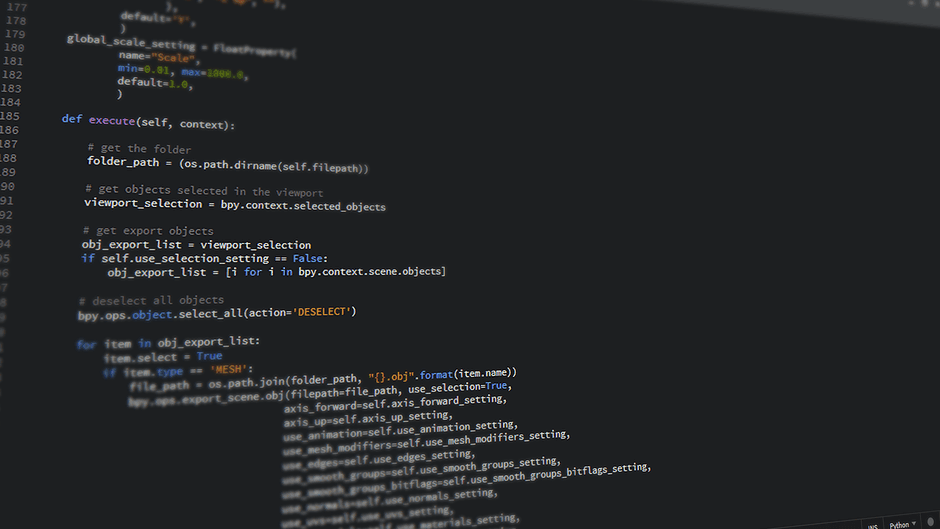
Stock photo for illustration only, not from the actual event
- Setting up the Google Colab environment and required packages
- Leveraging Ax to handle mixed-type search spaces and constraints
- Generating analyses and persisting experiment states to JSON files
Getting started with adaptive experimentation using Meta's platform begins by preparing the Google Colab environment and installing core dependencies such as ax-platform and scikit-learn. Essential libraries for optimization, machine learning, plotting, and logging are imported to ensure the notebook outputs remain focused and clean.
The code setup incorporates key modules including RandomForestClassifier and StratifiedKFold alongside a fixed random seed via numpy.random.seed(0) to guarantee reproducibility. Warnings and Ax logger configurations are also adjusted to keep the experimental results streamlined.
Utilizing platforms like Ax allows data scientists and developers to systematically navigate complex hyperparameter tuning challenges, particularly when dealing with mixed-type search spaces that combine numerical and categorical variables which traditionally hinder standard workflows.

Stock photo for illustration only, not from the actual event
Subsequent steps involve leveraging Ax's built-in analysis tools to generate diagnostic cards such as sensitivity analyses and cross-validation insights when supported by the environment. The completed experiment is then saved into a JSON file and reloaded to verify that optimization states are properly preserved.
Ultimately, this practical guide equips practitioners with the ability to handle constrained mixed-type optimization, evaluate trade-offs through multi-objective optimization, and utilize persistence features to enhance the interpretability and reproducibility of machine learning workflows.
Source: MarkTechPost
Found something wrong in this article? Report an issue with this article
Comments
Leave a Comment