

Children's Right to Play: When Architecture and Big Cities Must Rethink Spaces of Growth
Exploring a new perspective on the right to play under the convention, a special scoop showing that play is not trivial, but rather the heart of a child's life that cities and architecture often overlook.
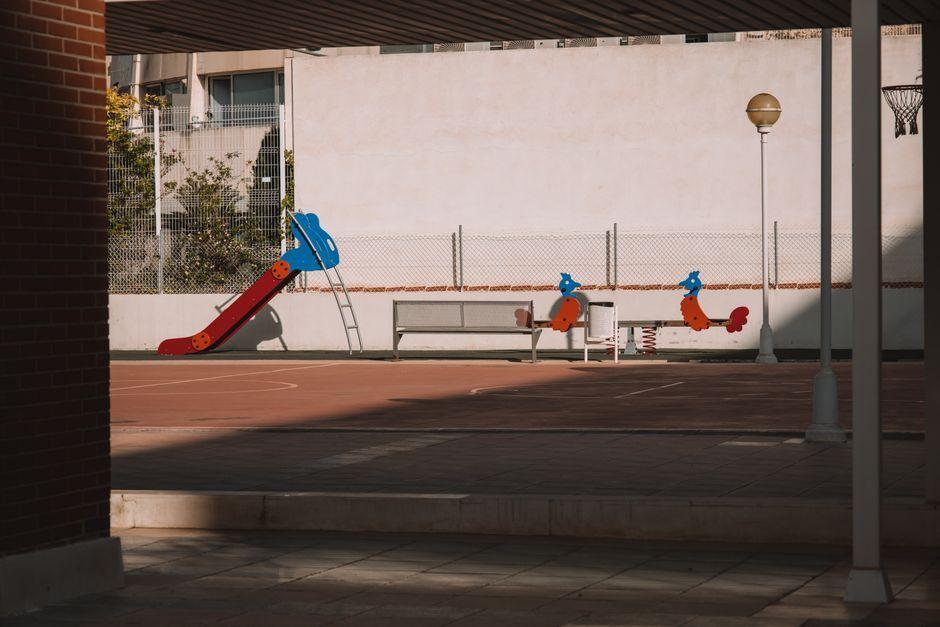
Stock photo for illustration only, not from the actual event
- The article explores a new perspective that play is a fundamental legal right, not just developmental toys.
- Questions the urban environment and refugee camps where play is often treated as secondary.
- References concepts from the book Children’s Right to Play by Stuart Lester and Wendy Russell.
- Highlights examples of playground design from the past to the present, such as Aldo van Eyck and CatalyticAction.
Walking through a major city, it becomes clear what society values. Streets are built for cars to move, hospitals are designed for healing, and parks are arranged for relaxation. Yet amidst this urban planning, one fragile aspect of childhood is consistently overlooked: the right to play.
Play is often viewed as something that happens only after other urgent needs are met—be it a cramped playground in a housing development or a short break between classes. Especially in humanitarian zones where the focus must remain on shelter, food, water, and medicine, play is all the more dismissed as distant.
However, the perspective of international law tells a different story. Since 1989, Article 31 of the United Nations Convention on the Rights of the Child (UNCRC) has recognized every child's right to education, protection, healthcare, as well as rest, leisure, and play. The convention's framework does not view play as a reward or a luxury, but as a fundamental component of childhood.
Article 31 of the United Nations Convention on the Rights of the Child (UNCRC) is considered a major international legal milestone, pushing for play to be more than just an option and establishing a foundation where governments worldwide must recognize the rights children deserve equally, beyond basic necessities for living.
This concept aligns with conversations across various fields—psychology, architecture, urban design, and contemporary art—which view play not as a distraction from learning, but as the primary way children build resilience, cope with uncertainty, negotiate social relationships, and understand the world.
In the book Children’s Right to Play by Stuart Lester and Wendy Russell, it is argued that play should not be seen merely as preparation for adulthood, but as a vital part of life. Self-directed, free play allows children to explore uncertainty and test emotional and social boundaries in ways that spoken language cannot fully convey.
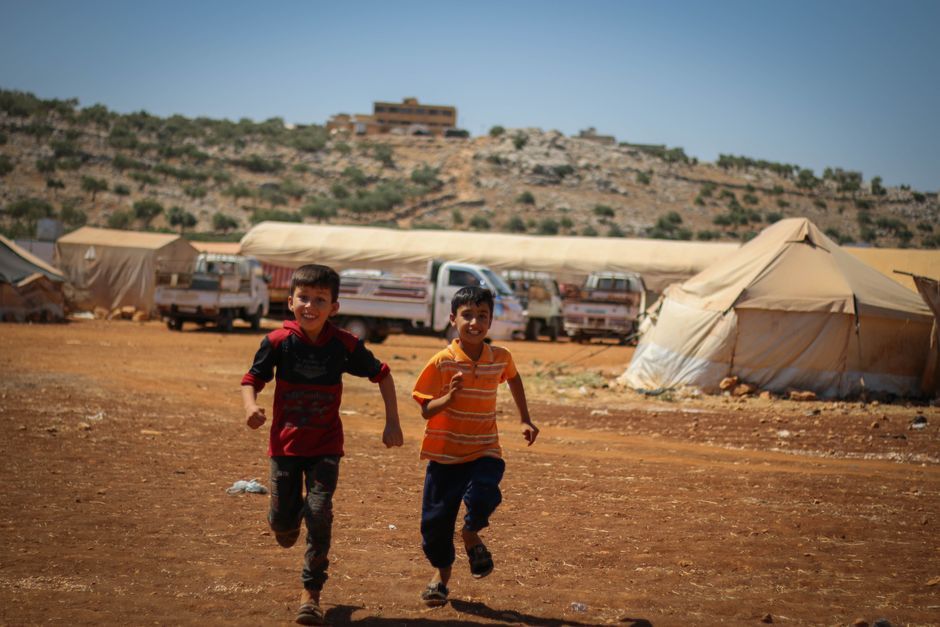
For children affected by conflict, displacement, natural disasters, or social instability, the need to play does not diminish. On the contrary, its role is critically important in helping children reclaim a sense of ownership over their lives, establish routines, and restore social connections.
"Time, freedom, safety, social interaction, and an environment full of possibilities matter far more than pre-determined activities or complex equipment."
Stuart Lester and Wendy Russell
Looking back, children once found spaces to play anywhere—streets, courtyards, riverbanks, or empty lots. But as cities densified and traffic grew heavy, these spaces steadily dwindled until reformers and educators began to argue that play deserved protection.
During the post-World War II era, architect Aldo van Eyck in Amsterdam distributed hundreds of small playgrounds into vacant lots and corners of the city, using simple equipment like climbing domes, sandpits, stepping stones, and low rails, without prescribed paths or forced games, allowing children to decide for themselves how to play.
Source: designboom
Found something wrong in this article? Report an issue with this article
Comments
Leave a Comment