

Athletes from bankrupt track league have now been paid, says Michael Johnson
Four-time Olympic champion Michael Johnson speaks publicly for the first time since Grand Slam Track filed for bankruptcy, confirming that all competing athletes have now received their payments.
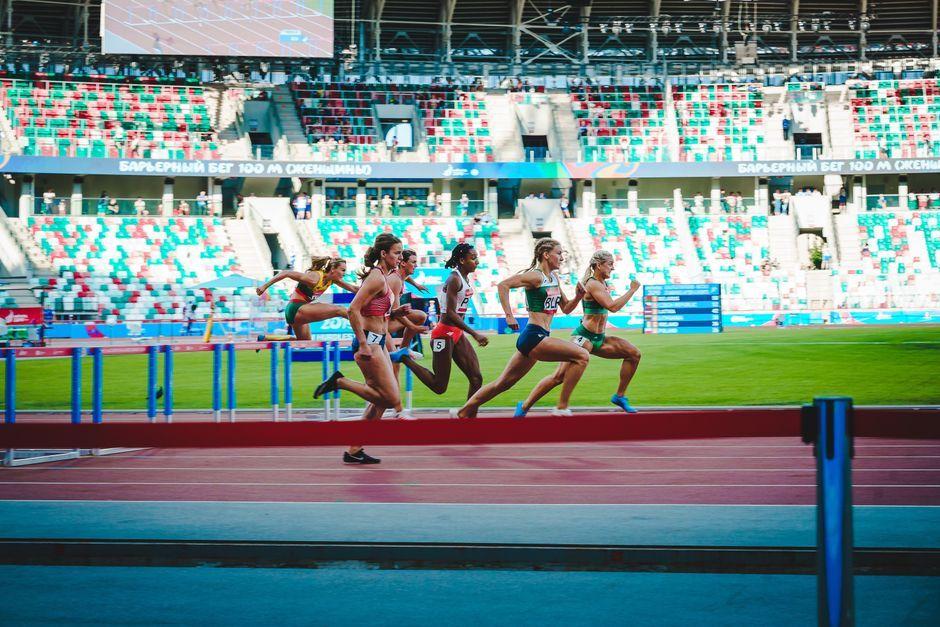
Stock photo for illustration only, not from the actual event
- Michael Johnson breaks silence following the bankruptcy of Grand Slam Track
- Confirms all athletes previously owed money have now been fully paid
- Explains severe cash-flow issues that led to using personal credit cards and a $2m loan
- Admits questioning of his integrity and motives was the hardest part of the ordeal
Four-time Olympic champion Michael Johnson has spoken publicly for the first time since the Grand Slam Track league went bankrupt, clarifying the intricate details regarding payments made to both himself and the competing athletes.
Contracted runners had been promised lucrative salaries and prize money during the competition's inaugural season last year. However, the final event scheduled in Los Angeles was abruptly cancelled, and organizers voluntarily filed for bankruptcy in the United States in December 2025. Several high-profile athletes were left owed sums exceeding £100,000, including British former world 1500m champion Josh Kerr and 2024 Olympic 400m silver medallist Matthew Hudson-Smith.
The Association of Athletics Managers, representing a number of competitors, reported back in January that Grand Slam Track had accumulated debts exceeding $30m, equivalent to roughly £22.5m.
Detailing the financial strain, Johnson explained that the company credit card reached its absolute limit due to severe cash-flow constraints. Organizers needed to fly 96 athletes alongside their companions to Miami and Philadelphia, as well as house 170 people in hotels across both cities.
"Our credit card was full at Grand Slam Track, because we were facing significant cash-flow issues. We had 96 athletes, plus companions, whom we needed to fly to Miami and Philadelphia. We had 170 people to house in hotels in both cities, and the credit card had no room left."
Michael Johnson
Johnson noted that he instructed the travel team to charge the expenses to his personal credit card with the agreement of future reimbursement. Furthermore, he stepped in by loaning the company $2m to guarantee that the athletes were properly looked after, choosing to entirely forgo his own salary.

Stock photo for illustration only, not from the actual event
The collapse of Grand Slam Track highlights the high-stakes financial realities facing alternative professional sports leagues attempting to disrupt traditional athletic circuits. Heavy reliance on initial liquidity and massive upfront investments to secure elite talent can create severe vulnerabilities if projected revenue streams fall short. The founder's decision to personally absorb financial liabilities underscores the fragility of startup sports business models when economic headwinds hit.
Back in March, Johnson stated that he would repay the $500,000 to Grand Slam Track, describing the public scrutiny as deeply painful. "That was the most difficult part of this. Questioning my motivation for doing this, questioning my integrity, questioning my character," he remarked. Johnson has served as a pundit and commentator for the BBC since 2001, though he paused his broadcasting duties following the Paris 2024 Olympic Games to focus entirely on building Grand Slam Track.
Source: BBC Sport
Found something wrong in this article? Report an issue with this article
Comments
Leave a Comment