

Ireland Set for Major Partial Solar Eclipse and Perseid Meteor Shower
Skywatchers across the island of Ireland are gearing up for a deep partial solar eclipse blocking over 90% of the sun on Wednesday evening, followed by the peak of the Perseid meteor shower.
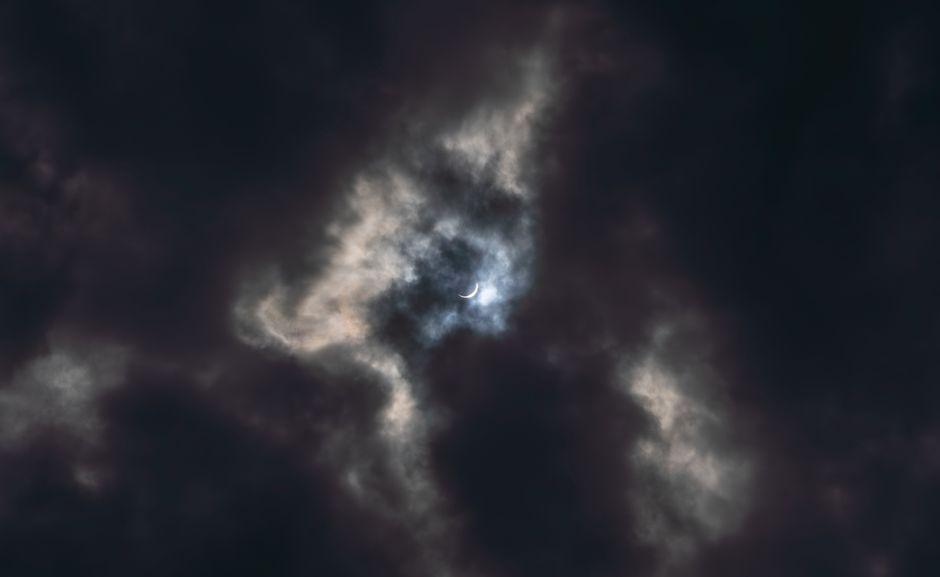
Stock photo for illustration only, not from the actual event
- Island of Ireland to experience a major partial solar eclipse covering over 90% of the sun this Wednesday evening.
- Skellig Michael off the County Kerry coast will see the highest obscuration at 98.01%.
- This is the largest solar eclipse visible on the island until September 2090.
- The Perseid meteor shower will peak later that night with favorable moonless conditions.
Astronomy enthusiasts across the island of Ireland are preparing to witness two major celestial spectacles next week, kicking off with a deep partial solar eclipse followed closely by the peak of the Perseid meteor shower overnight.
The solar event will take place during the early evening on Wednesday, obscuring more than 90% of the sun across Ireland. This marks the most significant solar eclipse visible from the island until September 2090. Meanwhile, travelers vacationing abroad, particularly in Spain, will have the opportunity to view a total eclipse. To cap off an eventful month, a lunar eclipse will also be visible in two weeks, making August an extraordinary period for stargazers.
The cosmic event is scheduled to begin at approximately 18:10 BST, though exact timings will vary depending on the specific location.
At the peak of the phenomenon, viewers located in Belfast can anticipate 93.05% of the sun to be covered by the moon, while those in Londonderry will experience 93.77% coverage. In Cork, the sun will be obscured by 96.43%. Skellig Michael, situated off the County Kerry coast, will experience the highest level of blockage at approximately 98.01%. Additional timings for the Republic of Ireland include Limerick starting at 18:13, peaking at 19:12, and ending at 20:07 with 96.03% coverage, alongside Skellig Michael starting at 18:14, peaking at 19:13, and ending at 20:09 with 98.01% coverage.
"It should get noticeably darker. Even though more than 90% of the sun will be covered, it will still be kind of bright, but it should seem like you're under some thick cloud."
Dr. Rok Nežič from Armagh Observatory and Planetarium
Stock photo for illustration only, not from the actual event
A partial solar eclipse of this magnitude is a rare event for the region, as lunar shadow paths frequently cross open oceans or remote territories. The fact that the island of Ireland will not experience another eclipse exceeding 90% coverage until 2090 highlights the astronomical significance of this occurrence. Combined with the peak of the Perseids during a new moon phase—which eliminates disruptive moonlight—clear skies will remain the deciding factor for successful observation.
Astronomers have issued strict warnings advising people never to gaze directly at the sun during a partial eclipse. Even when the majority of the star is obstructed, the remaining visible section remains intense enough to cause permanent eye damage. Observers should utilize certified eclipse glasses for direct viewing, though these must never be used while looking through binoculars or telescopes.
Alternatively, people can watch safely by projecting an image of the sun onto a white card using a telescope, a cereal box pinhole viewer, or even a kitchen colander. Experts have also strongly advised against pointing unfiltered smartphones or digital cameras directly at the sun, as the powerful light can easily ruin camera sensors.
Several hours later, the Perseid meteor shower will reach its zenith later in the night and continue overnight into Thursday. Because it coincides with a new moon, moonlight will not interfere with visibility, establishing optimal viewing conditions provided skies remain clear. The Perseids originate from tiny dust and rock fragments left behind by comet Swift-Tuttle. When these particles plunge into Earth's atmosphere at high velocities, they heat the surrounding air and produce brief streaks of light.
Observers are encouraged to seek out dark locations away from streetlights and allow at least 10 minutes for their eyes to adapt to the dark. Telescopes and binoculars are entirely unnecessary, and under ideal skies, roughly 100 meteors per hour can be spotted streaking across the night sky.
Source: BBC Science & Environment
Found something wrong in this article? Report an issue with this article
Comments
Leave a Comment