

IBM Reports 42% Drop in Mainframe Sales, Blames AI Trend for Temporary Budget Interruption
IBM announces latest quarter earnings below expectations after mainframe sales plummet as clients shift budgets to buy high-priced hardware driven by the AI boom, while reaffirming it is not the end of the system.
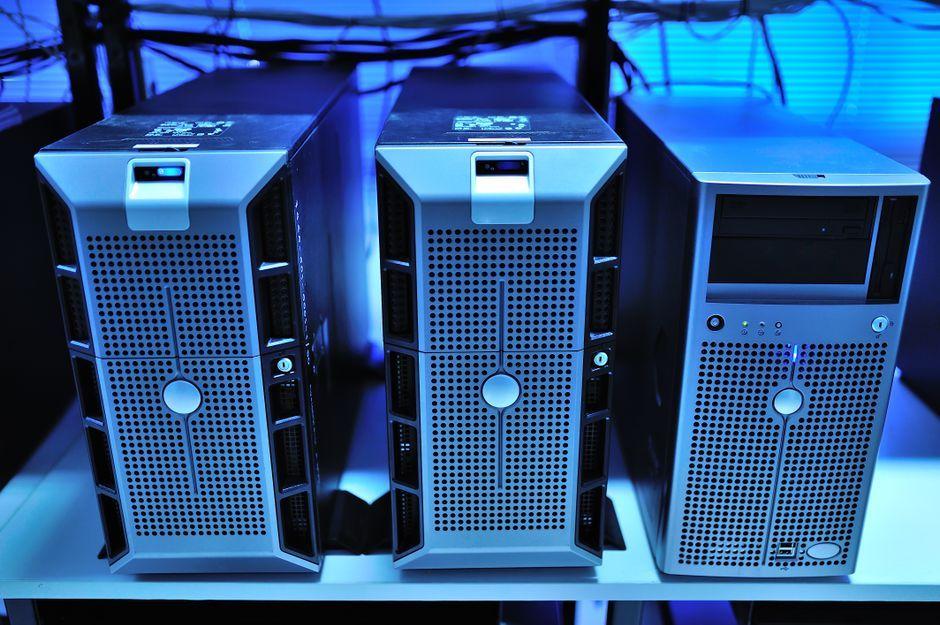
Stock photo for illustration only, not from the actual event
- IBM's mainframe sales plummeted by 42% in the latest quarter
- Enterprise clients reallocated budgets to purchase other hardware whose prices surged by 15% to 30%
- Executives assure that the issue is merely a temporary hiccup and no clients are migrating away from the system
The 115-year-old IT giant IBM faced a difficult quarter after revealing its financial figures last Wednesday. Although the company still generated total revenue as high as $17.2 billion, a gross profit of $9.9 billion representing a profit margin of nearly 58%, and a net profit of $2.2 billion this quarter, all figures still fell significantly short of Wall Street expectations.
This downturn led CEO Arvind Krishna and the board to warn investors ahead of the official announcement that financial results were worse than projected, while also lowering their full-year growth outlook. The main cause was the mainframe business—a vital revenue source for the company—which saw a 42% sales drop. This triggered a cascading effect because, from a business standpoint, IBM can generate $3 in software revenue for every $1 of mainframe hardware sold, according to an explanation by CFO Jim Kavanaugh.
Top executives Arvind Krishna and Jim Kavanaugh clarified during the investor meeting that this event is merely a temporary hiccup. A few dozen enterprise clients who were scheduled to purchase new mainframe machines this quarter decided to postpone their purchases. Although the number of clients is small, mainframe systems carry high values ranging from hundreds of thousands to millions of dollars and continue to generate massive ongoing revenue from maintenance contracts and software.

The artificial intelligence, or AI, boom crisis has become a double-edged sword that both supports and pressures IBM's business simultaneously. Those clients chose to allocate their budgets toward purchasing other types of hardware instead, as they faced rapidly soaring prices for data center equipment and PCs surging by 15% to 30%. CEO Arvind Krishna stated that when clients faced these sky-high prices, they decided to divert budgets to those urgently needed areas. This aligns with major hardware manufacturers like Dell, HP, and Apple, who previously stated that higher memory component costs driven by the AI trend made it necessary for them to raise prices as well.
"When they were faced with that issue, then they decided to move budget to those areas where they were having that extreme price"
Arvind Krishna
The temporary slowdown in high-priced hardware such as mainframes reflects that global enterprise IT budgets in the AI era are being reprioritized to accommodate rising infrastructure costs. Despite short-term figures dropping, mainframe systems still play a crucial role in the back-end systems of large enterprises, making system migration difficult and time-consuming.
Nevertheless, Arvind Krishna pledged that these client groups will definitely return to purchase new mainframes and execute software contracts in the near future, and revealed that some clients have already started resuming transactions this quarter. He also reiterated that the company found no evidence indicating that clients are gradually phasing out mainframe systems.
Source: TechCrunch
Found something wrong in this article? Report an issue with this article
Comments
Leave a Comment