

Meta AI Releases Muse Glimmer: A 30B Open-Weights Agentic Model That Runs on Consumer GPUs
Meta launches Muse Glimmer, a 30B open-weights agentic model under Apache 2.0 license, capable of running locally on consumer hardware.

Stock photo for illustration only, not from the actual event
- Meta launches Muse Glimmer, an open-weights 30B model under Apache 2.0 license.
- Compresses language weights under 20 GB, fitting into 24 GB or 32 GB consumer VRAM.
- Delivers a 3.1x speedup on an RTX 5090 using the DFlash block-diffusion drafter.
- Leads competitors in reasoning and agentic orchestration benchmarks.
Meta AI has released Muse Glimmer, a dense causal transformer artificial intelligence model with 30 billion parameters featuring a dedicated perception encoder. The model weights are openly available on Hugging Face under the Apache 2.0 license, including BF16 weights, GGUF k-quants, ExecuTorch builds, and the DFlash drafter, enabling immediate self-hosting paths for developers.
The underlying architecture utilizes grouped-query attention with 32 query heads and 2 KV heads, following a [Local, Local, Local, Global] attention pattern with a 2,048 sliding window. Rotary Position Embedding (RoPE) is applied solely to local layers with a theta value of 500,000. On the vision side, a ~1.8B ViT-G/14 perception encoder accepts up to 4,096 visual tokens per image. The model supports a context length of 131,072+ tokens, a vocabulary size of 202,048 tokens, and a knowledge cutoff of January 4, 2026, taking text and images as inputs while processing video as individual frames without native audio support.
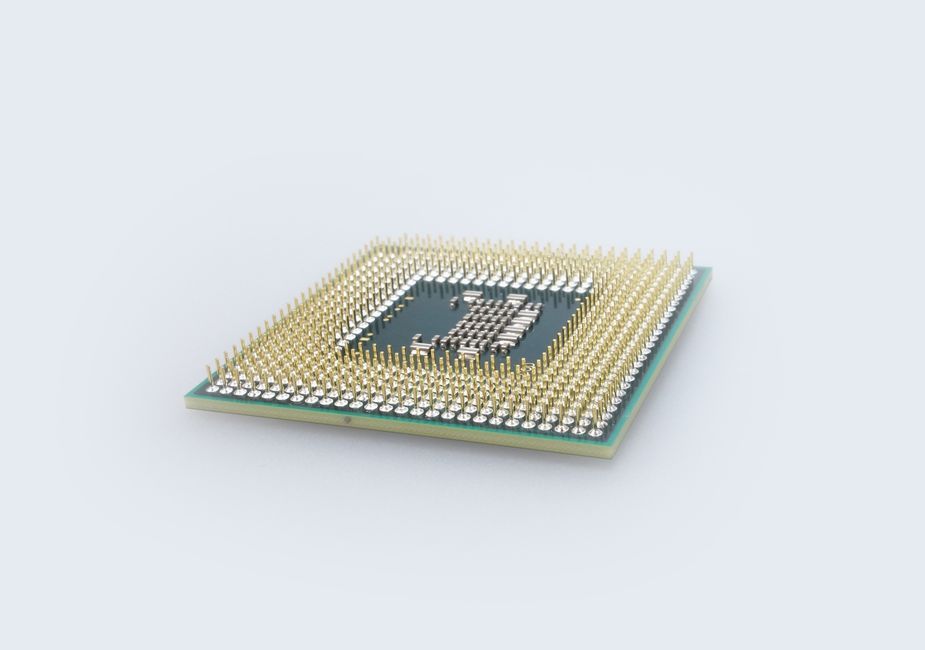
Stock photo for illustration only, not from the actual event
At full precision, the model requires over 55 GB of memory. However, Meta compresses the weights down to approximately 4-bit precision, reducing the language model footprint to under 20 GB. This leaves sufficient headroom within 24 GB or 32 GB hardware envelopes, shared among the KV cache, perception encoder, and drafter. Two quantized builds are provided: K-Quant-Dynamic targets 32 GB VRAM with an average accuracy degradation of 0.2%, while K-Quant-17GB targets 24 GB VRAM with a 1.0% degradation averaged across 15 common benchmarks.
By compressing a 30B model to fit comfortably within consumer-grade graphics cards, Meta is significantly lowering the hardware barrier for running advanced open-source AI models locally. This approach democratizes access for developers and researchers who require powerful agentic workflows without relying on costly enterprise cloud infrastructure.
Generation speed is accelerated by DFlash, a block-diffusion drafter that predicts 16 tokens in a single forward pass, allowing the main model to verify the block in parallel. The drafter utilizes 5 layers, a 2,048 sliding-window attention, and 32 query / 8 KV heads. Tested by Meta on K-Quant-17GB at batch size 1 with greedy decoding using an RTX 5090, throughput surges from 74.9 to 233.4 tokens per second, representing a 3.1x speedup. Meanwhile, Apple M5 Max rises from 26.6 to 50.2 tokens per second, and M4 Max increases from 23.7 to 37.8 tokens per second.
"The pattern is consistent. Muse Glimmer wins on agentic orchestration and reasoning. It trails on computer-use and terminal work."
Meta AI
When benchmarked against Gemma4-31B and Qwen3.6-27B in thinking mode, Muse Glimmer achieves top scores on MCP Atlas at 75.5 compared to 54.2 and 62.5. It also leads on DeepSearch QA at 74.6, Gaia2 at 43.3, and SWE-Bench Pro at 51.2, alongside strong reasoning scores including AIME 2026 at 94.7, IFBench at 77.0, and AA-LCR at 80.0. Conversely, Qwen3.6-27B remains ahead on OSWorld-Verified at 65.9 versus 65.9, TerminalBench 2.1 at 60.7, and SWE-Bench Verified at 77.2. Regarding safety, the Siren AgentDojo attack success rate sits at 28.4 with a utility score of 94.2, and Meta reports the model falls below the Frontier AI definition under its Advanced AI Scaling Framework.
Source: MarkTechPost
Found something wrong in this article? Report an issue with this article
Comments
Leave a Comment