

Parallel Coding Agents Need Handoffs, Not More Terminals
Running multiple AI coding sessions creates file conflicts and communication overhead, turning developers into human message buses.

Stock photo for illustration only, not from the actual event
- Running two or three coding sessions concurrently leads to file conflicts and overlapping tasks.
- Developers are forced to act as manual message buses, switching terminal panes and copying commit IDs.
- Claude Code now features cross-session messaging and local sockets to build better coordination foundations.
- The real solution is a local control desk forcing each session to declare goals, files, and expected results.
Running two or three coding-agent sessions is easy, but knowing when their work is safe to combine is not. One session changes an API while another writes regression tests against the old shape, and a third investigates a production failure while quietly editing the same configuration file. Git worktrees prevent immediate filesystem collisions, but they do not explain task dependencies, transfer assumptions, or warn that two agents are solving incompatible versions of the problem.
As a result, the developer becomes a human message bus: checking terminals, copying commit IDs, repeating context, and deciding which session should wait. The more capable each agent becomes, the less useful a wall of terminal panes is as a coordination interface.
Claude Code now supports messaging between sessions on the same machine. Its documentation describes session discovery, plain-text messages, and a local messaging socket. Agent view separately exposes background-session state, worktrees, pull-request status, and a JSON listing suitable for scripts, while hooks can observe tool input and block a tool call before execution.
The integration of native cross-session communication indicates that the primary bottleneck in AI-assisted development has shifted from raw model capability to workflow coordination among multiple active agents. Implementing a structured control layer is vital to reducing human cognitive overload.
That does not prove demand for a new product, but it does create a concrete implementation moment. The primitives for handoffs and visibility exist, while dependency ownership and conflict negotiation remain a workflow problem. The useful product is not another chat window, but a small local control desk that makes each session declare four things: its goal, worktree, files it expects to touch, and the result another session is waiting for.
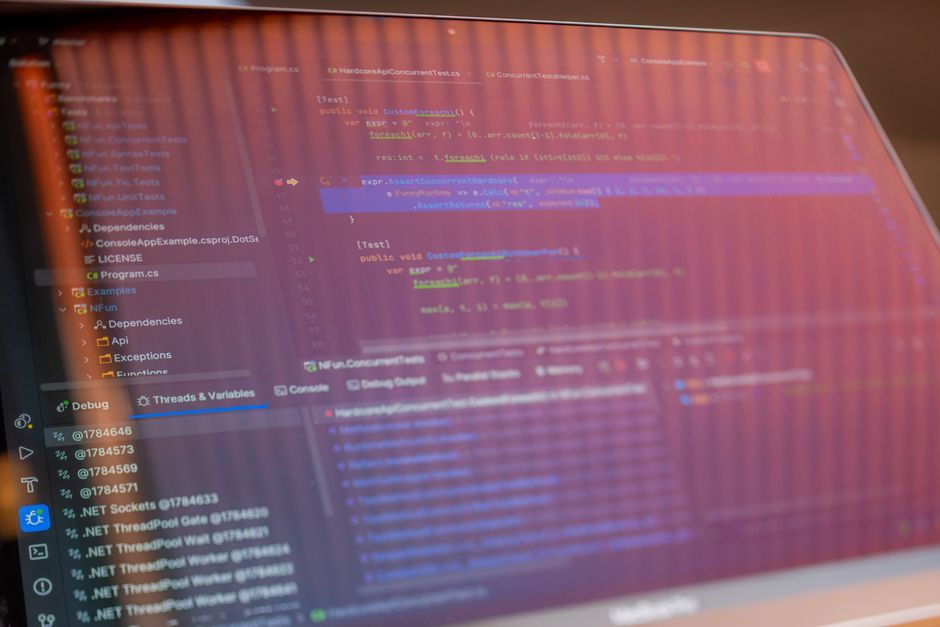
Stock photo for illustration only, not from the actual event
When the API session finishes, the testing session should receive a compact handoff containing the commit, changed contract, verification target, and unresolved assumptions. If the tests cannot proceed yet, that dependency should be visible as a blocked edge rather than buried in prose. Completed work should land in a review queue with test output and a diff summary, not disappear into a terminal scrollback.
A practical implementation starts with one developer, one repository, Claude Code, and Git worktrees. A local daemon can read the session list, register roles through session-start hooks, and collect commits plus test output when work finishes. Cross-session messages carry only structured handoffs: producer, consumer, dependency, commit, expected behavior, and open question.
For conflict prevention, begin with advisory file leases. Before an editing tool runs, a hook checks whether another active session has declared the same file. If so, it returns the owner, task, and suggested alternatives: wait, negotiate ownership, or work on a different file. Do not attempt automatic merging or function-level locking in the first release.
Source: Dev.to
Found something wrong in this article? Report an issue with this article
Comments
Leave a Comment