

Once-in-a-generation solar eclipse wows millions in UK and Europe
Millions across the UK and Europe witnessed their most dramatic solar eclipse in nearly 30 years, featuring a partial show and total darkness in Spain.
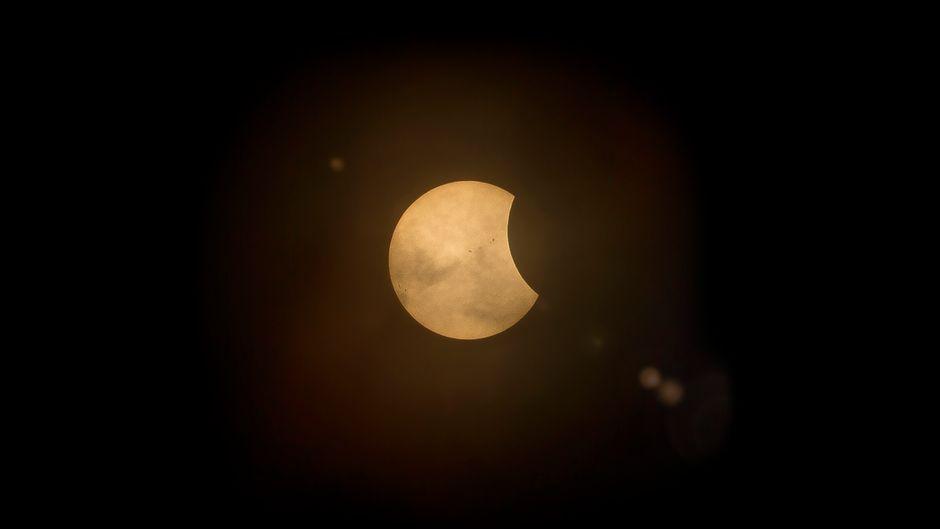
Stock photo for illustration only, not from the actual event
- Millions across the UK and Europe witnessed their biggest solar eclipse in nearly 30 years.
- The UK experienced a partial eclipse with over 90% of the Sun covered by the Moon, peaking at 95% in Cornwall.
- Greenland, Iceland, and parts of Spain experienced complete darkness during a total eclipse.
- Specialized eyewear sold out everywhere, prompting crowds to improvise with colanders and cereal boxes.
The UK and continental Europe have enjoyed their most dramatic solar eclipse in nearly 30 years, with millions believed to have witnessed the once-in-a-generation astronomical spectacle. Observers watching the phenomenon from the UK were treated to a partial eclipse that peaked shortly after 19:00 BST, when the vast majority witnessed more than 90% of the Sun blocked by the Moon.
However, regions including Greenland, Iceland, and Spain experienced the complete darkness and visual spectacle of a total eclipse. Large crowds gathered at viewing sites across the UK and Europe reacted with gasps and cheers, with astronomy enthusiasts noting that the event served as a striking reminder of how extraordinary the universe is. The path of the total eclipse originated far away at the northern tip of Siberia in Russia before curving around the Arctic Ocean to arrive in Iceland during the early evening and sweeping south toward the UK.
The partial eclipse began around 18:00 BST in northern Scotland and just before 18:20 BST along the south coast of England. Initially imperceptible, the event became clear for those blessed with cloud-free skies as crowds watched the Moon take bites out of the solar disk. Much of central and southern England, along with Wales, enjoyed perfect clear weather, providing an unobstructed view of the Moon slowly crossing the Sun over the course of an hour.
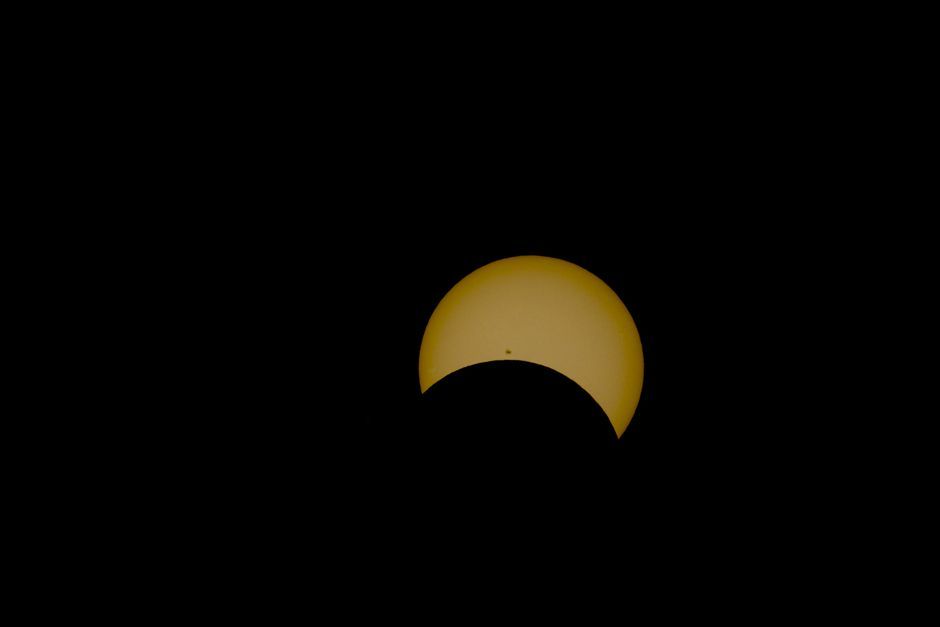
Stock photo for illustration only, not from the actual event
Northern England, Scotland, and Northern Ireland encountered cloudier conditions, though that did not stop enthusiastic crowds from turning out at famous landmarks. While some successfully secured solar eclipse glasses, the vital protective gear was critically in short supply ahead of the event, with opticians, hardware stores, and bakeries completely selling out. Undeterred, people improvised by deploying kitchen colanders, cereal boxes, and sheets of paper to safely catch a glimpse of the partial eclipse.
A solar eclipse occurs when the Moon passes directly between the Sun and Earth, blocking some or all solar light and casting a shadow across our planet. In the case of the UK, the Sun, Moon, and Earth were not perfectly aligned, resulting in a partial eclipse where the Moon covered roughly 90% of the Sun. The ability to witness a total solar eclipse at all is an astonishing cosmological coincidence: while the Sun is 150 million kilometers away from Earth—making it 400 times further than the Moon—the Moon's diameter is simultaneously 400 times smaller than the Sun's, causing both celestial bodies to appear precisely the same size in our sky.
Spain offered viewers an even more magical experience. At approximately 19:30 BST (20:30 local time), the Sun, Moon, and Earth achieved perfect alignment, triggering a total solar eclipse. Chilean scientist Yasmin Catricheo traveled thousands of miles to A Coruña in north-west Spain specifically for the astronomical event.
"At the totality, everyone was cheering and sharing the excitement of what we were seeing. No words could describe the feeling."
Yasmin Catricheo
Total solar eclipses happen somewhere on Earth roughly every 18 months, yet they are remarkably rare for any specific location on the planet, occurring only once every 400 years or so. Crowds positioned along the path of totality in Spain were rewarded with the rare sight of the Sun's red glow behind the Moon. The light emerging through the darkness was the solar corona, consisting of superheated plasma jets hurled thousands of miles into space, while close observers could spot small pink loops of gas known as prominences following the Sun's turbulent magnetic field. The total eclipse lasted for less than two minutes, yet it left an unforgettable impression on the millions who watched.
Source: BBC Science & Environment
Found something wrong in this article? Report an issue with this article
Comments
Leave a Comment