

Deep Dive into Yang Zhilin: From Former Rock Guitarist to the Brain Behind Moonshot AI and Kimi K3
Meet the young CEO and founder of Moonshot AI, the mastermind behind a 2.8 trillion-parameter model that is shaking up the global AI landscape

Stock photo for illustration only, not from the actual event
- Yang Zhilin, founder of Moonshot AI, used to play in a rock band and was inspired to name the company after his favorite Pink Floyd album.
- Launched the 2.8 trillion-parameter Open-weight Kimi K3 model on July 16, 2026.
- The mastermind behind legendary research like Transformer-XL and XLNet during his PhD at Carnegie Mellon.
- Aims to lead Moonshot AI toward AGI by combining OpenAI's idealism with ByteDance's business philosophy.
Moonshot AI's headquarters in Beijing's Zhongguancun district hides musical undertones in every corner, with meeting rooms named after legendary rock bands like the Rolling Stones and Led Zeppelin. Meanwhile, the company's Chinese name, 月之暗面, translates literally to "The Dark Side of the Moon," drawn from the iconic rock album by Pink Floyd. Behind this atmosphere lies the vision of a man who once dreamed in his youth of becoming a rock singer and wandering poet before pivoting to become one of the industry's leading artificial intelligence researchers.
That man is Yang Zhilin, CEO and founder of Moonshot AI, a Chinese artificial intelligence startup that sent shockwaves through the industry following the launch of the Kimi K3 model on July 16, 2026. Released as an open-weight model allowing users to download weights for themselves, it stands as the largest model ever released with 2.8 trillion parameters, propelling it to the number one spot on the LMArena Frontend Code Arena and successfully outperforming leading models like Claude Fable 5.
Yang's life journey began in 1992 in Shantou, Guangdong province. He displayed his computer science genius as early as high school by winning gold at the provincial informatics Olympiad before enrolling in computer science at Tsinghua University, graduating in 2015 under the mentorship of Professor Jie Tang, who later founded Z.ai. It was during his studies at Tsinghua that he teamed up with friends to form a rock band, counting Zhou Xinyu—who would later become one of the co-founders of Moonshot AI—among its members.
Behind Yang Zhilin's success lies the reflection that building a top-tier artificial intelligence startup requires a rock-solid academic foundation paired with structural vision. His experiences working with world-class research institutions and tech giants like Google Brain and Meta AI, alongside publishing research cited thousands of times, allowed him to spot the limitations of language technology at its source and rapidly leverage that experience to build his own products once generative AI matured.
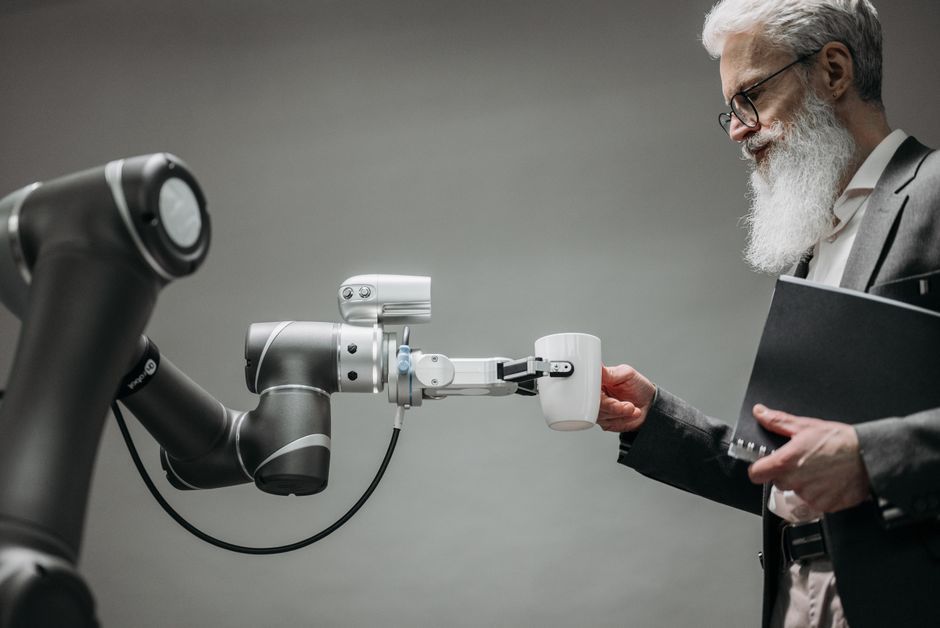
Stock photo for illustration purposes only, not from the actual event
After completing his bachelor's degree, Yang pursued a PhD at Carnegie Mellon University in the United States, graduating in 2019 in just four years—two years faster than the typical average—under the guidance of professors Ruslan Salakhutdinov and William Cohen. He also had the opportunity to intern with world-class research teams such as Google Brain alongside Quoc V. Le and Meta AI Research with Jason Weston, in addition to collaborating on research with Yoshua Bengio and Yann LeCun, two Turing Award-winning scientists.
Yang's reputation is well established in the natural language processing community as the co-author of two pivotal research papers: Transformer-XL at ACL 2019 and XLNet at NeurIPS 2019, which have garnered over 9,000 academic citations. The core of both research papers solved the memory limitations of language models that struggled to retain information separated over long passages of text. XLNet overcame the limitations of the BERT models of that era through autoregressive training. His advisor, Professor Salakhutdinov, once noted on platform X that Yang was a genius student heavily fought over by tech giants upon graduation, yet he chose to return to China in 2019 to build his own company and follow his dream.
"If I hadn't started a startup, I would have regretted it for the rest of my life."
Yang Zhilin (As cited through Professor Ruslan Salakhutdinov)
Before founding Moonshot AI, Yang co-founded Recurrent AI in 2016 to develop AI for sales conversation analysis, and participated in major national large-scale model projects such as Huawei's PanGu model and the Beijing Academy of Artificial Intelligence's Wu Dao model. Eventually, in March 2023, the massive wave of generative AI pushed him to partner with fellow Tsinghua alumni to establish Moonshot AI in Beijing, with a core team consisting of Zhang Yutao, Zhou Xinyu, and Wu Yuxin.
The goal Yang set from day one was to head toward Artificial General Intelligence (AGI), viewing profit as a mere tool rather than an end destination. He shared his vision in February 2024 of building Moonshot AI to be a blend of OpenAI's technological idealism and ByteDance's business philosophy. A key highlight that put the company on the map starting in October 2023 was its emphasis on Long Context via its first model, which supported inputting up to 200,000 Chinese characters at once. This reflected Yang's belief that expanding memory and long-text processing capabilities is the key to delivering the best personalized AI experiences.
Source: Techsauce
Found something wrong in this article? Report an issue with this article
Comments
Leave a Comment