

Ford on track to complete $2B factory overhaul for Fathom EV truck
Ford provides updates on its Kentucky plant overhaul, scrapping a century-old assembly line to build the affordable Fathom EV by 2027.

Stock photo for illustration only, not from the actual event
- Ford invested $2 billion to overhaul its Louisville Assembly Plant for the Fathom EV truck
- Aims to launch production of the under-$30,000 midsize electric truck in 2027
- Adopts a three-branch production system and large single-piece aluminum castings
- Upgraded factory Wi-Fi to 1,080 access points to support software quality checks
Ford made a massive two-billion-dollar bet two years ago when it decided to shutter its Louisville Assembly Plant in Kentucky and completely scrap the moving assembly line system it had relied on for over a century. The primary objective was transforming the facility into a cutting-edge hub capable of manufacturing a fresh generation of accessible electric vehicles.
Providing an update on the progress, the automotive giant stated that the factory renovation remains on track, with preparations set to begin producing the Fathom in 2027. The Fathom is an all-electric midsize truck priced under $30,000, serving as the very first electric vehicle built on the company's brand-new universal platform.
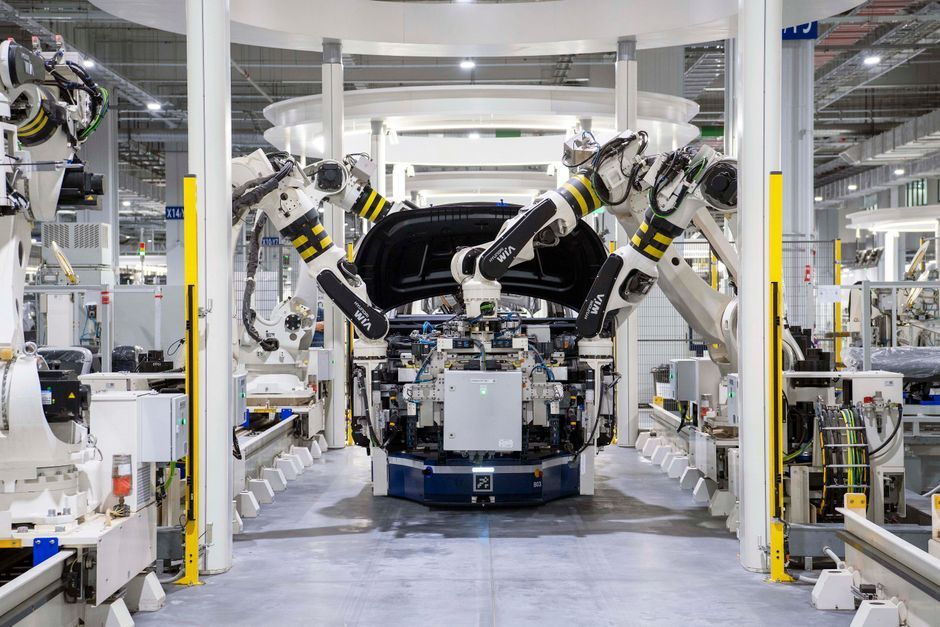
Stock photo for illustration only, not from the actual event
Regarding the operational timeline, Ford anticipates launching prototype builds for the Fathom during the first quarter of 2027, followed by customer-ready vehicles later that same year. The U.S. automaker is already actively testing production-level tooling ahead of assembling the official prototypes.
The stakes for Ford are exceptionally high. The corporation's previous EV initiatives weighed heavily on its profitability, while Chinese rivals and Tesla surged ahead by delivering high-volume vehicles with healthy profit margins. To bridge this gap, Ford abandoned the traditional moving assembly line system originally launched by founder Henry Ford, turning instead to a novel method developed by its skunkworks team spearheaded by former Tesla executive Alan Clarke.
This manufacturing pivot represents a historic gamble for Ford. By moving away from the conventional moving assembly line pioneered by Henry Ford in the early 20th century and embracing a three-branched structure inspired by Tesla's unicasting techniques, the company is attempting to radically slash production costs and compress assembly timelines to compete against low-cost foreign EV makers.
Referred to by Ford as a "universal production system," this approach utilizes a three-branched assembly tree. Ford will incorporate large, single-piece aluminum unicastings to drastically reduce component counts—a technique popularized by Tesla—allowing the front and rear sections of the vehicle to be assembled separately on two of the branches. The third branch is designated for assembling the structural battery alongside seats, consoles, and carpeting, with all three segments converging at the end of the line.
As part of the extensive facility rebuild, Ford nearly tripled the density of its factory Wi-Fi network, installing 1,080 access points to deliver the high-bandwidth, low-latency connectivity required for rigorous software quality verifications. The company estimates that these improvements will enable it to assemble the Fathom at a net 15% faster pace than the legacy vehicles previously built at the Louisville plant. Furthermore, select employees have spent months completing specialized training on the new system at the New Models Program Development Center located in Allen Park, Michigan.
Source: TechCrunch
Found something wrong in this article? Report an issue with this article
Comments
Leave a Comment