

Samsung Health AI Models Analyse Wearable Biosignal Data
Samsung Research America introduces xMAE and HiMAE AI foundation models to process smartwatch biosignals for preventive healthcare.

Stock photo for illustration only, not from the actual event
- Samsung Research America developed two AI foundation models for wearable biosignals.
- The xMAE and HiMAE models were accepted at major machine learning conferences ICML and ICLR.
- xMAE connects ECG and PPG signals to analyze cardiovascular health without manual ECG tests.
- HiMAE processes multi-scale time-series data and runs on smartwatches in under one millisecond.
Samsung Research America's Digital Health Team has presented two AI foundation models designed to learn from wearable biosignals, capturing smartwatch data such as heart activity, sleep, and physical activity. The company discussed its Connected Care vision at the Health Forum during Galaxy Unpacked in July 2026, outlining a future of preventive and personalized healthcare supported by health technology partnerships.
Sharanya Desai, Head of Digital Health Algorithms at Samsung Research America, stated that this research lays the technical groundwork for delivering efficient, precise, and continuous health insights through a health foundation model, noting plans to continue developing models that operate on-device with limited resources.
The research covers two distinct models: xMAE (Physiology-Aware Masked Cross-Modal Reconstruction for Biosignal Representation Learning), which learns temporal relationships between biosignals, and HiMAE (Hierarchical Masked Autoencoder), which learns health patterns across multiple time scales. Both models were accepted into prestigious machine learning conferences, with xMAE at ICML and HiMAE at ICLR.
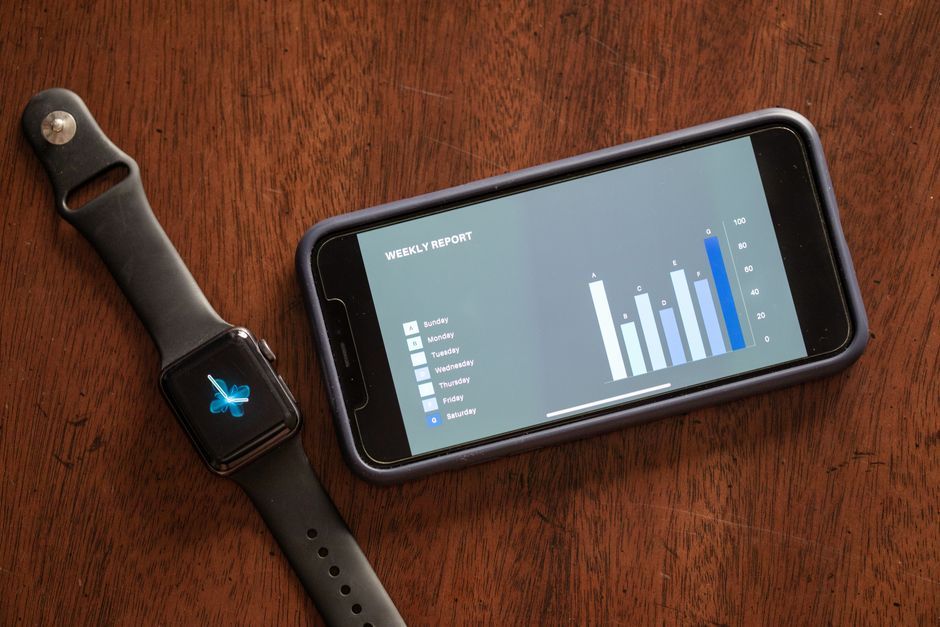
Stock photo for illustration only, not from the actual event
Specifically, xMAE connects electrocardiograms (ECG) and photoplethysmography (PPG) signals using about 9,400 hours of pretraining data to analyze cardiovascular health through continuous PPG measurements without requiring manual ECG pauses. Meanwhile, HiMAE employs multiple encoders to analyze short and long data segments separately, enabling efficient identification of time scales needed for specific health tasks.
"Biosignals are inherently dynamic, with unique time-varying physiological properties. The key contribution of this research lies in proving the viability of health foundation models capable of capturing both the inter-signal relationships and their underlying temporal structures."
Subbu Venkatraman, Head of the Digital Health Research Lab at Samsung Research America
Processing complex physiological biosignals directly on consumer hardware like smartwatches in under a millisecond represents a major shift toward edge computing in healthcare. By eliminating the need for continuous cloud connectivity, on-device AI foundation models enhance data privacy while enabling real-time diagnostic markers and user guidance.
Subbu Venkatraman, Head of the Digital Health Research Lab at Samsung Research America, commented on the team's commitment to advancing foundational health AI research into healthcare solutions that improve wellbeing. Samsung reports that HiMAE achieved high performance using a smaller model, producing results on a smartwatch CPU in less than one millisecond.
Source: AI News
Found something wrong in this article? Report an issue with this article
Comments
Leave a Comment