

Why Making AI Answer Faster Is Worth $1.5 Billion
Fireworks AI raises $1.5 billion at a $17.5 billion valuation, focusing on making existing AI models run faster and cheaper at scale.

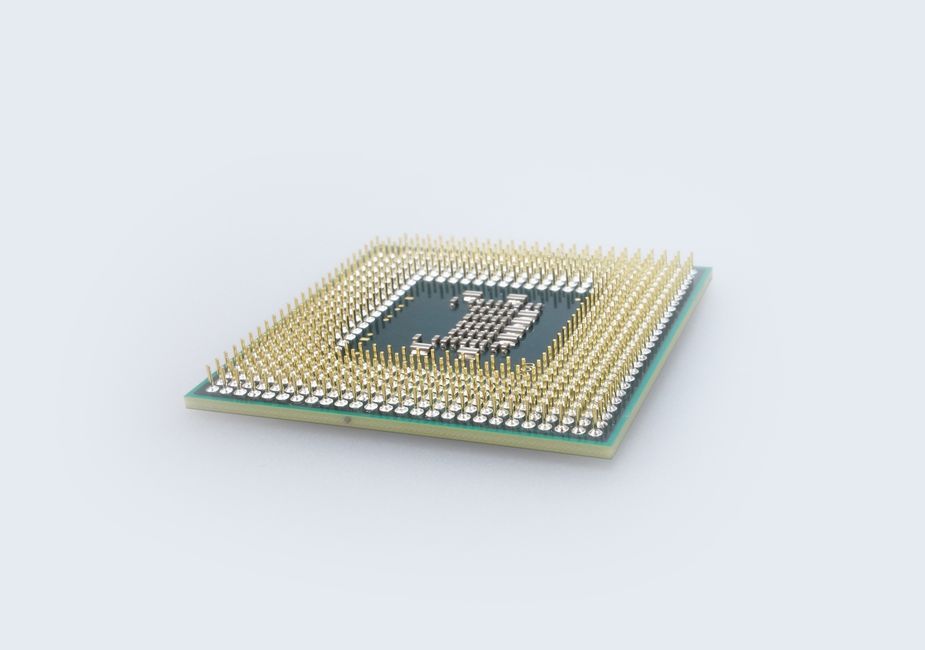
Stock photo for illustration only, not from the actual event
- Fireworks AI raises $1.5 billion, reaching a $17.5 billion valuation
- Annual revenue surpasses $1 billion, growing fivefold year-over-year
- Inference costs now consume over 80% of corporate AI hardware budgets
- AI agents execute 50 to 200 model calls per single complex task
Fireworks AI has just closed a massive funding round, securing 1.5 billion dollars and pushing its valuation to 17.5 billion dollars. Rather than building proprietary AI models from scratch, the company takes existing models from other firms and optimizes them to run faster and cheaper. This funding round acts as a clear indicator of where capital in the artificial intelligence sector is shifting: moving beyond the race for smarter models and toward making existing models commercially usable at scale.
Most people evaluate an AI company based on how intelligent its underlying model appears, which is often the wrong starting question. Today, Fireworks AI generates over 1 billion dollars in annual revenue, marking a fivefold increase compared to last year. Its infrastructure processes more than 40 trillion tokens daily, nearly triple the throughput of the previous year. Investors such as Index Ventures, TCV, and Nvidia backed the company not because foundational models suddenly became smarter, but because someone had to solve the unglamorous challenge of making AI functional and efficient at a massive scale once it already works.
In practice, this is the question most observers skip entirely. Everyone asks whether a model performs well, but almost no one initially asks whether it can serve requests quickly and inexpensively enough to retain paying users over time. A sluggish response turns into a compounding cost with every single user interaction. Running an artificial intelligence model differs fundamentally from hosting a standard website; a slow-loading web page invites a mere shrug, whereas an AI model taking three extra seconds to respond drives users away, with every single one of those delayed seconds translating directly into computing bills.
Stock photo for illustration only, not from the actual event
From an infrastructure perspective, serving AI inference at scale presents profound economic hurdles. Unlike model training—which remains largely a one-time capital expenditure—running inference continuously for millions of users incurs relentless, recurring operational costs. Companies solving this bottleneck bridge the crucial gap between raw AI capabilities and viable commercial deployment.
At true enterprise scale, inference costs now swallow more than 80 percent of a company's total AI hardware budget. Building a model represents a mostly upfront expense, but running it daily for millions of users generates ongoing costs that never level off. Operating AI models at scale boils down to an inevitable trade-off among three competing factors: how many concurrent requests you can handle, how fast each response is delivered, and what the total cost is. Pushing on any one of these dimensions invariably degrades the other two.
"Getting the same job done for less money, at the same speed, is a small technical trick with a very large business attached to it."
Dev.to
A customer service chatbot requires instant responsiveness, prioritizing speed above all else, whereas a background system processing a million documents overnight can tolerate latency in exchange for lower costs per document. No single architectural setup wins across all three metrics simultaneously, and navigating this precise trade-off constitutes the core product Fireworks AI offers. Furthermore, the rise of autonomous AI agents exacerbates this financial burden. While a basic chat interface might trigger a single model call, an agent executing concrete tasks like writing code or conducting research can issue 50 to 200 separate calls before completing its objective. Although per-request prices dropped roughly 80 percent over the past year, agents multiply request volumes so aggressively that total corporate bills continue climbing unchecked.
Source: Dev.to
Found something wrong in this article? Report an issue with this article
Comments
Leave a Comment