

Architecture for Nonhuman Residents: Buildings Designed for Wildlife
Exploring global architectural projects that integrate habitats for plants and animals into building facades, from French schools to Swedish forest cabins.
Stock photo for illustration only, not from the actual event
- Modern architecture increasingly incorporates design elements that allow plants and wildlife to inhabit building facades.
- A school in France recorded 345 plant and animal species following its completion in 2014.
- European residential and hotel projects integrate nesting cavities and ecological layers directly into their structures.
Traditional architecture has long focused on separating human interiors from the external environment, treating nesting birds or insects as a matter of building maintenance. Over the past decade, however, architects have begun embracing a different premise by intentionally leaving openings and cavities for other living creatures.
A notable example is the School of Science and Biodiversity in Boulogne-Billancourt, France, completed by ChartierDalix in 2014. The concrete envelope was formed with ledges and crevices to allow vegetation and wildlife to establish themselves. Ecological surveys conducted after completion recorded 207 plant species and 138 animal species, totaling 345—comparable to the biodiversity found in an urban park.
Stock photo for illustration only, not from the actual event
On a smaller scale, Buitenverblijf Nest in the Hoge Veluwe, Netherlands, designed by i29 and Namo Architecture, resembles an enlarged birdhouse on slender legs. The building features three stepped facade layers that create depth for nesting spaces, while offering a compact 55-square-meter retreat for humans surrounded by hidden rooms reserved strictly for wildlife.
Multispecies architectural design reflects a shift from viewing buildings as static enclosures to treating them as living ecosystems, helping to restore urban biodiversity in concrete-heavy environments.
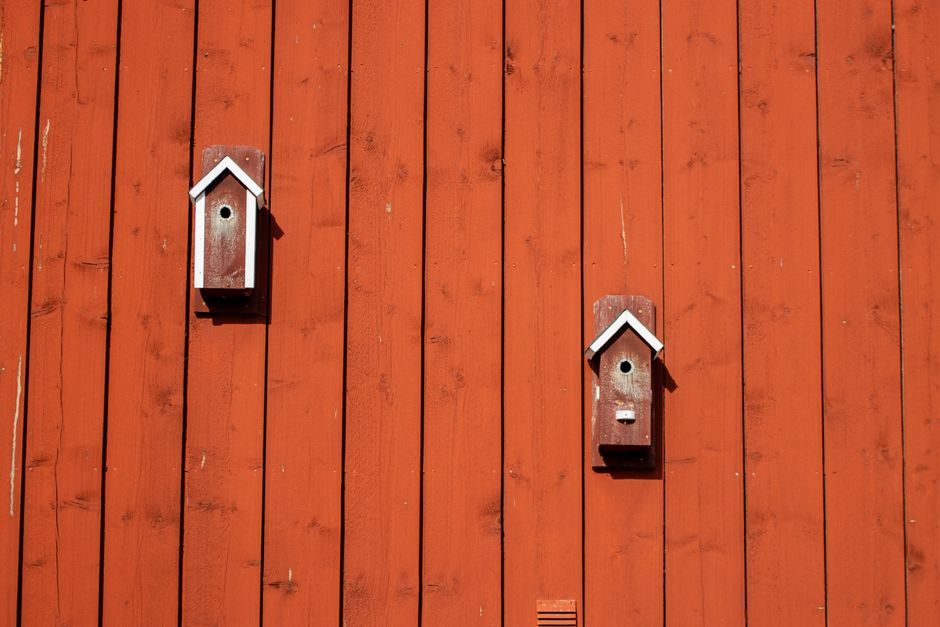
Similarly, the Biosphere at Treehotel in Harads, Sweden, designed by Bjarke Ingels Group (BIG) in collaboration with ornithologist Ulf Öhman, places a glazed hotel room inside a cloud of 350 birdhouses. The sizes and positions of the boxes vary based on local bird populations, turning the facade into shared real estate.
Stock photo for illustration only, not from the actual event
Other projects like the Rambla Climate-House in Spain by Andrés Jaque and Miguel Mesa del Castillo restore local ravine ecosystems using harvested rainwater. Jaque's Reggio School in Madrid wraps its exterior in thick projected cork to support microbial and animal life, while MVRDV's De Oosterlingen in Amsterdam incorporates dedicated habitats for bees, butterflies, and bats across seven distinct buildings.
Source: designboom
Found something wrong in this article? Report an issue with this article
Comments
Leave a Comment