

Operation Blue Skies 2026: Atlantic Trial Tests Rerouting to Cut Contrails
The UK is launching a £5 million Operation Blue Skies trial this winter, testing flight path and altitude adjustments over Shanwick airspace to reduce aviation contrail warming.
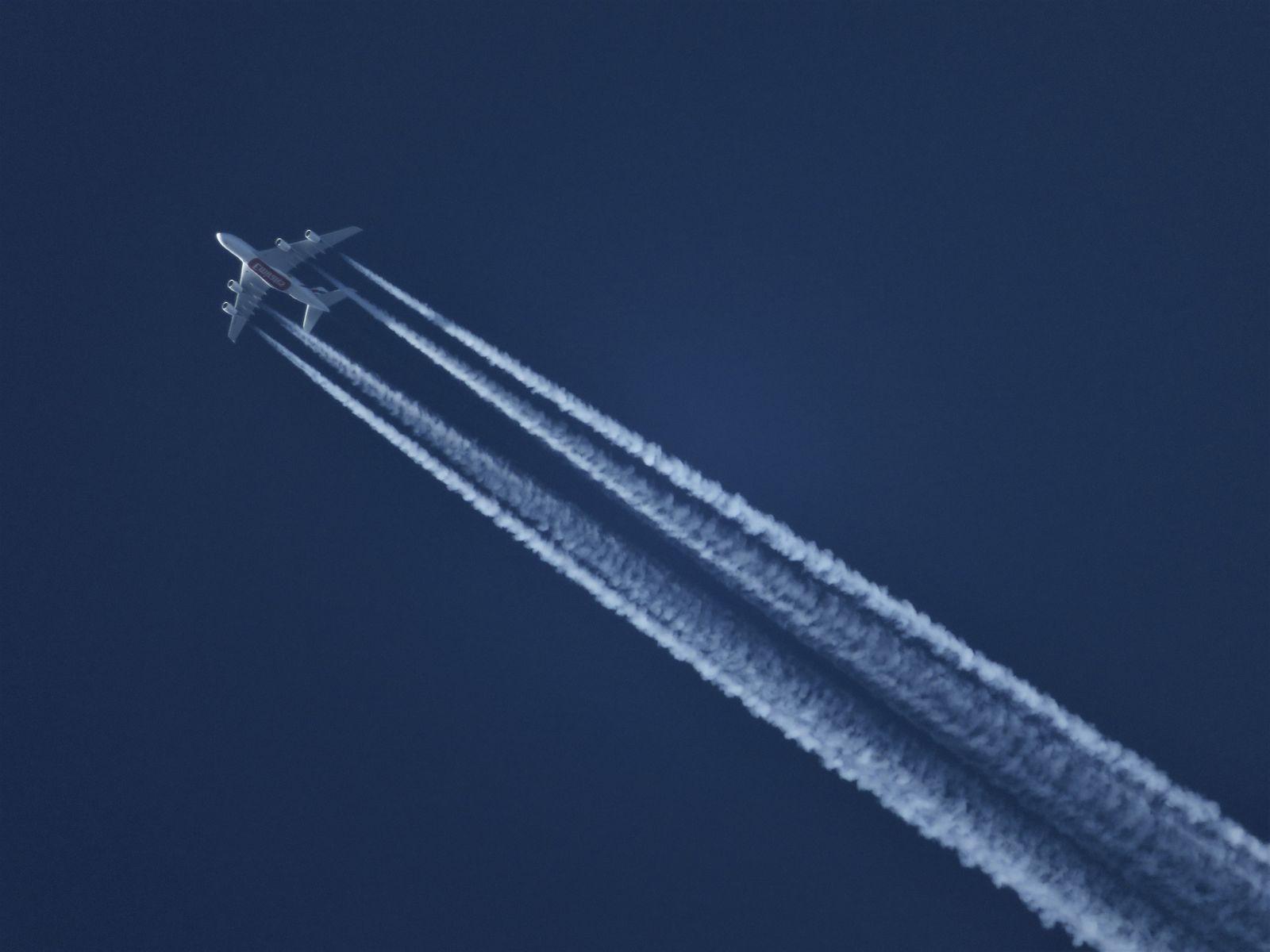
Stock photo for illustration only, not from the actual event
- Operation Blue Skies is a £5 million UK-backed trial running across the winters of 2026-2028 over the Shanwick Oceanic Control Area.
- The project uses AI forecasts from Google and meteorological data to adjust flight altitudes and avoid contrail formation.
- Minor altitude adjustments of up to 2,000 feet could cut contrails by 60-70% for roughly 1% more fuel burn.
- Trial results will be independently verified by Imperial College London and the University of Cambridge.
Airlines operating across the North Atlantic corridor are preparing for increased route adjustments this winter as a large-scale trial gets underway to mitigate the climate-warming impact of aircraft condensation trails, commonly known as contrails. Dubbed Operation Blue Skies, the initiative aims to test whether strategically tweaking flight paths can meaningfully reduce the heat trapped in the atmosphere by lingering artificial clouds.
The trial focuses on the Shanwick Oceanic Control Area, which represents the eastern half of the North Atlantic corridor managed by the UK air traffic controller National Air Traffic Services (NATS). This region serves as a hotspot for contrail generation, where engine soot and water vapor mix with freezing, humid air to form ice crystals that can trap atmospheric heat if they persist.
Backed by a £5 million budget—part-funded by the UK Department for Transport alongside industry contributions and AI support from Google, the Met Office, and Contrails.org—Operation Blue Skies will span the winters of 2026-2027 and 2027-2028 with 20 to 40 test days each season. Air traffic controllers will adjust evening and nighttime flight altitudes by up to 2,000 feet to steer aircraft clear of regions prone to persistent contrail formation.
Stock photo for illustration only, not from the actual event
Crucially, contrail avoidance during the trial will be treated as a standard air traffic control constraint similar to turbulence, meaning airlines will not be granted explicit opt-outs. Consequently, flight crews may occasionally experience unexpected deviations, and denied route requests could see an uptick while the trial is active.
Contrails account for roughly one-third of aviation's total climate impact, positioning avoidance strategies as a high-value, low-cost lever for the hard-to-abate sector. Prior modeling indicates that minor altitude adjustments can suppress contrail formation significantly while incurring only about 100 kilograms of additional fuel burn per rerouted flight.
Final outcomes from the airspace-wide trial will undergo independent verification by researchers from Imperial College London and the University of Cambridge to determine the viability of global adoption.
Source: Skift
Found something wrong in this article? Report an issue with this article
Comments
Leave a Comment