

Anutin reaffirms ties with Japan as Thai firms visit NZ
PM Anutin backs Japanese investors, 9 Thai business leaders visit New Zealand on Aug 21, 2026, and DE ministry updates TH-AI project.
Stock photo for illustration only, not from the actual event
- Prime Minister Anutin Charnvirakul confirmed the government remains fully committed to Japanese investors in Thailand.
- Deputy PM Ekniti Nitithanprapas led 9 major Thai business groups to New Zealand on August 21, 2026.
- The Digital Economy Ministry clarified the TH-AI Passport rollout using a pay-per-active-user model.
- The PDP 2026 subcommittee approved four power development guidelines featuring 9,000 MW of nuclear SMRs.
On August 21, Prime Minister and Interior Minister Anutin Charnvirakul spoke during his official visit to Australia and New Zealand, emphasizing that the Thai administration places high importance on investors from all nations, especially those from Japan who have long used Thailand as a primary manufacturing hub and formed an integral part of the country's industrial sector.
The Prime Minister stated that the government is dedicated to assuring existing investors with longstanding ties that they will not be abandoned. Particular emphasis was placed on the automotive industry, where major components such as engines, body frames, chassis, and electronic systems are manufactured locally under Japanese brands, making this partnership vital to maintain and protect.
Stock photo for illustration only, not from the actual event
On the same day, Narit Therdsteerasukdi, Secretary-General of the Board of Investment (BOI), revealed that Deputy Prime Minister and Finance Minister Ekniti Nitithanprapas co-chaired a business meeting alongside Hon. Todd McClay, New Zealand's Minister for Trade, and executives from Invest New Zealand in Auckland. The event featured business-matching activities connecting top private-sector leaders from both nations to discuss strategic industrial development policies spanning food, clean energy, and advanced technology, supported by three existing free trade agreements.
Narit noted that the delegation of senior executives from nine leading Thai conglomerates represented key sectors including energy, food, retail, construction materials, and real estate. The companies included B.Grimm Power, Banpu, Central Group, Charoen Pokphand Foods (CPF), Minor International, PTT, Siam Cement Group (SCG), Supalai, and Thai Beverage. Meanwhile, the New Zealand side was led by Robert Wall, CEO of Invest New Zealand, alongside representatives from NZTE, the Ministry of Foreign Affairs and Trade, the Ministry for Primary Industries, and the Department of the Prime Minister and Cabinet.
Regarding digital infrastructure, Permanent Secretary for Digital Economy and Society Patchara Anantasilpa addressed the delayed rollout of the TH-AI Passport project, explaining that the agency had to wait for the Office of the Attorney General to review the revised contract draft prior to signing on August 18, ahead of an immediate launch the following day. He affirmed transparency throughout the process and noted that payment terms were adjusted to a pay-per-active-user model, capping actual payouts at 5 million active login rights to ensure optimal budget efficiency.
This high-level diplomatic and economic engagement in New Zealand highlights Thailand's proactive strategy to expand trade partnerships and secure new supply chains beyond traditional markets. At the same time, efforts to safeguard the established Japanese automotive manufacturing base reflect the complex transition toward electric vehicles (EVs). Furthermore, the long-term energy transition outlined in the PDP 2026 framework and modernization of public digital services demonstrate systemic initiatives aimed at strengthening national competitiveness for the future.
Stock photo for illustration only, not from the actual event
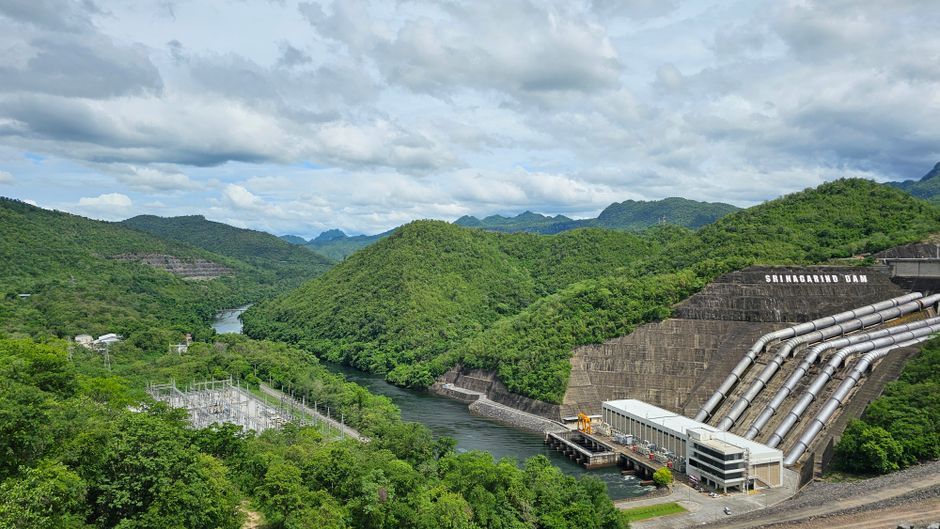
Additionally, reports indicated that the subcommittee drafting the Power Development Plan (PDP) 2026 for the 2026–2050 period, chaired by Tossaporn Sirisamphan, approved four guidelines for procuring new power generation capacities aligned with the national Net Zero greenhouse gas emission target by 2050. All four pathways incorporate 9,000 megawatts of Small Modular Reactor (SMR) nuclear technology alongside 54,500 to 55,000 megawatts of renewable energy and Battery Energy Storage Systems (BESS) to maintain grid stability. The plan will be submitted to Energy Minister Eknatt Promphan for public hearings in early September before seeking approval from the National Energy Policy Council by the end of 2026.
Source: Matichon Politics
Found something wrong in this article? Report an issue with this article
Comments
Leave a Comment