

HTML gets powerful updates with Invoker Commands API
Explore the Invoker Commands API, a new browser feature that reduces JavaScript and manages UI state directly via HTML, aligned with Baseline 2025.
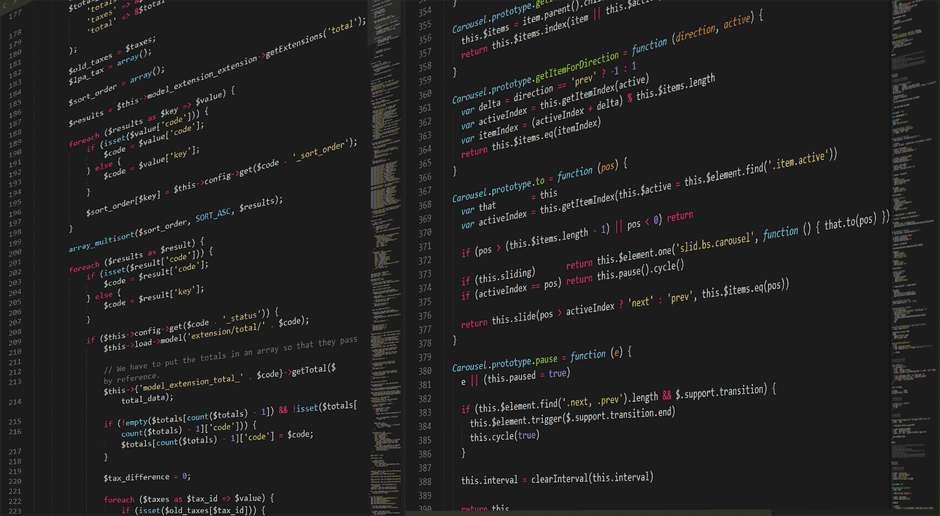
Stock photo for illustration only, not from the actual event
- Invoker Commands API allows declarative behavior assignment to buttons.
- Reduces JavaScript usage and eliminates unnecessary application state management.
- Uses commandFor and command attributes to control interactive elements.
- Broadly available under Baseline 2025 standards with consideration for legacy browsers.
For years, frontend development has maintained a slightly awkward relationship with HTML. While everyone reads about semantic HTML and proper landmarks, developers invariably find themselves right back to writing React code.
While the broader tech industry remains obsessed with artificial intelligence, modern web browsers are quietly rolling out native capabilities. These features allow developers to remove JavaScript, reduce state complexity, and express UI behavior directly within HTML. Because AI models are largely trained on historical code patterns, however, these platform advancements often go unnoticed or underrecommended.
Historically, opening a simple dialog or popover required writing a substantial amount of custom boilerplate code. For developers using frameworks like React or Vue, the process becomes even more elaborate, requiring custom application state, component prop drilling, event handler wiring, and meticulous state synchronization.

Stock photo for illustration only, not from the actual event
While such code is entirely reasonable on its own and familiar to any frontend developer, repeating it countless times raises a fundamental question: do we truly need application state simply to track whether a dialog box is open? Sometimes state is necessary, but often we are merely rebuilding native behaviors that browsers can handle out of the box.
The Invoker Commands API addresses this by providing a declarative way to assign behaviors directly to buttons, enabling seamless control over interactive elements. Instead of manually attaching event listeners, developers can describe component relationships directly inside the HTMLmarkup.
The key attributes enabling this workflow are commandFor and command. At first glance, this approach might save roughly 10 lines of boilerplate code, but the more profound impact is the shift of responsibilities away from custom scripts and back to the native browser engine.
The introduction of the Invoker Commands API represents a broader industry shift toward leveraging native browser capabilities rather than relying heavily on heavy JavaScript frameworks. Minimizing client-side logic can significantly improve application performance and maintainability, though developers must carefully evaluate browser compatibility during the initial adoption phase.
However, before developers rush to purge their codebase of custom dialog logic, there is an important caveat: the Invoker Commands API is relatively new. MDN currently lists the feature as Baseline 2025, with cross-browser availability rolling out in recent browser versions since December 2025. Older legacy browsers may not yet support these native commands.
Source: Dev.to
Found something wrong in this article? Report an issue with this article
Comments
Leave a Comment