

UK Partial Lunar Eclipse Aug 28, 2026: Moon Turns Red
Skywatchers across the UK can view a partial lunar eclipse in the early hours of August 28, 2026, featuring the Sturgeon Moon and Moon Illusion.
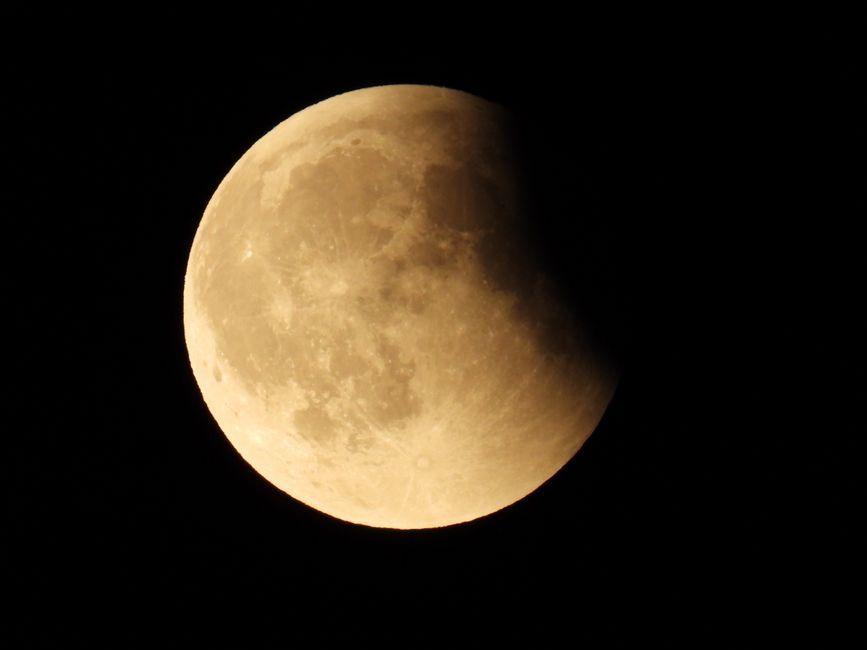
Stock photo for illustration only, not from the actual event
- A partial lunar eclipse is set to grace the UK skies in the early hours of August 28, 2026.
- The full Sturgeon Moon will take on an eerie reddish glow alongside the Moon Illusion effect.
- Maximum eclipse reaches 90% at 05:12 BST, with clearer skies expected in central and eastern England and Wales.
Skywatchers across the UK could have the opportunity to witness a stunning partial lunar eclipse later this week as the Sun, Earth, and Moon align in the night sky. This cosmic event follows closely after the UK experienced its most dramatic partial solar eclipse in nearly 30 years just weeks prior.
The celestial event will take place during the early hours of Friday, August 28, 2026, coinciding with a full Moon nicknamed the Sturgeon Moon, which may take on a striking reddish glow. Adding to the visual spectacle, the Moon's low position near the horizon will trigger a phenomenon known as the Moon illusion, making the lunar disc appear much larger and more dramatic than usual.
The partial eclipse begins at 03:33 BST in London as the Moon enters the Earth's darkest shadow. It will reach its peak at 05:12 BST when approximately 90% of the lunar surface is positioned within the umbra. By 06:15 BST in London, the Moon will set and move out of sight, though exact moonset times will vary across the country.
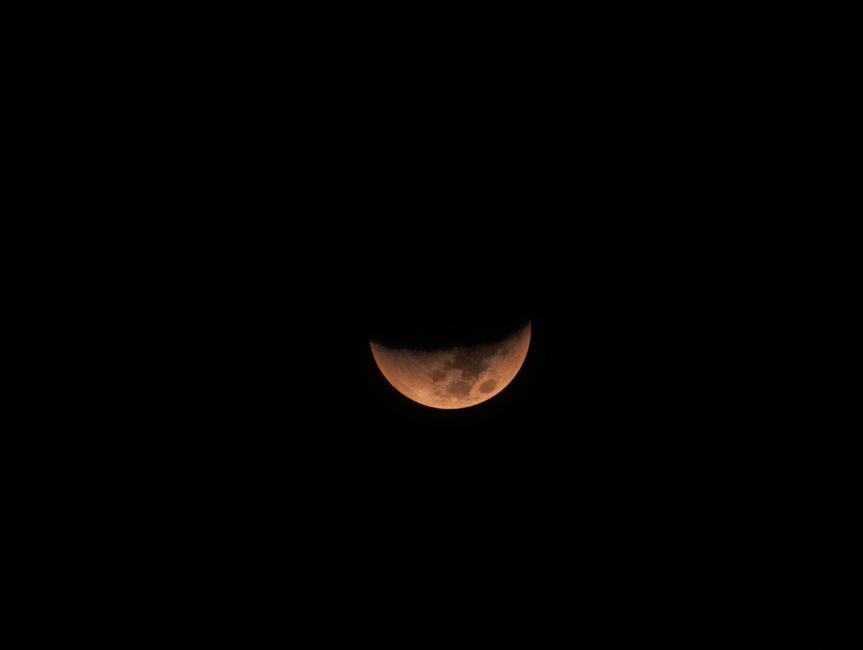
Stock photo for illustration only, not from the actual event
Lunar eclipses occur when the Earth moves directly between the Sun and the Moon, casting its shadow on the lunar surface. During a partial eclipse, only a portion of the Moon enters the darkest section of the shadow, or umbra. Sunlight passing through the Earth's atmosphere undergoes scattering, where shorter blue wavelengths scatter more easily, while longer red wavelengths reach the Moon and reflect back toward Earth, creating the characteristic red color.
The Moon Illusion is a psychological perceptual phenomenon rather than a physical magnification caused by the atmosphere. Our brains misinterpret the size of the Moon when it appears low on the horizon next to familiar terrestrial objects compared to when it is high up in the wide-open night sky.
Astronomers recommend finding an elevated location with an unobstructed view toward the south-western horizon for the best viewing experience. However, viewing conditions will vary significantly across the UK on Friday morning due to low pressure systems bringing cloud cover and heavy showers to regions like Scotland, while central and eastern parts of England and Wales hold the best promise for clear skies. Local forecasts can be checked via the BBC Weather app.
Source: BBC Science & Environment
Found something wrong in this article? Report an issue with this article
Comments
Leave a Comment