

Perplexity Ships Portable Computer on NVIDIA DGX Spark
Perplexity releases Portable Computer running on NVIDIA DGX Spark hardware with local sandbox and zero per-token cost.
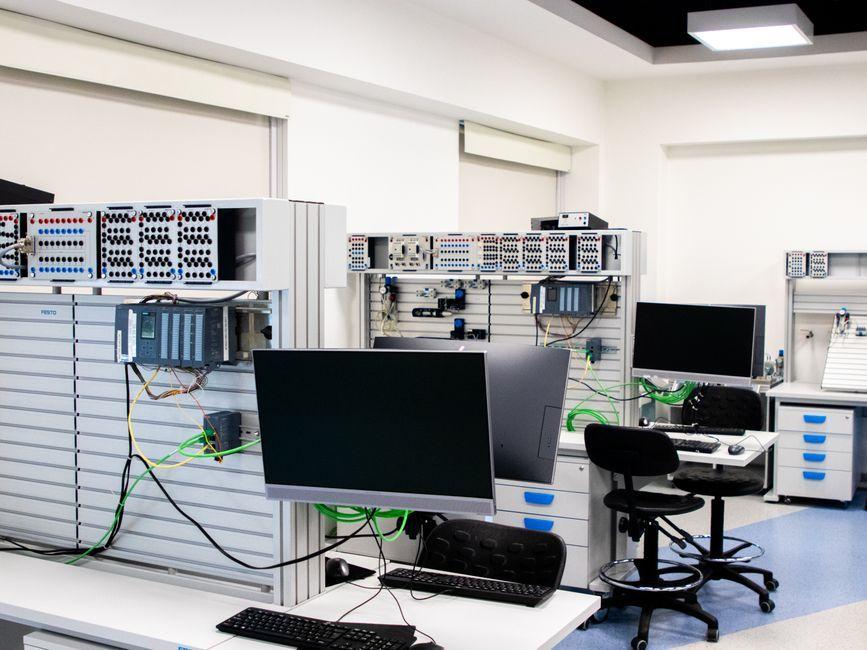
Stock photo for illustration only, not from the actual event
- Perplexity launches Portable Computer running on NVIDIA DGX Spark and RTX GPUs with at least 24 GB VRAM.
- The system bundles local models, inference engines, and tool sandboxes into a single unified platform.
- Supports hybrid escalation to cloud models with built-in PII classification for data privacy.
- Achieved an 85.4% score on the Local Knowledge Work Bench using the custom PPLX 27B model.
Perplexity has officially rolled out Portable Computer, shipping software designed to run on high-end hardware including NVIDIA DGX Spark boxes and RTX GPUs with a minimum of 24 GB of VRAM. Rather than acting as a simple local chat application, the system packages local models, inference engines, agent harnesses, tool sandboxes, and app connectors into a single cohesive ecosystem, eliminating the tedious setup of manual inference servers.
Users are given the option to select between Qwen 3.8 27B or PPLX 27B, a variant specifically fine-tuned by Perplexity, with NVIDIA Nemotron 3.5 Lightning scheduled for release soon. The platform also fully accommodates bring-your-soon model and inference server configurations for advanced users.
Perplexity's hybrid approach bridges local privacy with frontier cloud capabilities, offering a sustainable economic model for heavy local workloads without incurring per-token costs on owned hardware.
Stock photo for illustration only, not from the actual event
Code and tool executions are strictly isolated inside an OS-enforced sandbox that regulates active processes, file system directories, and network connectivity. If the sandbox environment is offline, tool execution safely halts rather than downgrading silently. Local orchestrators seamlessly route connectors for mainstream services like Gmail, Outlook, Slack, and GitHub.
Local-first processing does not restrict external web access. When complex reasoning or live web data is required, the orchestrator prompts the user for approval. A built-in PII classifier scans context data to ensure privacy before any information leaves the local machine, granting remote cloud models zero direct access to local files or tools.
Source: MarkTechPost
Found something wrong in this article? Report an issue with this article
Comments
Leave a Comment