

Firms scramble for battery power in Spain and Portugal
Businesses in Spain and Portugal are rapidly installing battery storage systems following last April's major blackout and Storm Kristin.
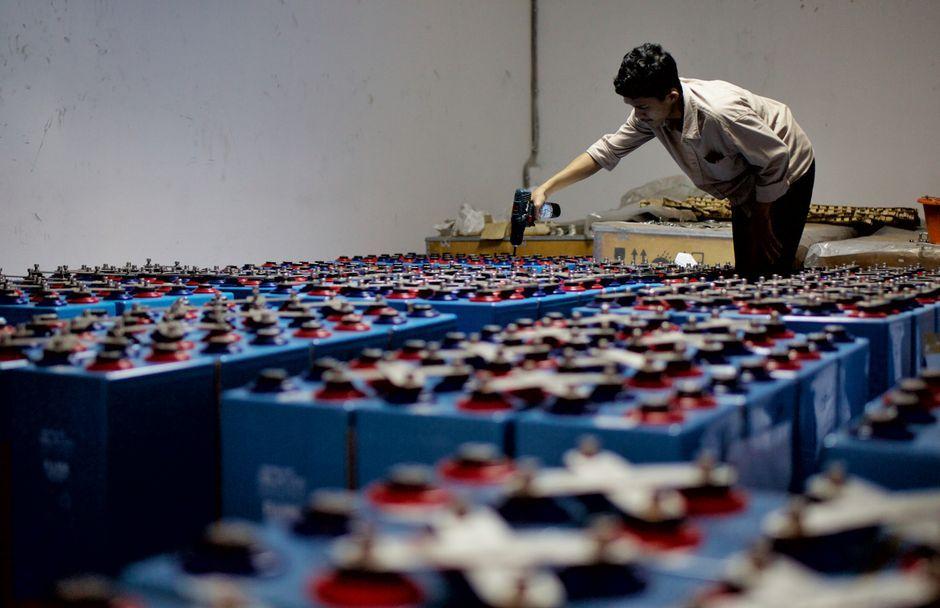
Stock photo for illustration only, not from the actual event
- Spain and Portugal suffered a massive blackout on 28 April last year, halting production lines.
- Spanish meat processor Fribin invested around 1.5 million euros in backup battery modules.
- Battery storage capacity in Spain surged nearly sevenfold to reach 193 megawatts.
- Storm Kristin further battered Portugal by toppling numerous electricity and telecom poles in late January.
On the 28th of April last year, Portugal and Spain went dark for several hours. A massive power failure caused widespread chaos, prompting people to dig out lanterns and old radios while companies scrambled to salvage whatever production they could manage.
The Spanish meat processing firm Fribin, located in Binéfar within the northeastern province of Aragon, was midway through its morning shift when the sudden shutdown brought its production lines to a halt.
Stock photo for illustration only, not from the actual event
For Andrés Altabás, Fribin's technology and systems director, it was a nightmarish scenario. Tons of meat in the processing stage had to be discarded. Altabás noted that there were losses amounting to hundreds of thousands of euros, prompting company bosses to rethink their backup plans entirely.
Fribin purchased its first five megawatt-hour module in June 2025 and ordered a second identical module in early June 2026, totaling an investment of around 1.5 million euros, funded in part by the European Union's Next Generation funds.
"There were losses of hundreds of thousands of euros."
Companies across Europe have been transitioning to electricity from fossil fuels for industrial needs, encouraged by EU subsidies. While this helps lower greenhouse gas emissions, it also makes businesses increasingly vulnerable to power outages.
The industrial shift toward electrification in Europe highlights a critical engineering challenge regarding grid stability. As factories abandon onsite fossil fuel burning in favor of 100% electrical reliance, Battery Energy Storage Systems (BESS) evolve from a simple emergency backup into an essential operational asset that also enables energy arbitrage and grid stabilization.
Stock photo for illustration only, not from the actual event
In Spain, battery storage capacity has risen almost sevenfold since last April, climbing from about 28 megawatts before the blackout to 193 megawatts in April 2026, according to grid operator Red Eléctrica.
Source: BBC Science & Environment
Found something wrong in this article? Report an issue with this article
Comments
Leave a Comment