

Waste to Resource: Space Insights on Circular Design
Exploring water and air recycling systems on the ISS and ESA's MELiSSA project, revealing key circular economy challenges for space habitats and Earth architecture.

Stock photo for illustration only, not from the actual event
- Managing waste and resources on the ISS presents constant logistical and spatial constraints.
- The Environmental Control and Life Support System achieves roughly 98 percent water recovery.
- ESA's MELiSSA project integrates microorganisms and plants into an artificial ecosystem loop.
- Closed-loop systems require supporting infrastructure, ongoing energy, and regular maintenance.
For astronauts aboard the International Space Station, dealing with waste is a constant logistical challenge. Some discarded materials are collected and packed into cargo vehicles, which later burn up during reentry, while resources such as water and air are continuously recovered and reused. As missions venture farther from Earth, the ability to simply discard materials becomes increasingly limited, making the recovery and reuse of resources far more critical.
This makes space an interesting place to examine the circular economy. A spacecraft is a small, controlled environment in which resources are limited, resupply is expensive, and storage space matters. The systems developed for these conditions are not direct solutions for cities or buildings on Earth, but they reveal practical difficulties behind keeping materials in circulation. The central question is how to design systems where materials remain useful longer, can be repaired or reused, and are easier to recover at the end of their first life cycle.
The ISS is often described as a closed environment, but it is not a completely closed material system. The station depends on regular cargo missions from Earth, bringing food, equipment, and packaging, while waste is stored and partially loaded into uncrewed cargo spacecraft that burn up upon reentry. It is a practical solution tied to Earth proximity, whereas future lunar or Martian habitats will have far less flexibility.
Solid waste therefore remains one of the hardest problems in long-duration spaceflight. Food packaging, hygiene items, and textiles consist of mixed materials prone to contamination, making conventional recycling difficult. NASA’s John F. Kennedy Space Center plays a pivotal role in researching these technologies
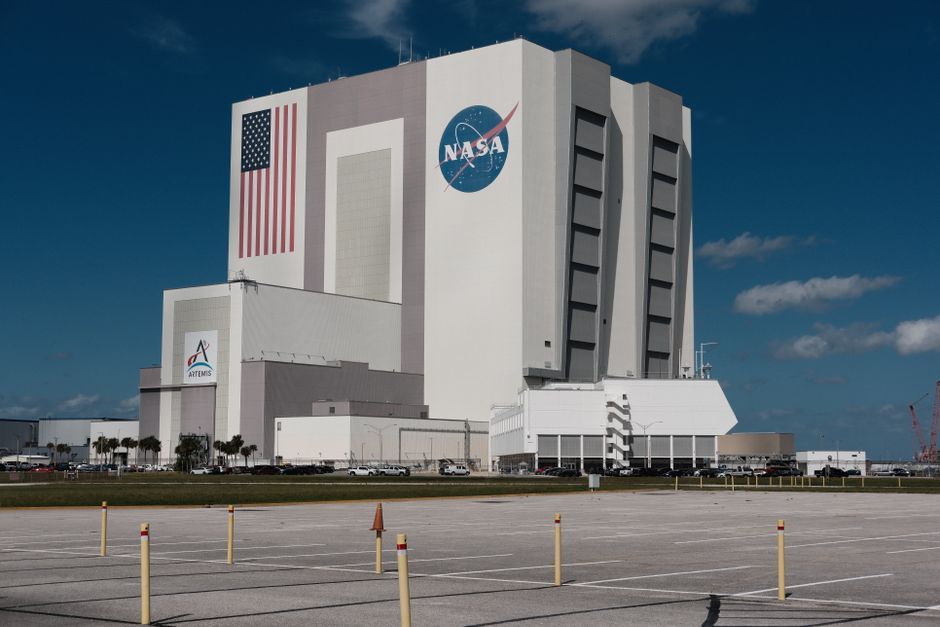
Stock photo for illustration only, not from the actual event
Examining closed-loop systems in space highlights that resource circularity relies heavily on upstream design, energy inputs, and byproduct management rather than simple end-of-life recycling. This perspective offers valuable lessons for designing sustainable buildings on Earth that integrate water, energy, and waste systems holistically.
The same principles apply to station air. Astronauts consume oxygen and produce carbon dioxide, which is removed from the atmosphere while oxygen is regenerated via water electrolysis. A Sabatier reactor further combines carbon dioxide with hydrogen to produce water, though minor byproducts like methane demonstrate that recovering one resource does not automatically mean recovering everything without residues or energy costs.
Developed since 1989, ESA’s Micro-Ecological Life Support System Alternative (MELiSSA) explores connecting microorganisms and plants into artificial ecosystems. At the MELiSSA Pilot Plant at Universitat Autònoma de Barcelona, biological compartments break down organic waste, transform nitrogen compounds, and utilize carbon dioxide to produce oxygen and biomass, demonstrating that habitats can function as interconnected biological processes.
Source: designboom
Found something wrong in this article? Report an issue with this article
Comments
Leave a Comment