

Amazon Triples Nvidia Chip Order Amid Surging AI Demand
Amazon has expanded its Nvidia partnership by adding 2 million GPU chips to AWS data centers for 2027-2028, alongside networking and open models.
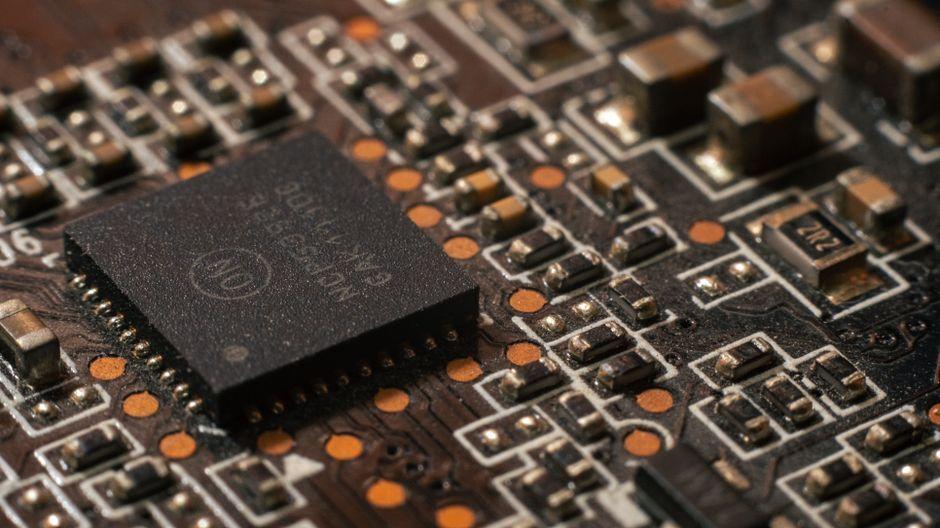
Stock photo for illustration only, not from the actual event
- Amazon expands its Nvidia partnership by ordering an additional 2 million GPU chips for AWS
- New GPU lineup includes Blackwell Ultra, Rubin, and Rubin Ultra for 2027 and 2028 delivery
- Collaboration extends beyond hardware to networking, CPUs, robotics, and open-source models
- Nvidia posted $96.2 billion in second-quarter sales, driven largely by its massive data center business
Amazon and Nvidia have significantly deepened their alliance as the two companies announced an expanded partnership featuring an order for another 2 million Nvidia GPU chips destined for Amazon’s data centers. The major update was shared during Nvidia’s quarterly earnings call, highlighting hardware specifically engineered to handle the heavy computational workloads required for training and operating artificial intelligence models.
The newly ordered graphics processors include Nvidia Blackwell Ultra, Rubin, and Rubin Ultra GPUs, which are scheduled to arrive at Amazon Web Services data centers throughout 2027 and 2028. This announcement follows an agreement made just five months prior in which Amazon committed to deploying over 1 million Nvidia GPUs across AWS infrastructure starting this year. According to an official statement from Nvidia, real-world market demand has substantially outpaced those initial expectations.
Although financial terms were not disclosed by either company, industry watchers estimate the deal is worth tens of billions of dollars based on standard unit costs. The development is notable not merely for its massive scale and rapid acceleration, but also because it broadens into a comprehensive technical integration even as Amazon continues developing its own proprietary AI chips.

Stock photo for illustration only, not from the actual event
Nvidia confirmed that its proprietary technology—including the advanced networking hardware required to tie thousands of GPUs into a single cohesive system, open models, CPUs, data processing software, and robotics platforms—will also be integrated throughout AWS. CEO Jensen Huang holds ambitious plans for the company's Vera CPUs, projecting widespread deployment across major hyperscalers, neoclouds, and AI laboratories worldwide.
"Demand has exceeded those expectations."
Nvidia
The expanded partnership coincides with Amazon ramping up its own custom silicon initiatives, particularly general-purpose CPUs and custom AI accelerators like Trainium, which serve as direct alternatives to Nvidia's hardware. Amazon’s AI chief Peter DeSantis previously noted that AWS is in active discussions to supply Trainium chips to external corporate customers, while the company's custom chip business recently surpassed a $25 billion annualized revenue run rate.
The decision by a cloud giant like Amazon—which actively designs competing custom silicon—to heavily invest in massive Nvidia deployments underscores the unprecedented scale of enterprise AI demand. Building internal alternatives is crucial for long-term margins, but securing immediate cutting-edge hardware from Nvidia remains vital to maintaining market leadership in cloud AI infrastructure.
Financially, Nvidia reported strong second-quarter sales of $96.2 billion, beating Wall Street analyst expectations. Data center revenue accounted for the vast majority at $89 billion, representing a 117% increase year-over-year. Nvidia further noted that it has committed $279 billion in total supply and manufacturing capacity to secure memory and hardware production for ongoing and future data center projects over the coming years.
Source: TechCrunch
Found something wrong in this article? Report an issue with this article
Comments
Leave a Comment