

How to watch the partial lunar eclipse from Northern Ireland
Stargazers in Northern Ireland can watch a 93% partial lunar eclipse this Friday morning, starting at 02:23 BST with peak view at 05:12.
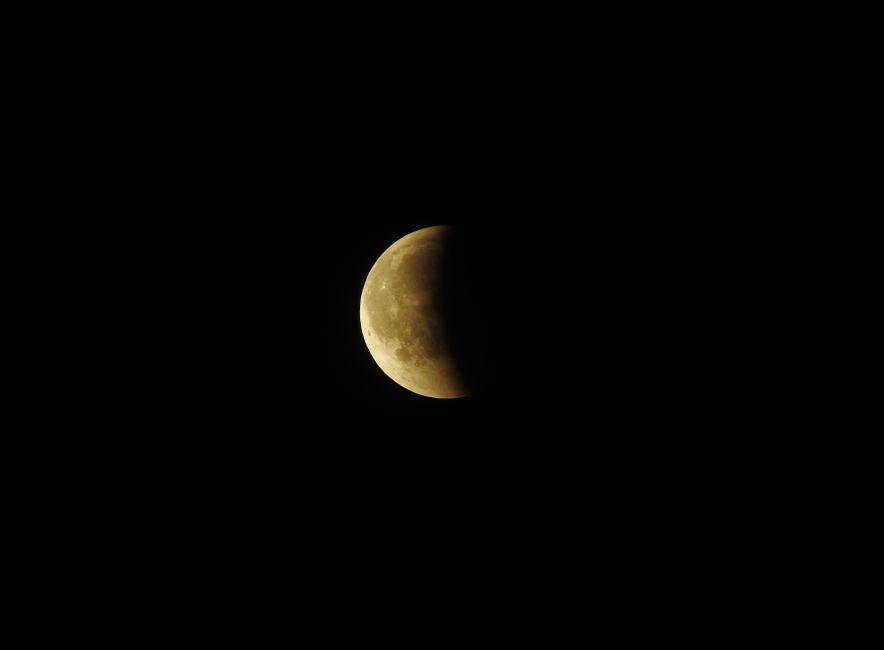
Stock photo for illustration only, not from the actual event
- A partial lunar eclipse will be visible early Friday morning in Northern Ireland.
- Roughly 93% of the Moon's diameter will be covered at its peak stage.
- The event begins at 02:23 BST with maximum eclipse occurring at 05:12.
- Viewers need a clear, unobstructed horizon facing west to see the low-hanging moon.
Stargazers across Northern Ireland have the opportunity to observe a striking partial lunar eclipse in the early hours of Friday morning as the moon passes through the shadow of Earth. At its maximum extent, approximately 93 percent of the lunar diameter will be obscured, delivering a visual experience closely resembling a total eclipse.
For residents hoping to catch the event, the primary hurdles involve the early morning timing, potential cloud coverage, and the low elevation of the moon in the western sky. More than 90 percent of the lunar surface will enter the shadow shortly after five in the morning.
The timeline of the eclipse opens at 02:23 BST when the moon enters the penumbra, the lighter outer region of Earth's shadow. A much more distinct phase commences at 03:33 BST as the darker central umbra begins traversing the lunar face, culminating in the peak eclipse at 05:12 BST.
In Belfast, the moon will sit low in the western sky at an altitude of roughly nine degrees, with the event concluding at 06:34 BST. Further south in Dublin, it will maintain a slightly higher position until 06:38 BST, while viewers further west in Enniskillen will experience moonset at 06:41 BST, granting them a marginally extended window.
"This is sometimes called a blood moon - which is a nice dramatic name - but it's not always the colour of blood. It can turn anything from orange to a deep red, but the part near the centre of the eclipse will be the most spectacular."
Successful observation will rely heavily on atmospheric clarity and maintaining an open line of sight toward the west, as local structures like buildings, hills, and trees risk obstructing the view as the moon descends toward dawn.
A lunar eclipse takes place when the Sun, Earth, and Moon align such that the moon traverses Earth's shadow. While the umbra blocks direct sunlight from hitting most of the lunar surface, refracted light still filters through Earth's atmosphere. Shorter blue wavelengths scatter more readily, while longer red wavelengths reach the moon, creating the signature reddish hue often associated with the event.
Unlike solar eclipses, observing a lunar eclipse requires no protective eyewear and is completely safe to view directly. Specialized equipment like binoculars or telescopes is likewise optional, though helpful for examining subtle chromatic shifts across the surface. Forecasts indicate western regions hold the most favorable weather outlook, contrasted with heavier cloud cover expected centrally and eastward.
Source: BBC Science & Environment
Found something wrong in this article? Report an issue with this article
Comments
Leave a Comment