

ALIT Lamp: Ceramic and Wood Design by Byunggwon Na
Discover ALIT, a minimalist lamp by Seoul-based designer Byunggwon Na that pairs a translucent ceramic shade with a timber base.
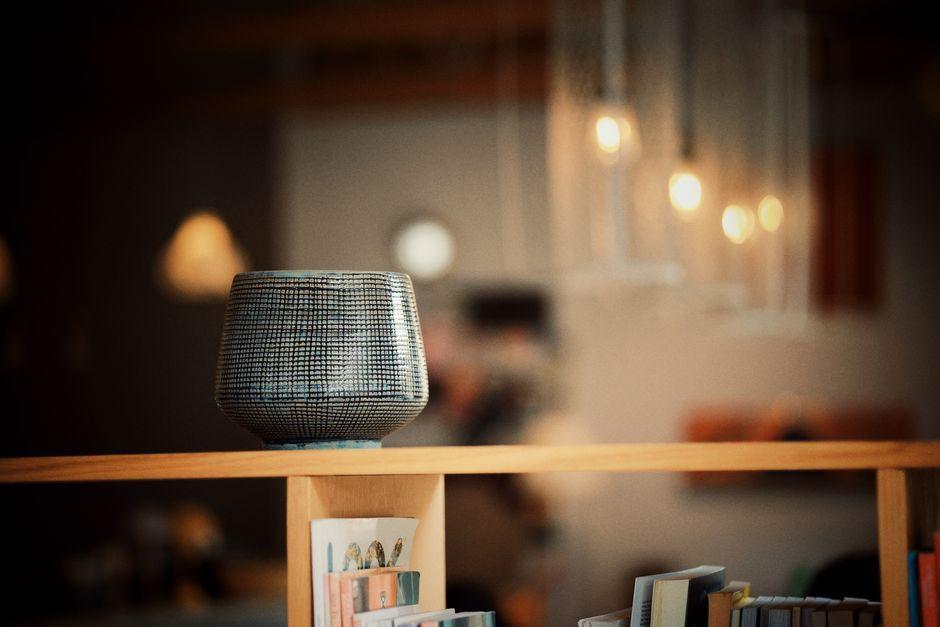
Stock photo for illustration only, not from the actual event
- ALIT lamp designed by Seoul-based creator Byunggwon Na.
- Combines a curved ceramic shade with a square wooden column base.
- Ceramic shade crafted via slip casting, inspired by falling petals or seeds.
- Detachable ceramic shade can function independently as an object or tray.
Seoul-based designer Byunggwon Na explores the relationship between ceramic, wood, and illumination with ALIT, a lamp reduced to two contrasting materials and a deceptively simple geometry. Beginning with the translucent qualities of ceramic, Na studied how light could pass through, bounce against, and diffuse across its surface before introducing a square wooden column as the project’s only additional material.
The result sets the softly curved ceramic shade directly on top of the timber base, allowing light to fall across both surfaces at once. Rather than hiding the meeting point between structure and diffuser, ALIT makes it the focus, creating a small material conversation between something solid below and something lighter and less obedient above.

Stock photo for illustration only, not from the actual event
Produced through slip casting, the ceramic shade begins conceptually as a circular plane folded into four quadrants, generating four gently curved surfaces around its perimeter. Its shape sits somewhere between strict geometry and an organic form, with Na likening its silhouette to a maple seed or petal drifting down before coming to rest on the wooden column.
Slip casting is a traditional ceramic technique that allows for exceptional thinness and uniformity in hollow objects. By applying this method to study light translucency, Byunggwon Na bridges craft traditions with modern minimalist lighting design, highlighting how material choice directly dictates the distribution of luminosity.
The shade is not permanently attached to the base and can instead be lifted off, replaced, or exchanged with another version. Removed from the column, it can work independently as an object or tray, while the wooden lamp continues functioning without it, requiring no complicated assembly.

Stock photo for illustration only, not from the actual event
Na also experiments with color by mixing pigments directly into the liquid slip before casting, producing ceramic shades whose tone runs consistently through the material rather than being applied as a colored glaze. While lighter versions allow illumination to travel through the shade, the pigmented pieces become opaque, directing a softer pool of light from underneath to interact with the wood grain.
Source: designboom
Found something wrong in this article? Report an issue with this article
Comments
Leave a Comment