

Space Weather: How Solar Storms Threaten Earth's Tech
Met Office's 24/7 space weather team collaborates with Aberystwyth University to protect vital global infrastructure from trillion-dollar solar storms.
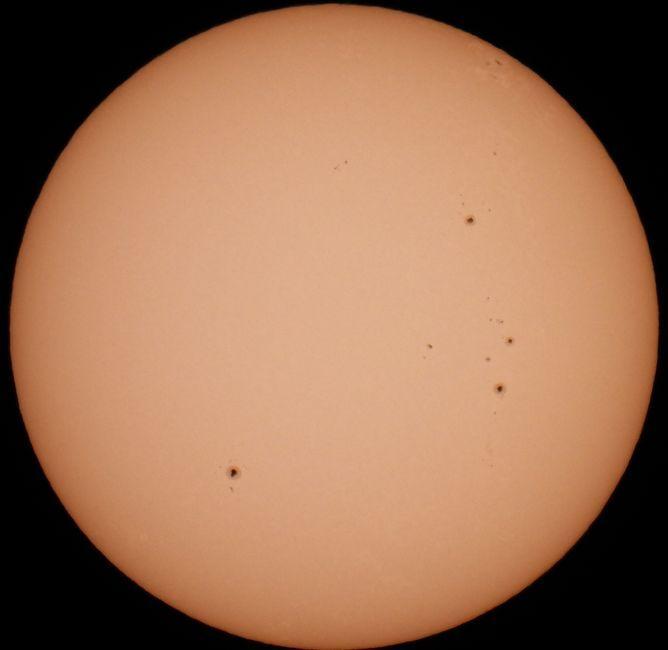
Stock photo for illustration only, not from the actual event
- Met Office operates a round-the-clock space weather forecasting control centre
- Severe space weather could cost the global economy up to 2.4 trillion dollars
- Scientists have a critical one-hour window to predict exact impacts before storms hit
- Aberystwyth University researchers are partnering to boost forecasting capabilities
Deep within the control headquarters of the Met Office, computer screens in a corner are locked onto close-up imagery of the Sun. This is the operational base for a specialized space weather prediction team, one of only a handful worldwide, running 24 hours a day and 365 days a year to monitor extraterrestrial phenomena capable of fundamentally altering life on Earth.
Space weather is primarily driven by dynamic solar activity, including solar flares which release intense bursts of radiation. These powerful events possess the capacity to severely disrupt essential technologies relied upon daily, such as GPS navigation networks, electrical power grids, and orbital satellites that remain vulnerable to shifts in the Earth's magnetic field.
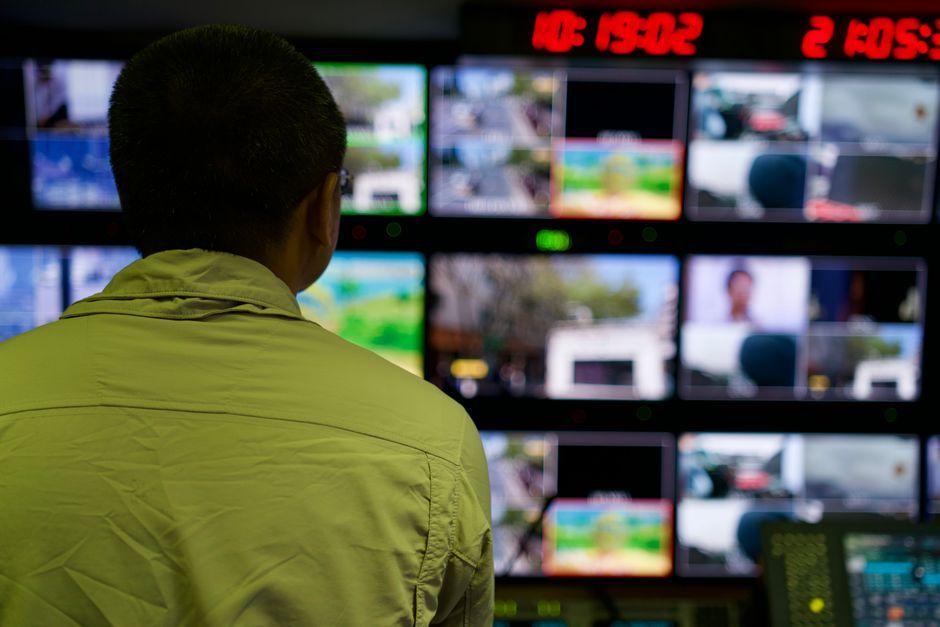
Stock photo for illustration only, not from the actual event
The UK government has formally listed severe space weather within its National Risk Register. Furthermore, an economic assessment by Lloyd's in 2025 estimated that a catastrophic space weather event could cost the global economy 2.4 trillion dollars ($2,400,000,000,000) across a five-year timeframe. To combat these threats, the Met Office has collaborated with critical infrastructure operators since 2014, generating forecasts using a combination of ground-based equipment and space-borne satellites.
Richard Stone, head of the forecasting team, noted that while current technology is exceptionally advanced, the field remains in its early stages. Despite spotting a solar surface event roughly three days before it reaches Earth, there is a tracking blackout until the activity reaches satellites positioned about one million miles away. This leaves scientists with an approximate one-hour window to more precisely forecast its real-world effects and issue warnings for necessary mitigation.
"This pre-warning is a huge mitigation of the danger posed by space weather. For example, it gives the National Grid an opportunity to prepare and avoid power cuts, or airlines can divert their flights from high latitude to safer lower latitudes."
Forecasting space weather presents immense logistical hurdles due to the vast distances and monitoring gaps between the Sun and our planet. The narrow one-hour warning window underscores why automated systems and swift communication channels between space physicists and infrastructure operators—such as power grid managers and aviation authorities—are vital to preventing large-scale technological failures.
To upgrade their forecasting accuracy, the agency enlisted a research group spearheaded by Aberystwyth University. Professor Huw Morgan, Head of Space Physics at Aberystwyth, leads the initiative alongside academic teams from Northumbria, Durham, and Reading universities. Additionally, the Sun operates on an approximate 11-year activity cycle, peaking during a period known as the Solar Maximum in 2024, which brought increased sightings of the Northern Lights across various regions.

Stock photo for illustration only, not from the actual event
Historically, the 1859 geomagnetic storm known as the Carrington Event remains the ultimate benchmark for a worst-case scenario. Named after English astronomer Richard Carrington, the storm triggered worldwide auroras and disrupted commercial telegraph networks which had recently emerged in the 1840s. Stone recounted that during the Carrington event, telegraph wires hummed and crackled loudly, allowing operators to run equipment without external electricity due to the massive input of induced current. Modern concerns center on the fact that a contemporary Carrington Event would cause exponentially greater societal disruption given our deep reliance on digital technology.
Source: BBC Science & Environment
Found something wrong in this article? Report an issue with this article
Comments
Leave a Comment