

Musicians-turned-detectives hunt for AI music grifters
26-year-old EDM producer Max Harris calls out creators passing off generative AI tracks as human art, pointing out distinct digital hiss in fakes.
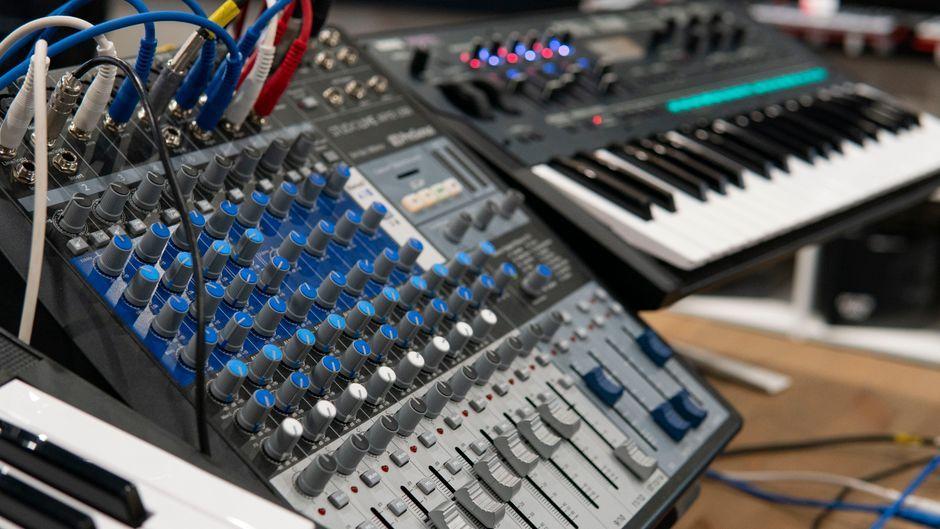
Stock photo for illustration only, not from the actual event
- Generative AI audio tools have evolved to create music and vocals mimicking human artists closely.
- 26-year-old EDM producer Max Harris is exposing creators using AI tools to pass off fake tracks as their own.
- Harris views AI music as decoy art driven by quick profits rather than genuine emotional expression.
- A key indicator of AI-generated tracks is a sharp, persistent hissing sound throughout the audio.
As artificial intelligence infiltrates the electronic dance music scene, a culture of calling out phonies is rapidly brewing. With audio-focused generative tools and platforms becoming increasingly sophisticated, the internet is flooded with AI-generated music whose melodies and vocals are algorithmically derived from human artists. While some creators readily admit to utilizing AI, others deny its use until escalating public scrutiny forces them to confess.
For musicians working in technology-driven spaces like electronic dance music, the blurred line between real and fake feels deeply personal and urgent. Professional courtesy complicates matters further; while listeners can easily flag suspected gen AI users, it is entirely different when artists publicly question their peers. Yet, producers like 26-year-old EDM artist Max "H4RRIS" Harris from Maine are taking a stand, releasing videos to call out anyone attempting to pass off AI slop as authentic human artistry.
"I don’t consider AI-generated material to be art, and I don’t think this technology is really advancing art in any meaningful way. It’s a technological advancement that’s giving people a way to steal real art and pass it off as their own."
Max Harris
When speaking about the trend, Harris described AI-generated music as a decoy art form created by individuals who lack anything meaningful to express. He believes true art in any medium originates from people attempting to convey genuine feelings and messages, whereas AI boosters are motivated solely by quick financial gain.

Stock photo for illustration only, not from the actual event
Originally from Maine, Harris compared his music production workflow to other creative disciplines, starting with a core concept before layering ideas until something sticks. Although his setup may look complex to outsiders—including Ableton Live, a Novation Launchkey 49 MIDI controller, Ableton Push 3, Launchpad X, analog synthesizers, Serum, Diva, and the software sampler Kontakt—he emphasizes that the entire process relies entirely on making deliberate creative choices to evoke the right emotion.
The emergence of musician-led investigations highlights a broader industry anxiety over copyright dilution and the devaluation of artistic labor. As generative AI lowers the barrier to producing track volumes instantly, the core conflict centers on protecting the intentional human decision-making process—hundreds of micro-choices that define authentic composition—which algorithms fundamentally lack.
Those hundreds of individual decisions bring him closer to specific ideas and emotions before mixing the track for presentation. In Harris' view, being a real artist requires making informed, experimental choices rooted in a deep understanding of the medium. One of his major grievances with generative AI is how it eliminates the need to understand how songs, books, or films are constructed, while muddying public perception of what authentic human EDM sounds like.
Aside from similar vocal styles, Harris noted that AI-generated tracks often feature a sharp hissing sound running throughout the music. He attributes this artifact to models starting with large white noise blocks and predicting waveforms based on data scraped from real songs, pointing to tracks like MANSA's "Midnight on My Mind" and Danny and Ian Asher's "Take Me (To The Moon)" as examples.
Source: The Verge
Found something wrong in this article? Report an issue with this article
Comments
Leave a Comment