

Caterpillar brings mining automation lessons to industrial AI deployment
Caterpillar commits $100M over five years to train 118,000 employees in AI, reporting record Q2 revenue of $20.5 billion driven by data center demand.
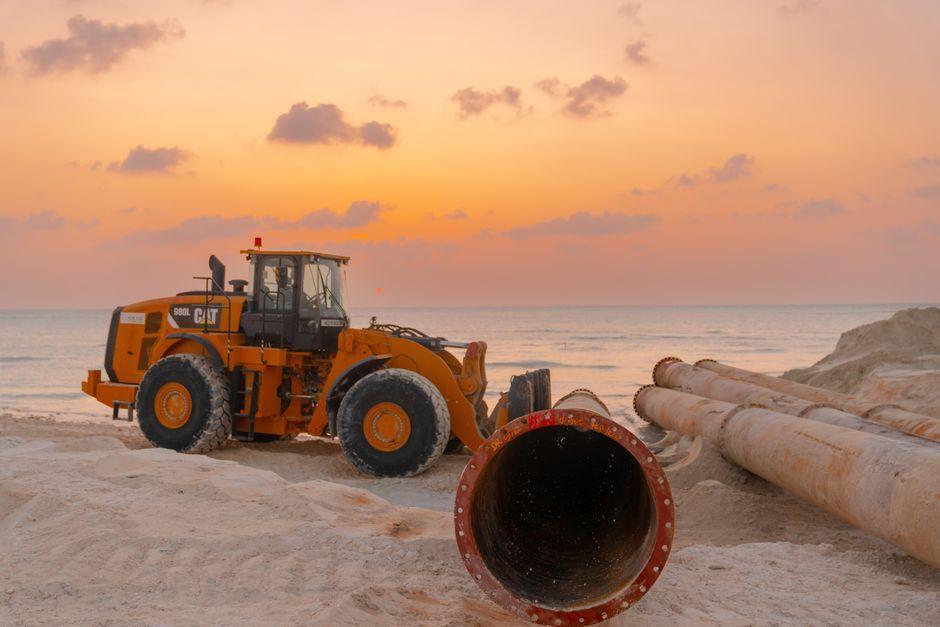
Stock photo for illustration only, not from the actual event
- Caterpillar scales autonomous tech from mining to dynamic construction and quarry sites
- Launches Cat AI Assistant enabling field technicians to use voice-command repair procedures
- Allocates $100 million over five years to upskill its 118,000 global workforce
- Reports record Q2 revenue of $20.5 billion boosted by data center power generation demand
Caterpillar is making a major strategic push to translate the operational lessons it learned from developing autonomous mining machinery into practical artificial intelligence deployments across much more dynamic physical work environments. Jaime Mineart, the company's chief technology officer, detailed this strategic expansion on the sidelines of the Ai4 conference held in Las Vegas earlier this month.
The industrial giant's automation journey originally took root in the mining sector, where chronic labor shortages and hazardous operational conditions made automation an immediate necessity. Today, the corporation commercially deploys autonomous haul trucks, drilling rigs, underground loaders, dozers, and remote-controlled heavy construction apparatus alongside a comprehensive suite including software command centers, fleet management platforms, and remote terrain intelligence tools.
Transitioning automation technology from the controlled, predictable parameters of a closed mining pit to chaotic, ever-changing construction sites presents fundamentally different engineering challenges. Caterpillar's ability to leverage foundational operational data from its heavy machinery ecosystem gives the firm a distinct competitive advantage in industrial physical AI.
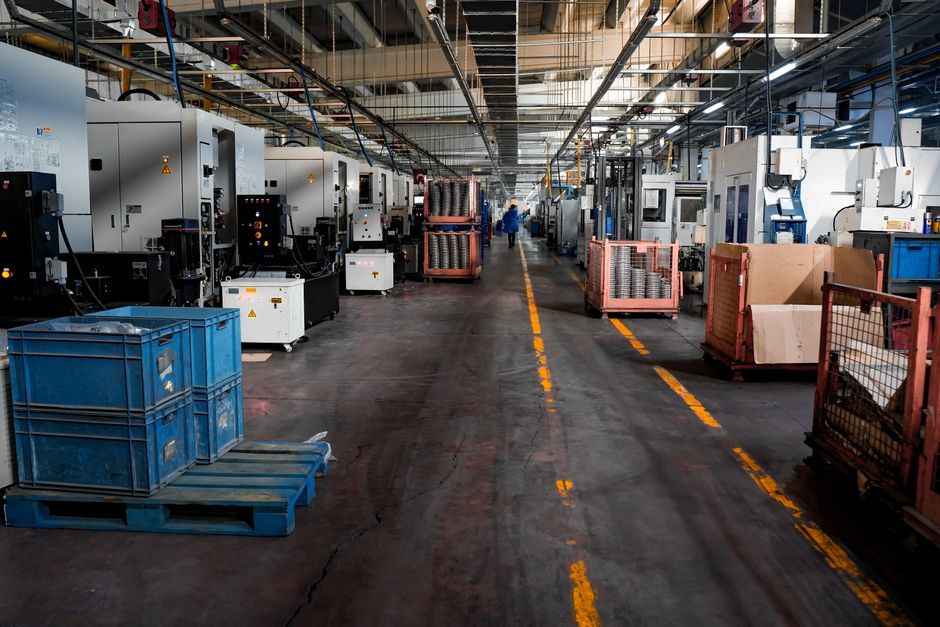
Stock photo for illustration only, not from the actual event
Building upon those foundational capabilities, Caterpillar is now deploying artificial intelligence deeper into enterprise operations, including dedicated tools built specifically for field technicians and internal staff. A prime example is the Cat AI Assistant, which allows field technicians standing directly beside heavy machinery to execute voice commands to instantly retrieve repair instructions, execute initial troubleshooting steps, and accurately identify necessary replacement parts before initiating physical maintenance work. The assistant relies directly on Caterpillar's proprietary dataset, drawing from approximately 1.6 million connected assets globally and over 16 petabytes of structured operational data.
"Now we're in this super exciting time where we can take all of that learning from mining and bring it into much more dynamic environments, jobsites, quarries, and construction sites."
Jaime Mineart, CTO at Caterpillar
Furthermore, the corporation utilizes AI-powered software designed to scan job sites and generate digital twins within manufacturing facilities to optimize operational workflows. Enterprise-wide, the company leverages AI agents to modernize legacy software code, generate and test new applications, and catch software defects much earlier in development cycles. Mineart emphasizes, however, that engineering the core technology represents only a fraction of the overall challenge, as successfully integrating physical AI requires fundamentally restructuring human workflows at customer sites.
To address this operational shift, Caterpillar faces the internal hurdle of preparing its global workforce. Mineart announced plans to invest $100 million over the next five years specifically dedicated to training its 118,000 employees in artificial intelligence, autonomous systems, and robotics. As heavy equipment gains higher degrees of autonomy, human operators will transition from manually driving single machines to overseeing multiple units simultaneously from remote command stations.
This aggressive technological transition coincides with an industry-wide boom in AI infrastructure that is directly boosting Caterpillar's financial performance. The heavy equipment manufacturer posted an all-time high quarterly revenue of $20.5 billion during the second quarter, significantly bolstered by soaring market demand for power-generation equipment deployed within data centers. Sales inside its power-generation division spiked by 72% to reach $3.10 billion, while CEO Joe Creed confirmed that customer demand for cloud computing and generative AI infrastructure shows zero signs of slowing down.
Source: TechCrunch
Found something wrong in this article? Report an issue with this article
Comments
Leave a Comment