

NASA Launches Nancy Grace Roman Space Telescope to Explore Universe
NASA has launched the powerful Nancy Grace Roman Space Telescope from Florida to investigate dark energy, black holes, and distant exoplanets.
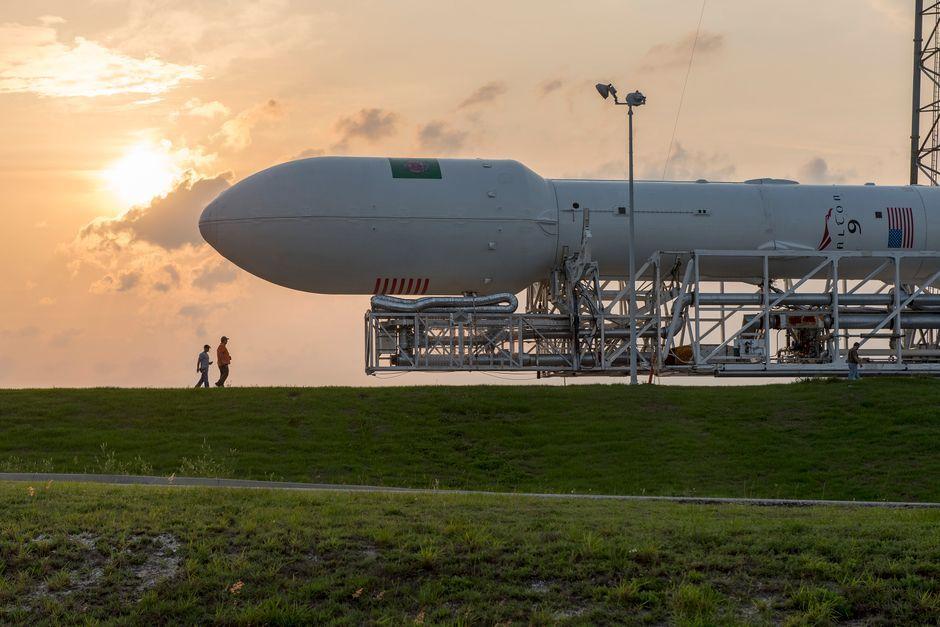
Stock photo for illustration only, not from the actual event
- NASA successfully launched the Nancy Grace Roman Space Telescope from Florida on Sunday morning.
- The telescope features a field of vision at least 100 times larger than the Hubble Space Telescope.
- It will spend 100 days traveling to an orbit roughly one million miles away from Earth.
- The instrument is named after Nancy Grace Roman, NASA's first female chief astronomer.
NASA has successfully launched its next-generation space telescope from a launchpad in Florida on Sunday morning, embarking on a mission dedicated to exploring dark energy, black holes, and other profound mysteries of the Universe. The Nancy Grace Roman Space Telescope is engineered to capture expansive panoramic views, boasting a field of vision that is at least 100 times larger than the iconic Hubble Space Telescope, which promises to fundamentally reshape our comprehension of the cosmos.
Following a lift-off powered by a SpaceX Falcon Heavy rocket, the Roman telescope separated from the launch vehicle roughly 30 minutes later. It is now navigating a 100-day transit toward its operational vantage point located approximately one million miles away from Earth. Designed with a primary lifespan of five years and a stretch goal of operating for a decade, the telescope will soon begin cataloging planets existing outside our solar system known as exoplanets.

Stock photo for illustration only, not from the actual event
Nicky Fox, a NASA administrator, shared during a Sunday morning news conference that the telescope is set to transform how humanity observes the universe, estimating the discovery of tens of thousands, or potentially up to 100,000, new exoplanets. Additionally, US President Donald Trump dialed into the briefing to extend his personal congratulations to the scientists spearheading the initiative.
"Roman is going to change the way we look at the universe. It is going to discover tens of thousands, maybe even 100,000 new exoplanets."
Nicky Fox
The new observatory honors physicist Nancy Grace Roman, who served as NASA's inaugural chief astronomer during the 1960s and held its first female executive position. Throughout her career, she was pivotal in securing congressional approval for Hubble—the predecessor bearing her namesake—and later remarked that dark energy stood out as its most intriguing discovery. Scientists currently theorize that dark matter and dark energy combine to account for roughly 95% of the total universe.
Astrophysically, invisible dark matter acts as a gravitational glue holding cosmic structures together, whereas dark energy operates as a repulsive force driving the accelerating expansion of the universe. By characterizing the atmospheres of distant exoplanets and probing these unseen phenomena, the Roman mission represents a massive technological leap toward addressing humanity's enduring quest to find out if we are alone in the universe.
Source: BBC Science & Environment
Found something wrong in this article? Report an issue with this article
Comments
Leave a Comment