

US builds drone and robot barriers as China retains scale
Washington tightens restrictions on foreign advanced robotics and drones while Chinese makers captured 86% of global shipments in H1 2026.
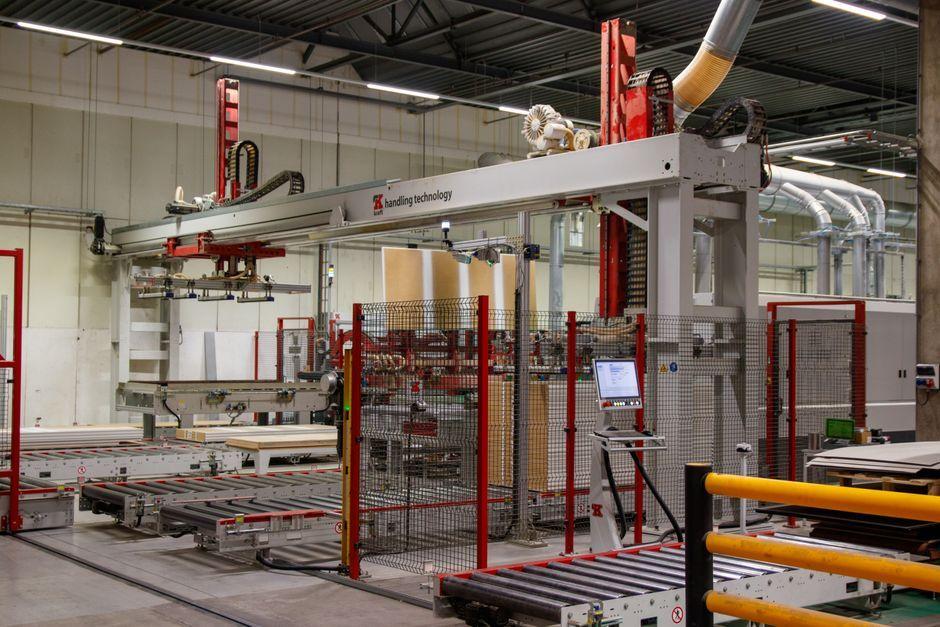
Stock photo for illustration only, not from the actual event
- The US implements stricter limits and import tariffs on foreign drones and advanced robotics.
- The top five global humanoid robot makers are all Chinese, holding an 86% market share.
- Experts note that trade sanctions cannot overcome fundamental manufacturing cost advantages.
During July and August, Washington tightened restrictions on foreign-made advanced robotic systems and imposed steep tariffs on imported drones and their components, citing national security concerns. The drone tariffs take effect in September, with additional component tariffs following in 2027. These moves are part of a broader US effort to restrict foreign technology in strategically important industries. The FCC’s Covered List, established in 2021, initially targeted telecommunications and surveillance equipment from companies including Huawei, ZTE, and Hikvision before expanding to foreign-made drones and, most recently, advanced robotic devices.
The latest move comes as Chinese manufacturers have built commanding positions in both drones and humanoid robots, often competing at prices US and European rivals struggle to match. Taken together, these restrictions raise a bigger question for the global robotics industry: If Chinese drones and humanoids are increasingly shut out of the US, where does the competition move next?
While these restrictions may protect parts of the American market, they do not directly address China’s global manufacturing scale and cost advantages. Industry analysts and executives who spoke with TechCrunch said the result may be less a clean US-China split than a more fragmented global market, with Chinese companies expanding elsewhere while US and allied manufacturers compete in markets where security requirements matter more.

Stock photo for illustration only, not from the actual event
The US and Chinese robotics industries remain deeply connected, but the two countries enter the competition with very different advantages. Unlike semiconductors, robotics does not hinge on a single technology that one country can easily control, said Ankur Saxena, an investment director at TDK Ventures. China dominates global humanoid robot manufacturing, with global shipments hitting 22,000 units in the first half of this year—the vast majority from Chinese manufacturers—according to a report by Counterpoint. US companies, by contrast, are operating at a far smaller scale, said Soumen Mandal, a principal analyst at Counterpoint Research. The world's five largest humanoid robot makers by shipments—AgiBot, Unitree, Galbot, UBTECH, and Leju Robotics—were all Chinese and together accounted for 86% of global shipments in the first half of 2026, according to Counterpoint.
"You cannot sanction your way around a cost curve. You can only out-build it, and America has yet to begin making the decade-long investment that will require."
Ankur Saxena
That advantage could compound. Lower prices allow Chinese manufacturers to put more robots into use, generating real-world data that can improve their technology. Higher production volumes, in turn, can drive costs down further, Saxena said. Mandal noted that Chinese humanoid makers are also pushing costs down by bringing more of the technology stack in-house and drawing on China's existing manufacturing base. Unitree, for example, is developing more components internally, while automakers such as XPeng can draw on their experience in chips and vehicle manufacturing as they move into robotics.
Deeper analysis indicates that China's robotics strategy mirrors its playbook in the electric vehicle sector, leveraging comprehensive domestic supply chains to secure cost dominance. While US tariffs and restrictions may temporarily curb Chinese expansion in the American market, manufacturers are likely to pivot toward emerging economies with high automation demands, potentially cementing a permanent regional technology split.
The drone market offers an early glimpse of what that more fragmented robotics landscape could look like. The industry is increasingly splitting into two ecosystems: a US-led market built around American-made, NDAA-compliant systems, and a China-led market focused on low-cost, high-volume production, said Bentzion Levinson, founder and CEO of Virginia-based drone maker Heven AeroTech. Levinson said Western manufacturers are unlikely to beat Chinese companies in the low-end consumer drone market, where cost remains a major advantage. Instead, US and allied companies could increasingly compete in long-range autonomous systems for defense and critical infrastructure, where security requirements carry more weight.
Source: TechCrunch
Found something wrong in this article? Report an issue with this article
Comments
Leave a Comment