

Starcloud Founders Pitch Fermi Explorer Mission to Alpha Centauri
Starcloud founders launch the Fermi Explorer non-profit, planning to send a 1-kilogram tiny spacecraft to Alpha Centauri by 2029 with a $15 million budget.

Stock photo for illustration only, not from the actual event
- Starcloud startup founders have revealed a plan to send a tiny spacecraft to the Alpha Centauri star system.
- The non-profit project named Fermi Explorer targets a $15 million budget and a 2029 launch date.
- The spacecraft will weigh 1 kilogram with a 10 cm square payload using existing space technologies.
- The journey is expected to take 80,000 years to cross the 41 trillion kilometer distance.
Following the ambition of operating a fleet of GPUs in orbit, the founders behind the startup Starcloud have introduced a new pitch for potential investors: a plan to dispatch a tiny spacecraft on an 80,000-year journey to Alpha Centauri. If executed, it will mark the first human-built object explicitly aimed at another star and the sixth to leave our solar system entirely.
Dubbed Fermi Explorer, the non-profit organization behind the mission emerged recently to seek partners, donations, and advice. The initial team—comprising Starcloud founders Philip Johnston, Adi Oltean, and Ezra Feilden, alongside program manager Garret Jameson—has formulated a blueprint to leverage proven space technologies to propel a vehicle carrying a 10 cm square payload and weighing 1 kilogram into interstellar space.
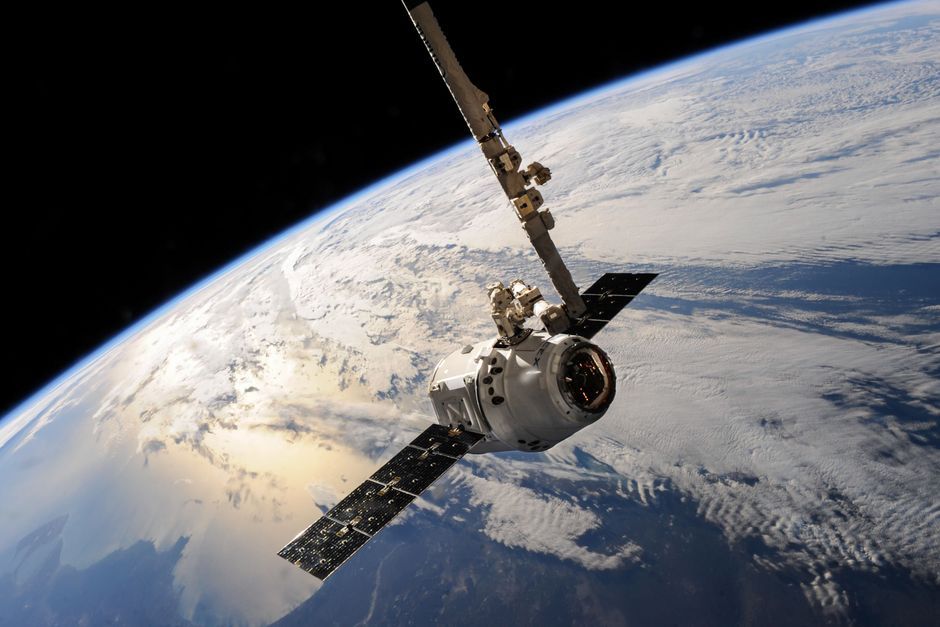
Stock photo for illustration only, not from the actual event
The founders note they are launching this mission driven by the spirit of human exploration, to achieve a historical milestone, and to test the boundaries of the Fermi paradox, which attempts to explain why intelligent extraterrestrial life remains undiscovered and gives the mission its name.
The mission targets an estimated cost of about $15 million and a launch window in 2029. The non-profit is actively soliciting vendors to build the spacecraft, funding to support them, and scientific and artistic payloads, much like the sensors and Golden Record carried aboard NASA's Voyager probe, the first human spacecraft to exit our solar system.
Interstellar exploration has long faced immense hurdles due to staggering cosmic distances and the relatively slow propulsion methods currently available. While past billionaire-backed ventures like Breakthrough Starshot sought futuristic laser propulsion before collapsing in 2025, Fermi Explorer takes a pragmatic pivot by relying entirely on mature, existing technologies to accomplish an unprecedented deep-space milestone.
Most interstellar exploration blueprints stumble when confronting vast distances and comparatively sluggish methods to cross them. Voyager, launched back in 1977, is currently about 26 billion km away from Earth, whereas Alpha Centauri, our solar system's nearest star, sits 41 trillion km away.
The last instance Silicon Valley tackled this hurdle occurred when a non-profit named Breakthrough Starshot, founded in 2016 by Yuri Milner and backed by Mark Zuckerberg, envisioned a multi-billion dollar initiative utilizing a novel laser-based propulsion system to reach Alpha Centauri within twenty to thirty years. Although that effort collapsed in 2025, the overarching dream clearly persists.
Fermi Explorer adopts the opposite philosophy: rather than pushing the bleeding edge of unproven technology, the objective is utilizing available capabilities to achieve a tangible outcome. The blueprint involves launching the spacecraft via a rocket rideshare, followed by deploying efficient yet low-power electric propulsion to slingshot the vehicle into orbits ultimately bound for Alpha Centauri. The spacecraft is engineered to remain active for approximately 12 years prior to entering a final coast phase toward the neighboring star system.
Source: TechCrunch
Found something wrong in this article? Report an issue with this article
Comments
Leave a Comment