

NASA CHAPEA 2026: 4 Crew Members Begin 378-Day Mars Stay
NASA's second CHAPEA mission kicks off at Johnson Space Center, where four crew members will spend 378 days inside Mars Dune Alpha.

Stock photo for illustration only, not from the actual event
- Four crew members begin NASA's second CHAPEA mission lasting 378 days inside Mars Dune Alpha.
- The habitat features 3D-printed construction by ICON and architectural design by BIG.
- Simulated communication delays of 22 minutes and resource restrictions test crew resilience.
- Space habitats must integrate closed-loop life support systems to replace terrestrial infrastructure.
Inside a 1,700-square-foot structure at NASA's Johnson Space Center in Houston, four individuals are currently spending 378 days pretending Earth is 140 million miles away. Ross Elder, Ellen Ellis, Matthew Montgomery, and James Spicer entered Mars Dune Alpha on October 19th, 2025, and will remain inside until October 31st, 2026, as part of NASA's second Crew Health and Performance Exploration Analog, or CHAPEA, mission.
Designed by BIG and 3D printed by ICON, the habitat provides each person with a private room while incorporating work areas, communal spaces, a medical station, and crop cultivation zones. The crew exercises, maintains the habitat, grows crops, and steps outside for simulated Mars walks across an enclosed field of red sand. NASA incorporates resource restrictions, equipment failures, and communication delays designed to approximate the distance between Mars and Earth.
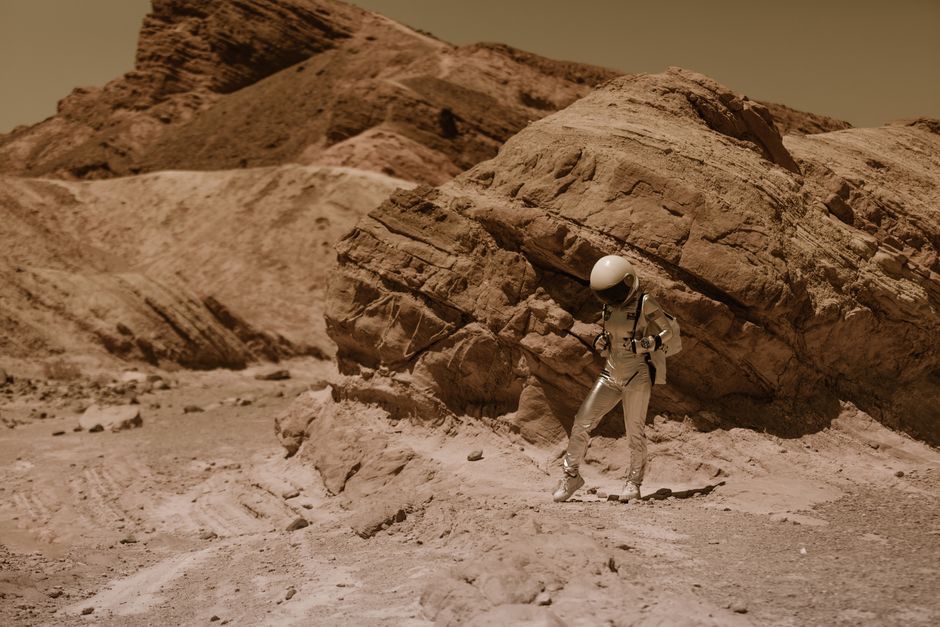
Stock photo for illustration only, not from the actual event
Mars Dune Alpha features thick ribbed walls produced by ICON's Vulcan printing system and a low interior divided into zones for living and work. Yet the more compelling experiment is domestic. A house on Earth connects invisibly to massive networks beyond its walls, with water arriving through pipes and waste disappearing beneath the floor. A habitat on Mars must compress much of that supporting world directly into the architecture itself, collapsing the distinction between home and infrastructure.
Within Mars Dune Alpha, BIG separated crew quarters from collective zones and varied ceiling heights across the layout, giving occupants spatial changes during a year spent indoors. NASA describes the layout as deliberately separating living and working areas while providing each crew member with an individual room.
Designing habitats for Mars or the Moon extends beyond basic pressure vessels and radiation shielding. It requires a profound understanding of psychological well-being and closed-loop resource management, where architectural nuances directly influence the survival of isolated crews under extreme confinement.
SAGA Space Architects explored a similar problem at a smaller scale with LUNARK, an experimental lunar habitat deployed in northern Greenland in 2020. Architects Sebastian Aristotelis and Karl-Johan Sørensen lived inside its 17.2-cubic-meter interior for 60 days, isolated in an Arctic landscape where temperatures dropped far below freezing.
Stock photo for illustration only, not from the actual event
Space habitation grows more complex once waste enters the equation, as settlements separated from Earth by months of travel have few opportunities to discard materials. The European Space Agency has spent decades developing MELiSSA (Micro-Ecological Life Support System Alternative) around the concept of shrinking Earth's ecological cycles into a controlled artificial ecosystem.
Source: designboom
Found something wrong in this article? Report an issue with this article
Comments
Leave a Comment