

Bangkok Business Summit 2026: World Bank Report Urges Reform
World Bank launches Building Thailand's Future Today report, noting post-COVID GDP growth at 2.2% and setting a 5.4% per capita income growth target for 2037.

Stock photo for illustration only, not from the actual event
- Thailand's post-COVID economic growth averaged just 2.2% annually from 2021 to 2027
- Targeting 5.4% annual per capita income growth to reach high-income status by 2037
- World Bank recommends upgrading five key industries toward tech and innovation
- Urgent education reform needed as over half of 15-year-olds score below minimum benchmarks
Thailand's economic growth averaged a modest 2.2 percent per year between 2021 and 2024. For the nation to successfully transition into a high-income country by the year 2037, per capita income must accelerate at an average of 5.4 percent annually throughout the upcoming decade.
This projection forms a core part of the newly released report titled Building Thailand's Future Today, unveiled by the World Bank at the Bangkok Business Summit 2026. The report points out that the traditional economic model which fueled Thailand's growth for the past 35 years is no longer adequate to compete in a rapidly shifting global landscape driven by artificial intelligence, global trade evolution, climate shifts, and demographic changes.
Since 1991, Thailand has generated approximately 11 million new salaried or waged jobs, while per capita income has more than doubled. This achievement was propelled by trade openness, foreign investment, quality infrastructure, macroeconomic stability, and the establishment of robust automotive, electronics, and tourism manufacturing bases.
Nevertheless, the Thai economy has experienced a continuous deceleration. Growth dropped from an annual average of 8 percent between 1991 and 1996 down to 3.6 percent during the 2010 to 2019 period, before slipping further to 2.2 percent in the post-pandemic era alongside stagnant formal job creation.
The root of the issue does not lie in a lack of investment or prominent corporations, but rather in high productivity remaining heavily concentrated within large enterprises, elite schools, and Bangkok. Many Thai firms remain confined to low-value activities, foreign direct investments yield limited local technology spillovers, and a large segment of the workforce remains excluded from the advanced skills demanded by the modern economy.
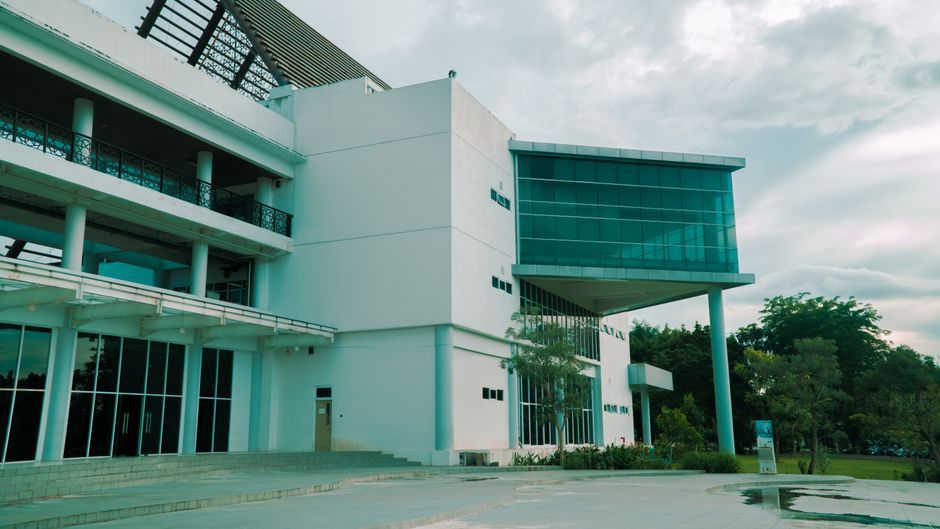
Stock photo for illustration only, not from the actual event
Analytical context suggests that an over-reliance on large corporations and capital-centric growth exacerbates economic inequality and reduces national resilience against external shocks. Transitioning toward an innovation-driven economy is therefore a structural necessity rather than a mere option for escaping the middle-income trap.
To overcome these structural hurdles, the World Bank proposes a dual-track economic transformation. The first track involves shifting competitive strategies away from volume, scale, and low costs toward skills, technology, knowledge, and innovation. The second track focuses on fostering economic dynamism by enabling new market entrants to thrive, improving foundational school learning outcomes, and empowering secondary cities to build local economic strength.
The report highlights five target industries that align with global market demand and Thailand's competitive advantages:
- Advanced manufacturing: Upgrading automotive and electronics into design, engineering, R&D, and AI components
- Sustainable and wellness tourism: Transitioning from sheer tourist volume to higher value-per-head and regional distribution
- Digital services: Leveraging existing digital payment infrastructures
- Agriculture and food: Expanding food production bases and driving innovation
- Creative industries: Scaling cultural capital and content economies
Source: Techsauce
Found something wrong in this article? Report an issue with this article
Comments
Leave a Comment