

HOUSING: 33 European Projects Answer Housing Question
Edited by Jeanette Kunsmann and Laura Traub, the 408-page book HOUSING — 33 Answers to the Housing Question explores 33 residential projects across Europe.

Stock photo for illustration only, not from the actual event
- The 408-page book gathers 33 residential projects from across Europe.
- Content is organized into three main chapters covering community and renovation.
- It highlights adaptive reuse as equally important to new construction.
- The focus centers on everyday life design and actual resident needs.
Contemporary discussions around domestic architecture frequently question what kind of life housing should make possible today. In the newly released book HOUSING — 33 Answers to the Housing Question, editors Jeanette Kunsmann and Laura Traub bring together a selection of projects from across Europe to approach this urgent question from various directions. Looking far beyond standard metrics like units, square meters, and market supply, the publication examines social and cooperative housing, low-cost construction methods, shared living models, renovation, and adaptive reuse.
Spanning 408 pages, the publication suggests that modern residential architecture needs to become significantly more adaptable, better connected to its immediate surroundings, and deeply attentive to the existing structures and social systems that shape daily routines. The book is systematically structured around three core chapters: Social and Community Housing; Building Simply; and Renovate, Adapt and Build New. It compiles architectural works ranging from Portugal to Bosnia, and from Oslo to Basel. Although their specific methods vary greatly, a consistent underlying question remains: what happens when housing initiatives begin with changing societal conditions rather than a standardized template of domestic life?
Examining this book's thesis reveals a pivotal paradigm shift in modern architecture, moving away from treating housing purely as a commodity or square-footage metric. Instead, it emphasizes ecological sustainability by optimizing existing structures, addressing rising construction material costs through intelligent adaptation rather than resource-heavy demolition and rebuilding.
Architectural discourse often presents shared spaces as inherently social by default. However, experts point out that while architecture can certainly provide physical opportunities for encounters, it cannot artificially manufacture genuine community, nor should it eliminate necessary personal privacy. Affordability and supply remain absolute foundational concerns, but Laura Traub argues that broader conversations must also address the actual organization of everyday life and which neighborhoods genuinely support a good life.
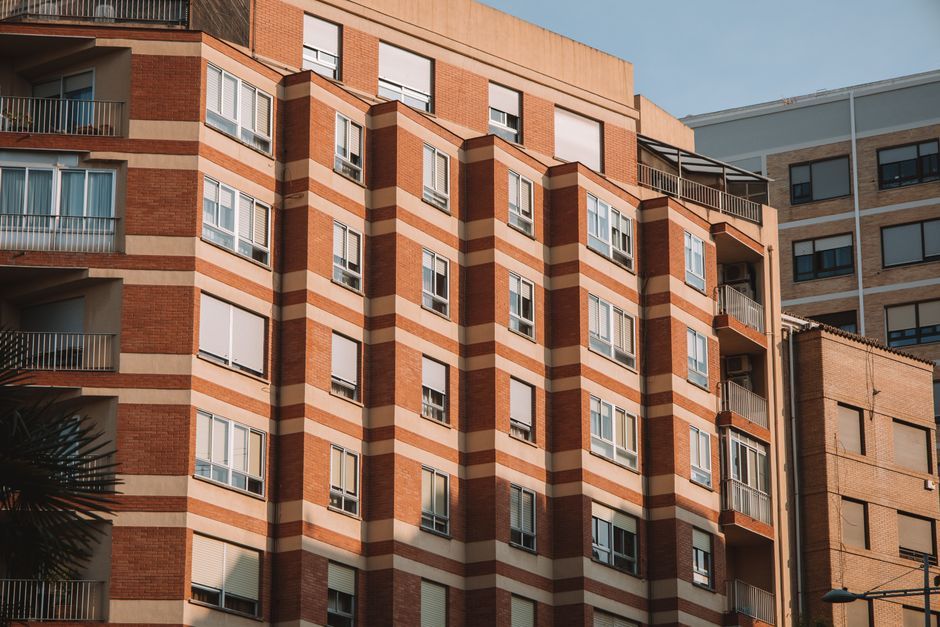
Stock photo for illustration only, not from the actual event
Care infrastructure becomes vividly apparent through this expanded lens, prompting questions about who looks after children, elderly residents, or individuals requiring support, and whether housing can successfully alleviate some of the immense pressure currently placed on individual households. For instance, the House for Five Women in Bosnia featured in the book was developed specifically around the unique needs of five female residents, successfully combining private rooms with generous shared spaces. Traub notes this project demonstrates how housing can seamlessly support both individual independence and social connection without ever forcing collective living as a rigid obligation.
"Given the amount of housing and infrastructure that already exists, renovation, conversion, and adaptation will be at least as important as new construction in the future."
Laura Traub
Among the various forms of experimentation documented in the publication, Laura Traub sees exceptional potential in working directly with what has already been built. As the severe ecological and material costs of new construction become impossible to ignore, renovation, conversion, and adaptation are bound to match the importance of new housing developments. True innovation does not necessarily demand a spectacular new typology or an entirely fresh building; rather, it frequently emerges from the patient, slower work of understanding existing assets and finding intelligent ways to make them useful again.
The 33 selected projects form what publisher Edition DETAIL describes as a comprehensive atlas of possible strategies, complete with architectural plans, sections, construction drawings, photographs, and interviews that make diverse design positions available for comparison. Traub reflects that the overarching takeaway is recognizing housing as much more than a mere commodity or collection of square meters, emphasizing that a successful home has no universal model since the right answer always depends on evolving people, places, and circumstances.
Source: designboom
Found something wrong in this article? Report an issue with this article
Comments
Leave a Comment