

Borneo Wildfires 2025: Volunteers Defuse Carbon Bombs
Volunteers in Borneo risk their lives fighting underground peat fires that have scorched 200,000 hectares, releasing massive carbon and causing 50,000 respiratory cases.
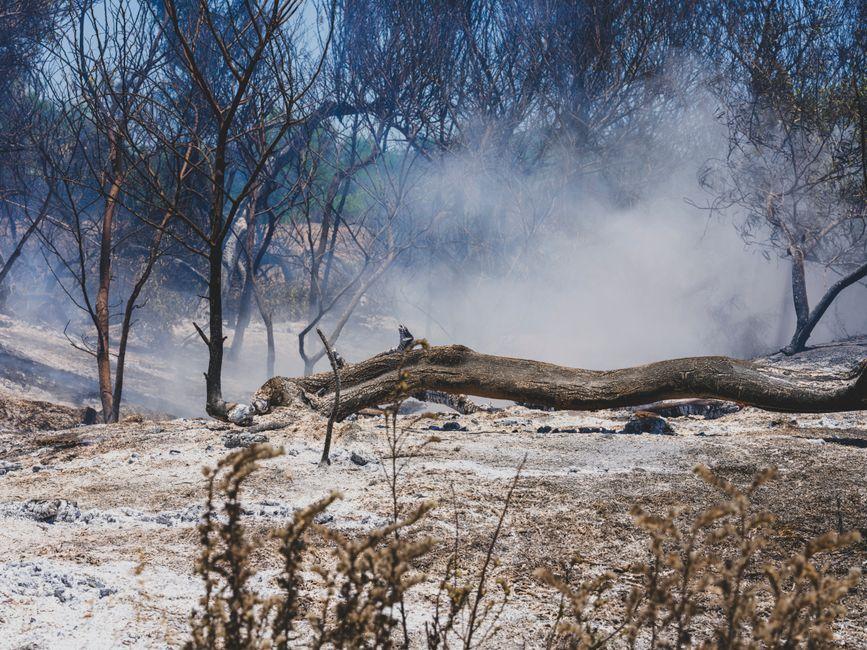
Stock photo for illustration only, not from the actual event
- Wildfires have scorched over 200,000 hectares of forest and farmland across Borneo since early July.
- Underground peat fires release fossilised carbon comparable to the annual emissions of thousands of cars.
- Indonesia's Health Ministry recorded over 50,000 respiratory infection cases due to the toxic haze.
- Local volunteers are digging ponds and improvised irrigation systems to battle subterranean blazes.
The sky over Borneo grows heavy with an amber-hued, treacle-thick smog that has spilled across international borders into Singapore, Manila, and Kuala Lumpur. Dwi Sujatmoko, a 35-year-old volunteer firefighter, describes the air as feeling like tear gas as he spends over a month enveloped in toxic microparticles fighting an unyielding fire front.
Using hand tools, carts, and portable fire pumps, Dwi and thousands of other volunteer firefighters—many belonging to indigenous Dayak or Banjar communities—have been battling an inferno that has carbonised approximately 200,000 hectares of forest and farmland across Indonesian Borneo since early July.
Hidden underground, giant subterranean peat fires continue to smoulder and choke the air with poisonous fumes. What makes the fires in Borneo particularly concerning is that they are ravaging one of the world's largest tropical peatland ecosystems.
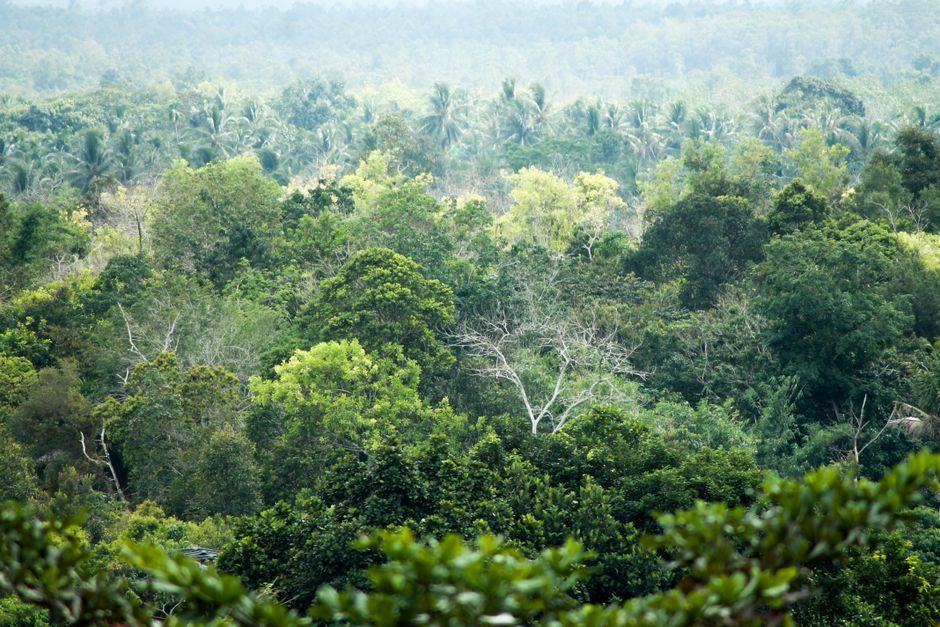
Stock photo for illustration only, not from the actual event
The 4.5-million-hectare expanse of forest and swamp normally serves as a valuable reservoir for ancient carbon. Dr. Nisa Novita, a peatland researcher at Indonesian conservation NGO Yayasan Konservasi Alam Nusantara (YKAN), explains that waterlogged conditions slow decomposition, allowing carbon to accumulate underground for millennia.
A deep peatland can harbor over 6,000 tonnes of carbon per hectare—roughly equivalent to the annual CO₂ emissions of 4,800 cars. When it burns, Dr. Nisa notes, that fossilized carbon is released into the atmosphere very rapidly.
"Living in this kind of pollution cloud is extremely unhealthy."
Indonesian Health Ministry
These health impacts are felt most acutely at the disaster's frontline. Between July and August, Indonesia's Health Ministry recorded over 50,000 cases of respiratory infections linked to land and forest fires, including more than 12,000 children under the age of five. Two volunteers in Central Kalimantan recently died after their health deteriorated from extinguishing fires.
Peatland fires are notoriously difficult to extinguish compared to standard surface wildfires because the fuel consists of accumulated organic matter buried deep underground. Without sufficient moisture and oxygen deprivation through saturation, subterranean fires can smoulder invisibly for months and easily reignite.
Experts trace the crisis back to decades of land-use changes originating in the Suharto era. Tono, a representative of the Dayak Kanayatn people, told the BBC that indigenous communities are frequently scapegoated for controlled farming burns. Meanwhile, Prof. Page points out that industrial peatland drainage for commercial plantations has dramatically escalated fire vulnerability across the region.
Source: BBC Science & Environment
Found something wrong in this article? Report an issue with this article
Comments
Leave a Comment