

Earth warming faster? Scientists analyze sulphur pollution clue
Declining sulphur pollution from clean air policies may be accelerating global warming, with Met Office predicting 2027 to likely break temperature records.
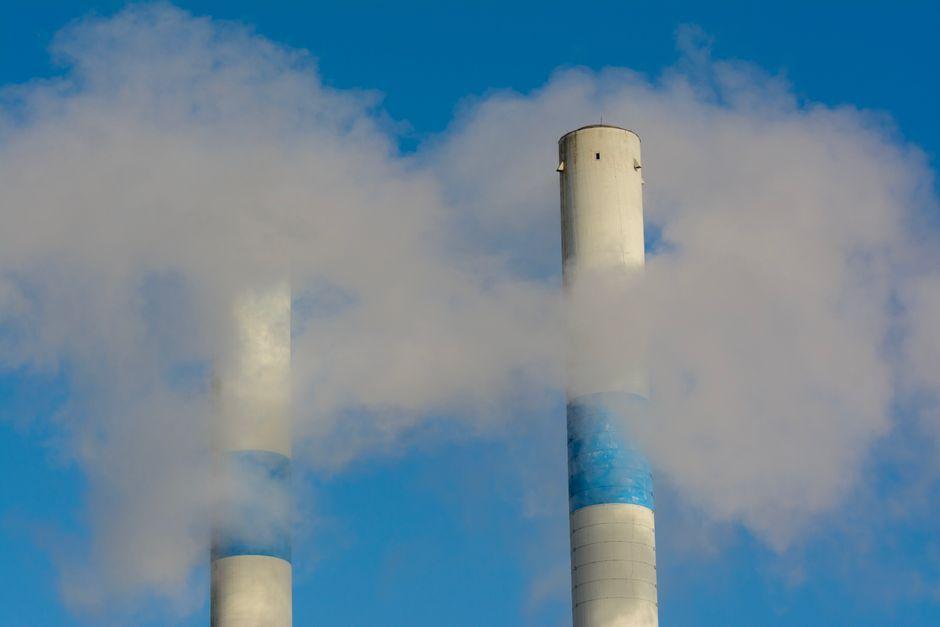
Stock photo for illustration only, not from the actual event
- Fossil fuel burning releases both carbon dioxide and sulphur pollution
- Global clean air policies have sharply reduced sulphur emissions worldwide
- Sulphate aerosols reflect sunlight and help cool down the planet
- The loss of this cooling effect is slightly accelerating global warming trends
During Britain's record-breaking hot summer, a curious debate broke out on X regarding climate science. While certain arguments distorted core facts, the underlying science itself is real and far more intricate than initially claimed.
The fossil fuels burned for over a century produce two distinct types of pollution. While carbon dioxide warms the Earth, sulphur pollution forms tiny atmospheric particles that reflect sunlight back into space, partially counteracting the warming effect.

Stock photo for illustration only, not from the actual event
Thanks to global clean air policies like the US Acid Rain Program in the early 1990s, sulphur emissions have dropped dramatically while carbon dioxide remains near record highs. Scientists increasingly believe that losing this cooling shield is slightly speeding up global warming.
The past three years rank as the warmest ever recorded, and the Met Office notes that 2027 is very likely to replace 2024 as the warmest year on record. This raises a worrying question: is the planet more sensitive to greenhouse gases than previously thought?
"Sulphate aerosols, they are really small particles, but they are bright particles"
Global temperatures naturally fluctuate year-to-year due to phenomena like El Niño. Reto Knutti and his team at ETH Zurich attempted to strip away these natural variations to reveal the true underlying climate trend.
Understanding the delicate balance between greenhouse gases and aerosols remains pivotal for accurate climate modeling. Sulphur pollution has historically acted as a natural sunblock. While clean-air regulations successfully protected human health and curtailed acid rain, they inadvertently accelerated surface temperature warming.
Burning coal and oil releases sulphur dioxide, forming bright sulphate aerosols that reflect sunlight. Dr Øivind Hodnebrog, a principal researcher at Cicero, explains that these tiny bright particles also modify cloud formation, making clouds brighter and longer-lived, while ship pollution creates distinct bright trails visible from space.

Stock photo for illustration only, not from the actual event
However, sulphur pollution severely harms human health and causes acid rain that destroys forests and aquatic life, prompting decades of emission cuts across Europe, North America, and China. Unlike carbon dioxide which lingers for centuries, sulphate aerosols survive in the atmosphere for mere days or weeks, meaning their cooling effect vanishes almost immediately when emissions fall. Prof Piers Forster from the University of Leeds estimates that declining aerosol pollution currently adds about 0.05C to 0.1C of warming per decade.
Source: BBC Science & Environment
Found something wrong in this article? Report an issue with this article
Comments
Leave a Comment