

Gerhard Richter Pavilion 2026: Hexagonal Gallery in Doha
Artist Gerhard Richter and Selldorf Architects are set to unveil a permanent hexagonal gallery pavilion at MIA Park in Doha, Qatar, on November 20, 2026.
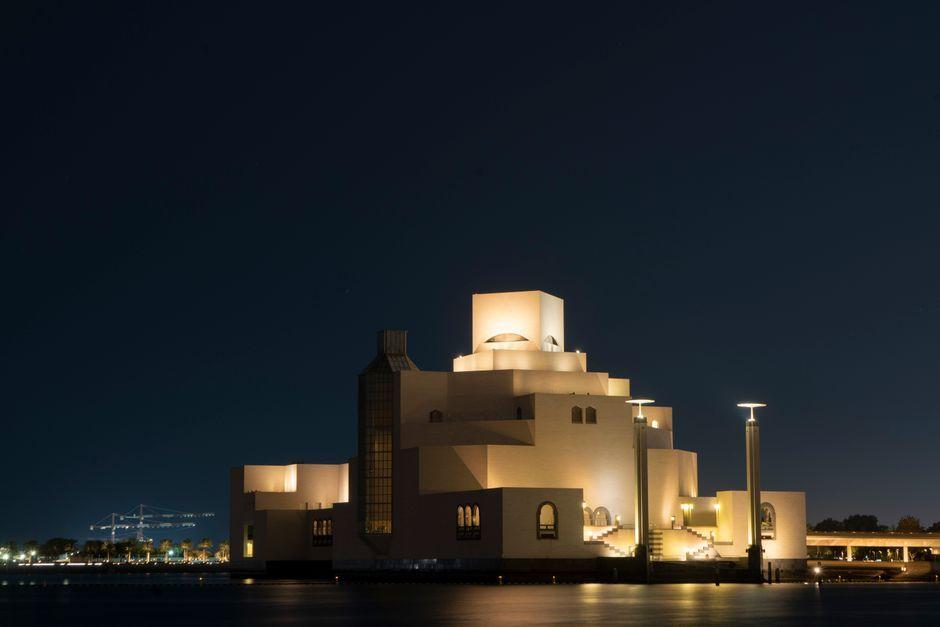
Stock photo for illustration only, not from the actual event
- Gerhard Richter designed a permanent hexagonal art pavilion at MIA Park, Doha
- Realized in collaboration with Selldorf Architects and commissioned by Qatar Museums
- Official inauguration is scheduled for November 20, 2026
- The interior features three large-scale Strip paintings and the Strip Tower sculpture
The art world is gaining a striking new permanent landmark as German artist Gerhard Richter has designed a hexagonal gallery pavilion for MIA Park in Doha, Qatar. Realized in collaboration with Selldorf Architects and commissioned by Qatar Museums, Doha Pavilion: Gerhard Richter is set to open its doors on November 20, 2026, situated right beside the Museum of Islamic Art.
The conceptual framework behind the building's architecture stems from Richter's Strip paintings. Its six exterior walls are wrapped in repeating printed patterns derived from the artist's 2011 book Patterns. The source traces back to 1990 when Richter digitally divided an image of his Abstract Painting (724-4) into two vertical strips, repeatedly subdividing them until reaching 8,192 strips. Each strip was then mirrored and repeated into a horizontal symmetrical pattern, covering the exterior surface of the architectural structure.
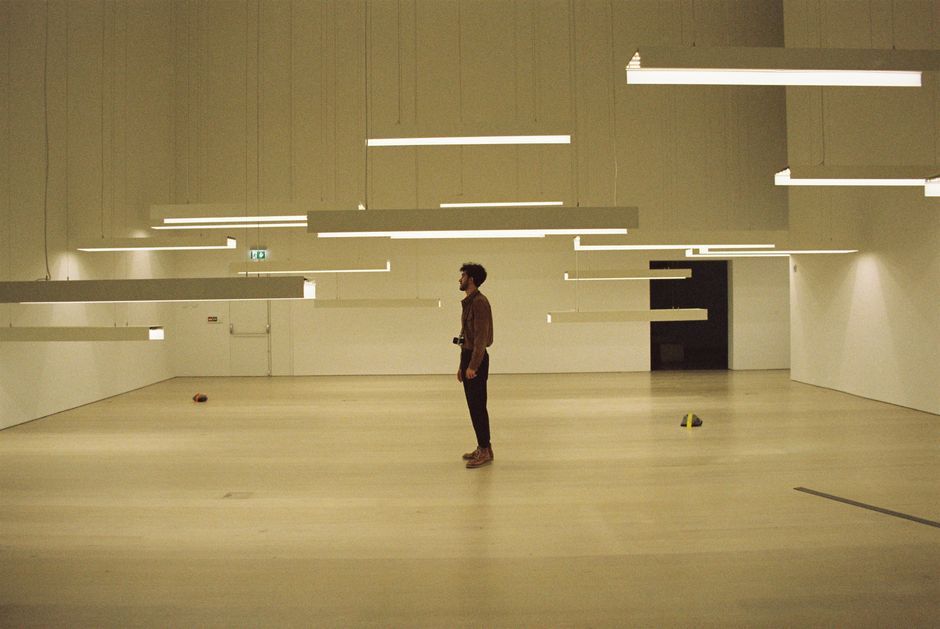
Stock photo for illustration only, not from the actual event
Upon stepping inside, visitors encounter three large-scale Strip paintings lining the interior walls. These works push the process to the absolute limit of human visual perception, with each horizontal band corresponding to a photograph slice measuring just 0.08 millimeters wide. At the center of the room stands Strip Tower, a freestanding sculpture explicitly designed for the pavilion, lifting the linear bands away from the wall and directly into the room's interior space.
On the narrower walls between the paintings, two floor-to-ceiling mirrors occupy the space. Richter has utilized mirrors since the 1980s, and here they transform the pavilion into an optical device. Artworks repeat across their surfaces, visitors step right into the composition, and the compact interior footprint appears vastly expanded.
The application of repeated symmetry across the facade bridges Richter's digital process with the traditional geometries of Islamic art, where patterns extend seamlessly beyond visible edges. Furthermore, the pavilion's November 20, 2026 opening precedes the inaugural Rubaiya Qatar international visual arts quadrennial running through April 30, 2027. Featuring over 50 regional and international artists across Doha, Richter's permanent structure anchors the city's expanding role as a global contemporary art hub.
Outside the pavilion, a stone sculpture titled Brunnen (Well) sits directly on the grounds, extending the artwork further into MIA Park. After the inaugural arts event concludes, the pavilion remains a permanent fixture in Doha. It marks a remarkable circular journey where a single photograph was dismantled, mirrored across thousands of slivers, and translated into the walls of a physical building.
Source: designboom
Found something wrong in this article? Report an issue with this article
Comments
Leave a Comment