

Frank Gehry’s Guggenheim Abu Dhabi to Open in December 2026
Frank Gehry's largest museum on Saadiyat Island is officially scheduled to open to the public on December 11, 2026, after more than two decades of anticipation.
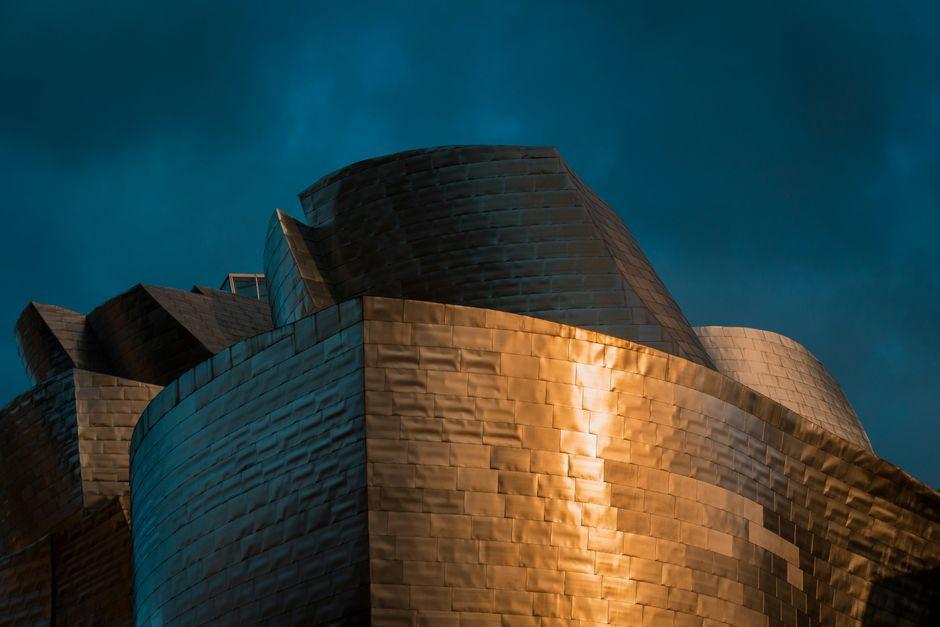
Stock photo for illustration only, not from the actual event
- Guggenheim Abu Dhabi is officially set to open on December 11, 2026, on Saadiyat Island.
- Designed by the late Pritzker Prize-winning architect Frank Gehry, spanning roughly 80,000 square meters.
- Features ten sculptural towers serving as passive environmental devices for ventilation and shade.
- Houses 30 galleries across 11,600 square meters of exhibition space focusing on a transcultural art framework.
More than two decades after the initial announcement, the Department of Culture and Tourism – Abu Dhabi has confirmed that the Guggenheim Abu Dhabi will finally open its doors to the public on December 11th, 2026. Designed by the late Pritzker Prize-winning architect Frank Gehry, the museum stands as one of the most significant cultural projects completed in recent years, adding a major new landmark to the Saadiyat Cultural District.
Situated within the Saadiyat Cultural District, Guggenheim Abu Dhabi joins a rapidly growing cluster of elite institutions, which includes the Louvre Abu Dhabi, Zayed National Museum, Natural History Museum Abu Dhabi, and teamLab Phenomena Abu Dhabi.
The building has consistently remained one of the most anticipated elements of the entire masterplan. Guggenheim Abu Dhabi is Frank Gehry’s largest museum to date, occupying approximately 80,000 square meters with 11,600 square meters of gallery space distributed across 30 rooms, alongside 23,000 square meters of outdoor exhibition zones. Gehry’s architectural response directly addresses the harsh environmental conditions of the Gulf region, organized around a monumental central atrium beneath a skyline defined by ten sculptural cones.
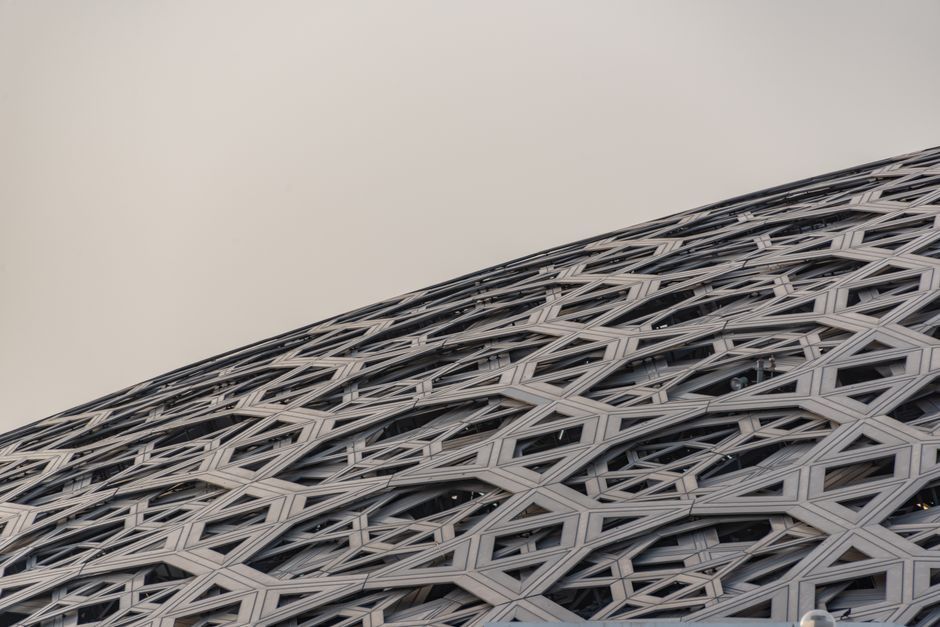
Stock photo for illustration only, not from the actual event
Rising to heights of roughly 88 meters, these striking towers fulfill a vital environmental purpose rather than just an aesthetic one. They operate as passive environmental devices that introduce natural ventilation and essential shading into the structure, mitigating the intense regional climate. While Gehry experimented with sculptural forms throughout his career, this project deeply integrates monumental form with high-performance environmental engineering.
The integration of climate-responsive features—such as the massive stainless steel mesh canopy and passive cooling towers—highlights how contemporary architecture in the Gulf is evolving. Star architects are increasingly required to balance iconic sculptural designs with rigorous sustainability and thermal comfort metrics to combat extreme desert temperatures.
The museum’s curatorial direction sets it apart from traditional modern art institutions by adopting a transcultural framework. Since 2009, the museum has curated a permanent collection spanning painting, sculpture, installation, photography, and new media. Galleries are grouped around thematic concepts such as Abstractions, Popular Culture, Land, Language, and Storytelling, allowing diverse global narratives to intersect rather than relying purely on a Western-centric art history timeline.
Source: designboom
Found something wrong in this article? Report an issue with this article
Comments
Leave a Comment