

Realtime Audit Signals for Voice Lobby and Delivery Proof
Explore designing realtime audit streams for gaming voice lobbies, separating media paths from audit ledgers, and measuring delivery metrics.
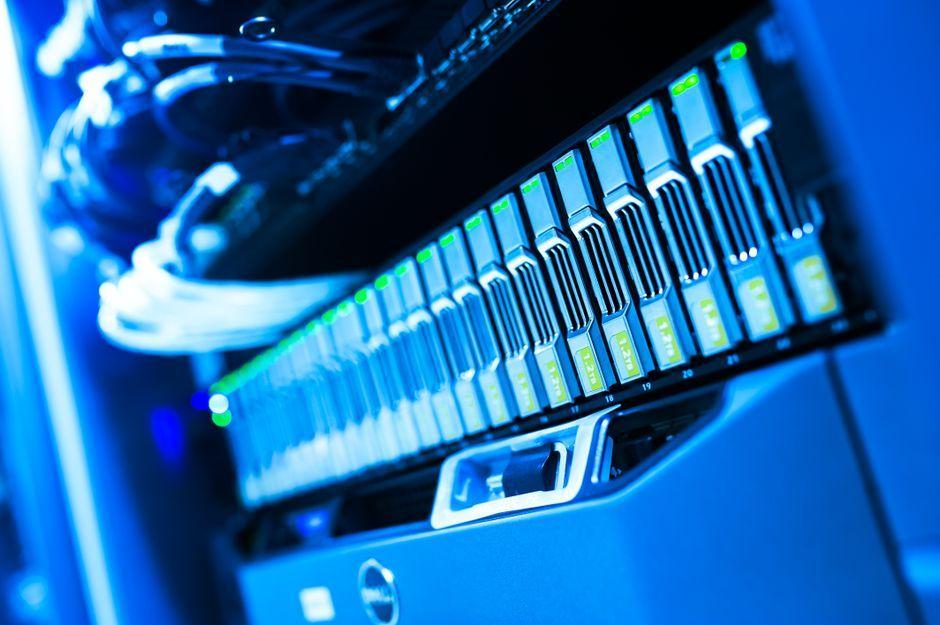
Stock photo for illustration only, not from the actual event
- Record state transitions like joins and permission updates instead of raw RTP packets
- Use per-lobby sequence numbers to scope ordering and prevent global bottlenecks
- Track three core latency and health signals: publish lag, ack lag, and replay requests
- Define distinct backpressure policies for live moderators versus archival consumers
Designing a gaming voice lobby with trustworthy audit evidence requires a deliberate architectural pattern: placing a compact audit stream beside the media path. Emitting immutable events with monotonic sequences, fanning them out to dashboard consumers, and recording individual receipts provides operators with verifiable data. Treating a raw audio packet as proof of lobby event delivery represents a critical category error.
Systems should record explicit state transitions—such as member p-184 joining lobby l-42, a microphone permission toggle, or a lobby closure—rather than processing every RTP packet. Each audit event requires an event ID, lobby ID, producer timestamp, schema version, and a sequence number scoped strictly to that specific room. This structure enables dashboards to independently verify whether the service published a state change and whether a specific viewer observed it.

Stock photo for illustration only, not from the actual event
This distinction becomes critical during dispute resolution. WebRTC governs peer connections and media transport, but it does not define application audit ledgers or delivery guarantees. Establishing a narrow pipeline with explicit boundaries ensures system reliability:
- The lobby service commits an event prior to acknowledging state changes.
- The gateway maintains a short per-lobby replay window over WebSocket channels.
- The dashboard acknowledges the highest contiguous sequence it has successfully rendered.
From a software architecture perspective, decoupling the media plane from the audit plane prevents performance bottlenecks. While voice data prioritizes ultra-low latency and tolerates minor packet loss, audit data demands strict reliability and tamper-evident ordering for accountability. This separation is an industry standard for scalable real-time systems.
Three core signals make delivery measurable: publish_lag_ms tracking commit-to-send duration, ack_lag_ms measuring send-to-acknowledgement delay, and replay_requests_total capturing viewer gap detection. Developers should also monitor duplicate_events_total and unknown_schema_total to catch client configuration or deployment flaws that latency metrics alone cannot surface.
A green socket count alone is weak operational evidence because a blocked event loop can stall rendering while the connection remains active. Tracking acknowledgement watermarks per viewer provides granular health insights. Scoping sequence ordering per lobby avoids unnecessary global contention while keeping replay ranges compact and manageable.
"Three words: publish, observe, reconcile."
Gideon Sterling
Source: Dev.to
Found something wrong in this article? Report an issue with this article
Comments
Leave a Comment