

Why living underground feels so strange: Architecture explored
Exploring the psychological and architectural reasons why subterranean living, from Chinese dikengyuan homes to Javier Senosiain's Organic House, evokes both comfort and unease.
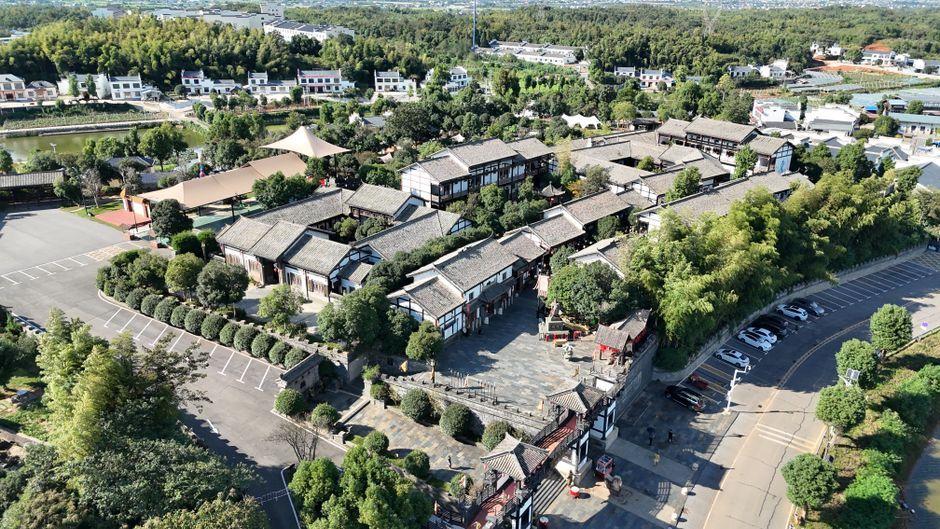
Stock photo for illustration only, not from the actual event
- Subterranean homes like China's dikengyuan challenge traditional domestic spatial perception.
- Thick surrounding earth acts as a natural thermal mass to stabilize indoor temperatures.
- Lack of daylight and spatial orientation directly impacts psychological comfort and well-being.
- Central courtyards and open-air skylights are vital for connecting underground spaces to the surface.
Across China's Loess Plateau, an entire house can disappear beneath a field. The dikengyuan begins with a courtyard excavated several meters into the earth, then expands sideways as vaulted rooms are carved from its walls. Seen from above, the agricultural landscape continues nearly uninterrupted, with only a rectangular opening and a patch of sky giving the house away. Living here reverses familiar domestic cues, moving the earth from beneath your feet to surround your entire body.
Despite centuries of human habitation, underground spaces still evoke an unusual psychological charge. A buried room can suggest protection and intimacy, while simultaneously causing unease. Gaston Bachelard linked the cellar to the irrationality of the depths in The Poetics of Space, connecting it with darkness and the unknown. Meanwhile, Rosalind Williams traced subterranean spaces in literature and infrastructure as both a refuge and a source of fear.
Stock photo for illustration only, not from the actual event
The practical case for going underground is remarkably direct. Soil changes temperature far more slowly than air, allowing thick earth to buffer interiors against extreme seasonal swings. Across the Loess Plateau, this thermal mass stabilizes rooms through harsh summers and winters, similar to excavated dwellings in Matmata, Tunisia, and cave houses in southern Spain. Recently, a University of Hong Kong team revisited the dikengyuan with their Underground House of the Future in Henan, reinforcing earthen chambers with brick vaults and adding skylights.
Reviving subterranean architecture today highlights a growing interest in energy-efficient housing that harmonizes with natural landscapes amid climate challenges. Combining ancient spatial wisdom with modern techniques like digital fabrication allows architects to enhance structural safety while retaining natural climate control benefits without heavy reliance on mechanical systems.
A vital opening to the sky appears repeatedly throughout subterranean architecture. A 1979 earth-sheltered house in Scottsdale, Arizona, arranged its rooms around an open-air court below the desert, while architect Javier Senosiain completed his Organic House in Mexico in 1985 by placing curved ferrocement rooms beneath grassy mounds, allowing windows to pierce the shell and pull greenery close.
Source: designboom
Found something wrong in this article? Report an issue with this article
Comments
Leave a Comment