

Superstudio 1971: 12 Ideal Cities question perfect design
Explore Superstudio's 1971 Twelve Ideal Cities project, questioning the hidden cost of living in completely automated environments.
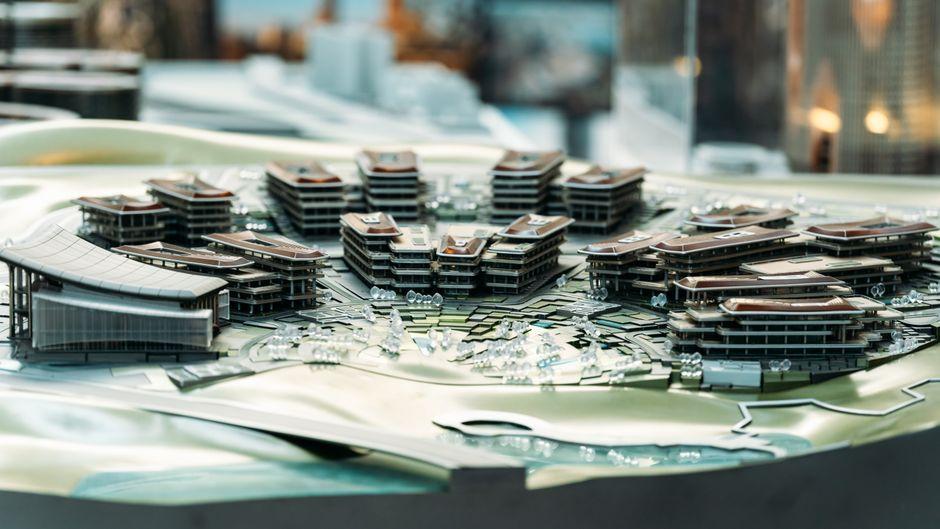
Stock photo for illustration only, not from the actual event
- Superstudio published Twelve Ideal Cities in 1971
- Features 12 imaginary settlements solving human problems
- Portrays colossal industrial machine-like urban organisms
- Questions if ultimate convenience strips away human freedom
Back in 1971, the collective Superstudio envisioned twelve cities engineered to resolve the trials of human existence, offering solutions so comprehensive that barely any life remained to be lived. In The 2,000-Ton City, an individual wakes up inside a five-cubit cell where the temperature stays permanently at 25 degrees Celsius, humidity never fluctuates, and every necessity arrives automatically with zero work required, no reason to depart, and no peers to meet.
The dwelling recognizes its inhabitant's desires prior to any request and detects unhappiness instantly. This settlement represents one of the dozen imaginary habitats outlined by Gian Piero Frassinelli and Superstudio in Twelve Cautionary Tales for Christmas: Premonitions of the Mystical Rebirth of Urbanism, released in 1971. Widely known as 12 Ideal Cities, the project features disembodied brains, citizens sustained by machinery, populations governed via books, and inhabitants carried through existence by cities operating like massive industrial organisms.
These creations remain bizarre, frequently humorous, and increasingly harsh, all anchored around a single trap: every city successfully resolves its premise. Every narrative initiates from a specific principle and drives it toward its most radical conclusion, pondering what happens if every human need is met automatically or if life gains efficiency by treating cities as machinery.
Inhabitants of the 2,000-Ton City reside in isolation within individual cells, regulated by intricate technological apparatuses. A brain-impulse receiver transmits personal wishes to a central electronic network, eliminating the need to search, manufacture, or negotiate. Superstudio then integrates the detail defining the city's moniker: if the system notes rebellious thoughts against eternal perfection, a two-thousand-ton ceiling panel drops, removing both the problem and the individual.
"The 2,000-Ton City questions whether a life made entirely convenient is necessarily a life made freer."
Superstudio
Within The New York of Brains, human intellects are preserved inside individual containers, sustained via technological systems and linked through electrodes, completely eradicating traditional domestic elements like kitchens, beds, and streets. Similarly, in Spaceship City, inhabitants experience programmed realities while surrounding machinery dictates the strict conditions of their existence.
Superstudio's 1970s portfolio stands as a quintessential pillar of radical architecture, critiquing technological determinism and modern urban capitalism. By pushing futuristic habitats to dystopian extremes, these conceptual designs warn that delegating all human agency to automated systems transforms architecture from a sheltering vessel into an oppressive regulatory apparatus.
Stock photo for illustration only, not from the actual event
The most peculiar architectural forms within Twelve Ideal Cities discard conventional definitions entirely, such as the Temporal Cochlea-City where life unfolds inside an immense mechanical structure operating under its own physical logic. Here, inhabitants function merely as components within a greater mechanism, demonstrating how architecture dictates time management, spatial movement, and mortality.
Source: designboom
Found something wrong in this article? Report an issue with this article
Comments
Leave a Comment