

Fusion power startups find new partners in defense
Fusion startups Xcimer and Pacific Fusion are teaming up with defense contractors and government agencies for funding as climate tech investments stall.
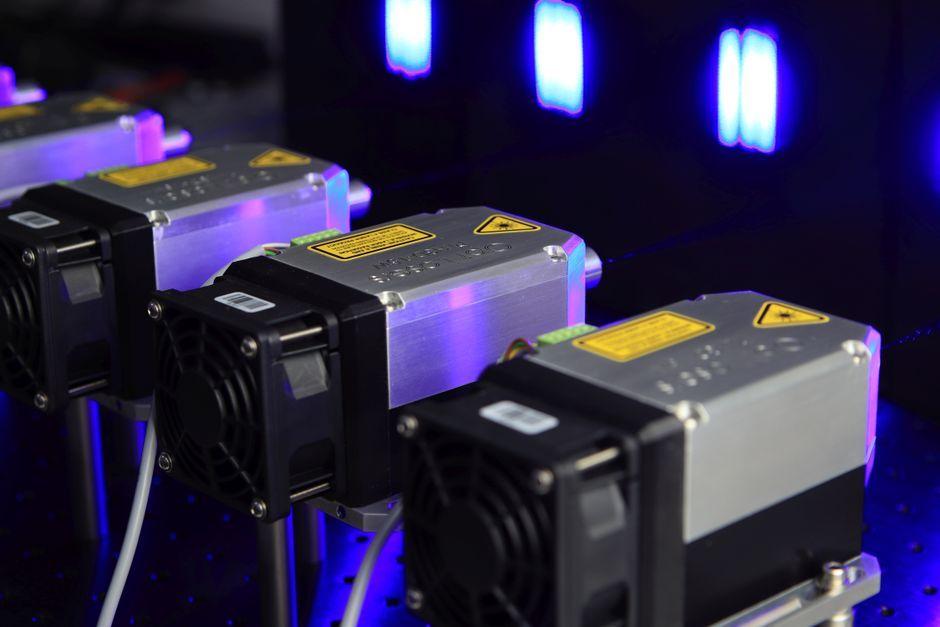
Stock photo for illustration only, not from the actual event
- Fusion energy startups are turning to the defense sector for alternative funding sources.
- Venture capital investments in climate tech supporting fusion have recently stalled.
- The high cost of firing missiles at cheap drones has sparked military interest in lasers.
- Xcimer and Pacific Fusion have forged strategic partnerships with RTX and U.S. agencies.
The fusion power industry is returning to its foundational roots. While continuing to pursue their ultimate objective of delivering electrons onto the electrical grid, numerous startups are embracing or revisiting the defense applications that originally built the industry during the Cold War. Groundbreaking thermonuclear fusion experiments trace back decades, including a major breakthrough at the National Ignition Facility, which has backed national security efforts for over 25 years.
This strategic pivot has accelerated as venture capital funding dedicated to climate tech—the primary financial backbone for fusion startups—has stagnated. Although fusion companies captured substantial shares of recent climate tech funding, the sector remains exceptionally capital-intensive, leaving venture capitalists relieved when portfolio companies secure alternative capital streams.
This is precisely where the defense sector enters the picture. While military branches have explored laser weaponry for years, interest has surged intensely as unmanned drones reshape modern combat tactics. Traditional air defense systems were engineered to counter human-piloted aircraft, which are typically larger and fewer in quantity. This dynamic created stark cost disparities, such as an incident roughly a decade prior when a U.S. ally expended a $3 million Patriot missile to destroy a $200 consumer drone—an effective interception, but a terribly inefficient one.
Laser weapons promise to completely transform this economic equation. Rather than discharging a single, expensive, expendable missile per engagement, laser systems fire rapidly at minimal operational costs by utilizing electrical power drawn from onboard generators or ship engines and reactors. Consequently, fusion startups engineering laser-driven reactor architectures make ideal partners for developing these advanced defense systems.
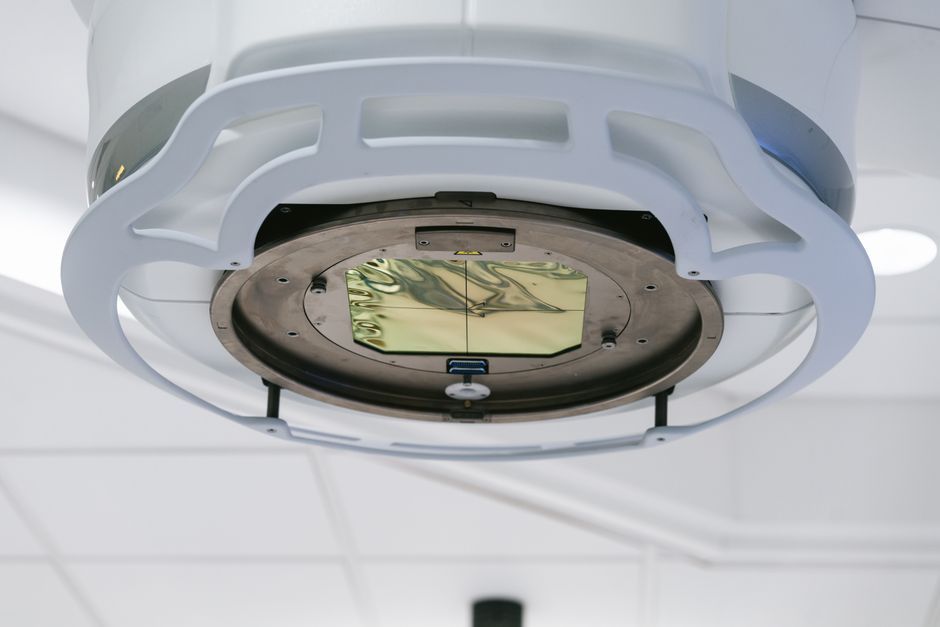
Stock photo for illustration only, not from the actual event
Last week, laser-based fusion startup Xcimer announced an investment and partnership agreement with RTX, the major industrial conglomerate housing defense contractor Raytheon. Under this pact, Xcimer receives financial backing from RTX Ventures, while RTX gains early insight into leveraging Xcimer’s powerful laser systems for its own proprietary applications.
Denver-based Xcimer currently operates what it describes as the largest privately owned laser system globally, slated to support the development of a commercial power plant. Inside the future plant, lasers will bombard fuel targets, compressing them until atoms fuse and release thermal energy. Although Xcimer’s existing Phoenix laser system operates at an order of magnitude lower power than required for a commercial power plant, it generates enough intensity to capture heavy defense industry attention.
The migration of fusion energy startups toward defense funding highlights how capital-intensive deep-tech ventures rely on public sector and security budgets when private markets exercise caution. This synergy helps sustain high-power laser research across dual civilian energy and defense pathways.
Xcimer is far from alone within the defense landscape. Pacific Fusion revealed a memorandum of understanding signed last month with the National Nuclear Security Administration to collaborate on high-energy-density fusion experiments.
"It turns out that the facility that we’re building also has utility in this world-leading defense application,"
Keith LeChein, Pacific Fusion
The startup recently broke ground on a demonstration facility in New Mexico situated near the Sandia and Los Alamos National Laboratories. While the primary objective is demonstrating that the proprietary architecture can generate a net-positive energy yield, the installation serves alternative functions. The fusion reactions generated inside Pacific Fusion’s facility will substantially exceed the power levels currently deployed by the government for nuclear weapons experimentation.
Source: TechCrunch
Found something wrong in this article? Report an issue with this article
Comments
Leave a Comment