

Why Thais Fear Big Trucks and How AI Video Telematics Offers a Solution
Exploring road accident statistics in Thailand and the reasons behind public fear, alongside an immediate AI safety solution for fleets.
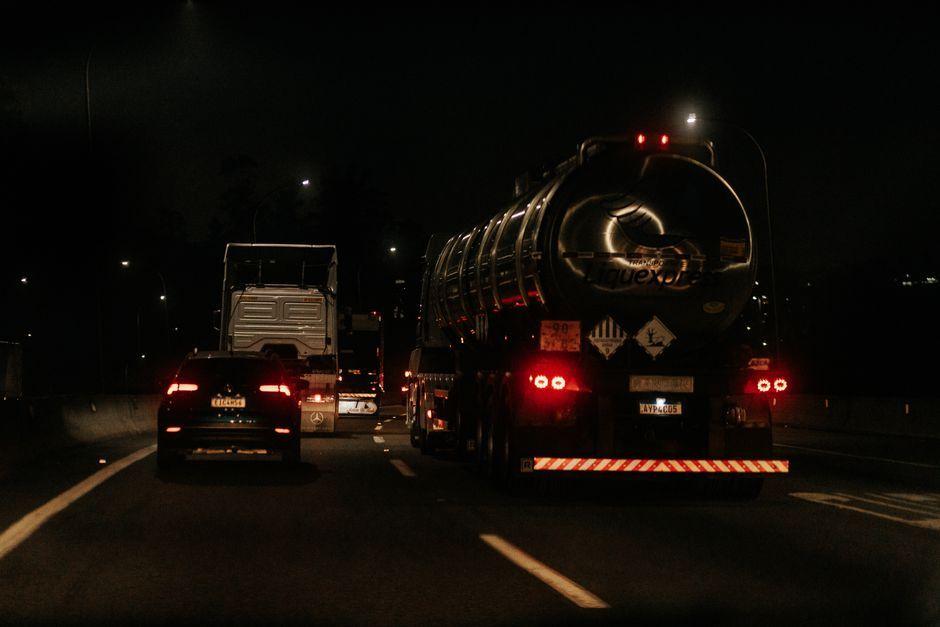
Stock photo for illustration only, not from the actual event
- More than half of Thai drivers instinctively keep their distance from large trucks on the road.
- Thailand records around 18,000 road fatalities annually, ranking among the highest globally.
- Road accidents cost the Thai economy roughly 5.9 trillion baht or 3.3% of GDP per year.
- Video Telematics and AI technologies can be retrofitted to reduce risky driving habits immediately.
On Thai roads, there is an unspoken rule that never appears on driving tests, yet almost every driver strictly follows it: stay as far away from large trucks as possible. The instinctive reaction to slow down, change lanes, or accelerate past massive freight vehicles is not a coincidence. It is a shared behavioral response born from accumulated fear and direct experience, creating a decentralized safety system built by citizens to cope with systemic risks.
According to the World Health Organization, Thailand sees approximately 18,000 road deaths per year, averaging 50 fatalities daily. Large trucks and commercial transport incite the most public terror because their sheer weight and size result in exceptionally high fatality rates per crash, leaving tragic and lasting memories across society.
In economic terms, the Thailand Development Research Institute (TDRI) estimates that road accidents cause damage exceeding 3.3% of GDP, or roughly 5.9 hundred billion baht annually, impacting national logistics and supply chains. Research from Pathumthani University highlights human resource challenges, revealing that over 55.6% of truck drivers in Thailand work more than eight hours a day, leading to fatigue and an increased risk of microsleeps under tight delivery schedules.
Furthermore, TDRI statistics indicate that 70% of heavy trucks on Thai roads are older vehicles operating on outdated safety standards. Combined with natural physical limitations such as massive blind spots and significantly longer braking distances, a split-second error by a truck driver or an-cutting motorist can instantly escalate into a severe crash, echoing recurring news tragedies like the highway collision that killed eight people in a single event.
The introduction of Video Telematics marks a pivotal shift, moving the responsibility of road safety away from ordinary motorists and back onto vehicle operators and fleet management. These intelligent systems act as real-time co-pilots, mitigating human error which has long been the primary catalyst for severe accidents on Thai roads.
Geotab, a global leader in fleet management, recently introduced its Video Intelligence platform and GO Focus Plus AI dashcams to the Thai market. The system relies on three continuous real-time steps powered by the MyGeotab platform, which combines video auditing, progress tracking, and positive driver recognition to foster a sustainable safety culture rather than relying on occasional punitive measures.
"Across Thailand and the surrounding region, the transportation sector is under continuous pressure. Road safety risks are mounting, while fleets face tighter profit margins, workforce stress, and heightened public scrutiny."
Ezanne Soh, Geotab
A key advantage in the Thai context is that this technology can be retrofitted onto existing commercial vehicles immediately, sparing operators from waiting for new fleet purchases or regulatory reforms. Data from Geotab proves that in-cab audio coaching can reduce tailgating by up to 90% and mobile phone distraction by 95%, backed by a global network connecting over 6 million vehicles.
Source: Techsauce
Found something wrong in this article? Report an issue with this article
Comments
Leave a Comment