

Pony.ai unveils autonomous electric truck for logistics fleets
Pony.ai and GAC Commercial Vehicle debuted the Gen-4 Level 4 autonomous truck at IAA Transportation 2026, cutting hardware costs by 70%.

Stock photo for illustration only, not from the actual event
- Pony.ai and GAC Commercial Vehicle launched the Gen-4 Level 4 autonomous heavy truck
- Debuted at IAA Transportation 2026 with mass production starting later this year
- Bill-of-materials cost for the ADK hardware decreased by 70% compared to the previous version
- Features 360-degree sensor coverage and targets expansion into European and Middle Eastern markets
Pony.ai has unveiled an autonomous electric truck designed for logistics fleets, developed in collaboration with GAC Commercial Vehicle to transform freight supply chains.
Showcased at IAA Transportation 2026, this Level 4 (L4) heavy rig represents the fourth-generation (Gen-4) iteration of Pony.ai’s Robotruck platform. It builds upon GAC Commercial Vehicle’s T9 battery-electric truck architecture, with mass production scheduled to kick off later this year. Initial deployment routes will target long-haul freight, dedicated logistics corridors, and port transport operations.
He Xing, VP of Pony.ai and Head of its Robotruck business, stated that the global debut of the T9 autonomous heavy-duty truck with GAC Commercial Vehicle marks another critical step in accelerating mass production and commercial deployment. He noted that the company will deepen collaboration to bring jointly-developed autonomous trucking solutions to global markets.
An automotive-grade autonomous driving kit (ADK) equips the vehicle with nine lidars, three millimetre-wave radars, and 13 cameras, providing complete 360-degree sensing around the truck. Hardware expenses have plummeted, with the bill-of-materials cost for the Gen-4 ADK down 70 percent compared with the previous iteration, while transportation operating costs per ton-kilometre are projected to fall by 30 percent.
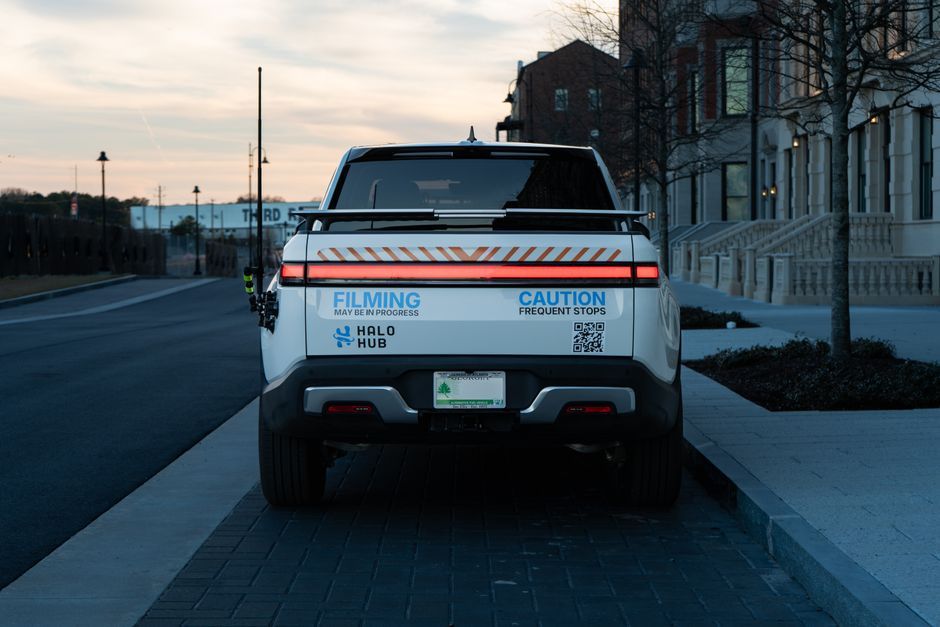
Stock photo for illustration only, not from the actual event
Energy efficiency is further enhanced by aerodynamic refinements. Pony.ai’s control algorithms work alongside the T9 cab’s 0.4 drag coefficient (Cd) to cut energy consumption by 10 percent compared to conventional haulage trucks. Furthermore, the Gen-4 Robotruck shares its central domain controller with Pony.ai’s seventh-generation robotaxis, running the company’s unified Virtual Driver software.
"The global debut of the T9 autonomous heavy-duty truck with GAC Commercial Vehicle marks another important step in accelerating the mass production and commercial deployment of Pony.ai’s Robotrucks."
He Xing, VP of Pony.ai and Head of Robotruck Business
Engineers paired the software stack directly with GAC Commercial Vehicle’s drive-by-wire chassis. To ensure reliable driverless operation, full hardware backups are integrated across steering, braking, power supply, computing, sensors, and communications. Development stemmed from a strategic agreement signed on April 16, with both partners completing vehicle validation in five months.
The introduction of this L4 autonomous truck highlights the rapid maturation of physical AI applications within heavy industry and long-haul logistics. By sharing a unified core software architecture with passenger robotaxis, Pony.ai can streamline development cycles and enhance system reliability, addressing critical driver shortages and operational overhead in commercial transport.
Pony.ai has pursued autonomous trucking development since 2018, building a versatile portfolio across heavy- and light-duty platforms. Following initial domestic production this year, the company plans to expand Robotruck operations into European and Middle Eastern markets over the next two years, leveraging footholds established by its robotaxi deployments across the UAE, Qatar, Croatia, Luxembourg, Singapore, and South Korea.
Source: AI News
Found something wrong in this article? Report an issue with this article
Comments
Leave a Comment